 how-to
Can I Add an EV Charger to a 100 Amp Panel?
Table of Contents
- Can You Install an EV Charger on a 100 Amp Panel?
- Understanding Electrical Load and Amperage Requirements
- EV Charger Load Calculation: Step-by-Step
- Load Management Device for EV Charger Installation
- Signs Your 100 Amp Panel Cannot Support an EV Charger
- Electrical Panel Upgrade Cost and Alternatives
- Installation Process and Code Compliance
- Next Steps: Getting a Professional Assessment
- Frequently Asked Questions
Last Updated: October 2, 2026
Can You Install an EV Charger on a 100 Amp Panel?
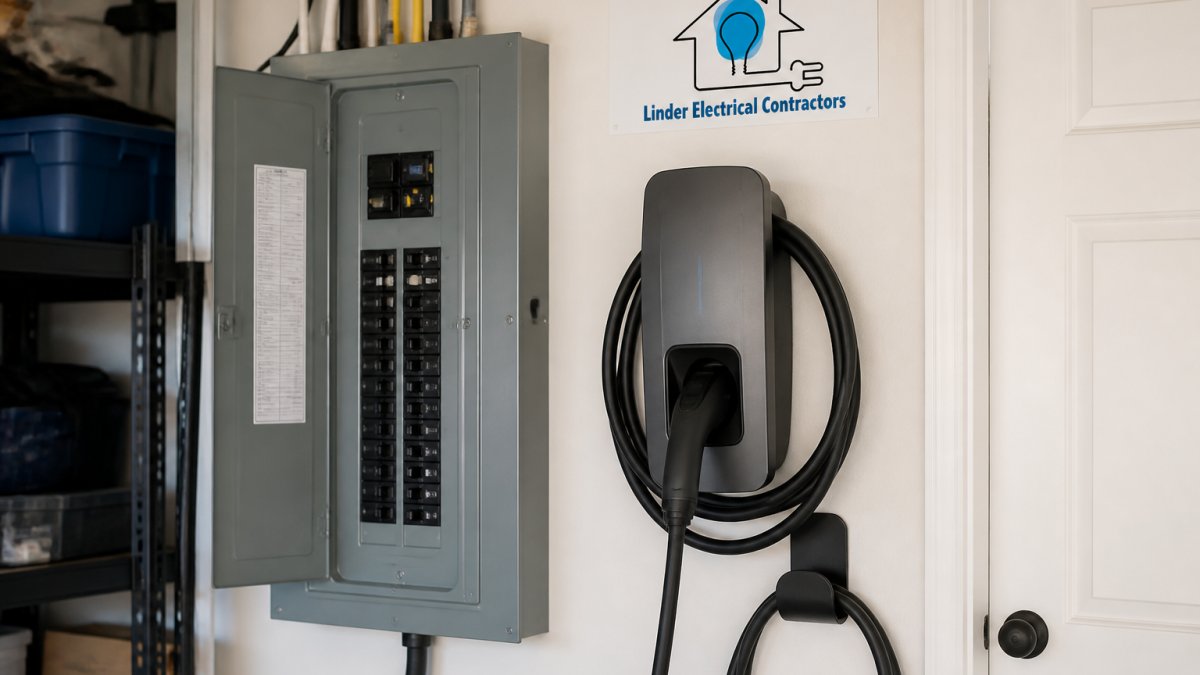
Most homes with 100 amp service cannot safely support a Level 2 EV charger without upgrades or load management, as an EV charger 100 amp panel installation requires careful capacity planning.
What matters is your home's total electrical load and spare capacity. Smart load management devices can sometimes solve the problem for a fraction of the cost of a full panel upgrade.
Understanding Electrical Load and Amperage Requirements
A 100 amp panel means the utility company delivers up to 100 amps to your home at any moment.
The National Electrical Code (NEC) requires that your total connected load not exceed 80% of your panel's capacity, 80 amps maximum for a 100 amp panel.
Your home doesn't use all devices simultaneously. The NEC accounts for this with demand factors, calculations that estimate your actual peak draw.
How to Calculate Your Home's Electrical Load
List every major appliance and its amperage draw from your electric bill, service panel, or appliance nameplate. Common examples:
- Electric water heater: 20-30 amps
- Central air conditioning: 15-25 amps
- Electric range/oven: 40-50 amps
- Clothes dryer: 20-30 amps
- Refrigerator: 10-15 amps
- Furnace/HVAC: 5-10 amps
Apply demand factors. The NEC doesn't require you to add all breaker sizes at full value, your water heater and air conditioner rarely run simultaneously at full power.
Add your appliances, apply the demand factor, and see what's left over for an EV charger.
What Level 2 Chargers Actually Draw
A Level 2 EV charger draws 30-50 amps depending on the model; most home installations use 40 amps.
On a 100 amp panel with 80 amps usable capacity, a 40 amp charger leaves only 40 amps for your house. If your existing load is 50-60 amps, you've exceeded capacity.
Overloading your panel creates fire risk, damages equipment, and violates code.
EV Charger Load Calculation: Step-by-Step
This section shows you how to calculate whether your 100 amp panel has room for an EV charger. You'll need your electrical panel, a notebook, and about 15 minutes.
Step 1: List Your Major Appliances and Their Amperage
Photograph your circuit breaker labels, check your electric bill or service documents, or call your utility company.
Create a list with these columns:
| Appliance | Circuit Breaker Size (Amps) | Actual Usage |
|---|---|---|
| Water Heater | 40 | Always on or cycles |
| Air Conditioning | 25 | Seasonal/temperature-dependent |
| Electric Range | 50 | Used during meals |
| Clothes Dryer | 30 | Weekly use |
| Refrigerator | 15 | Always on |
| Furnace | 10 | Seasonal |
| Lighting & Outlets | 15-20 | Constant low draw |
Step 2: Apply Demand Factors
The NEC provides demand factors for residential loads. Here's the simplified version:
Use 100% for the first 3,000 watts of general lighting and outlets, 35% above that. For heating or air conditioning, use the larger (not both). For water heaters, use 100%.
Example: 4,000 watts of lighting = (3,000 × 100%) + (1,000 × 35%) = 3,350 watts.
Convert to amps: 3,350 ÷ 240 = 14 amps.
Step 3: Add the EV Charger Load
Add the charger to your existing load. A 40 amp Level 2 charger adds 40 amps to your demand.
Example: 65 amps existing load + 40 amp charger = 105 amps total. Your 100 amp panel cannot support this.
If your existing load is 40 amps, adding the charger brings you to 80 amps, at the NEC limit with no margin for growth.
Load Management Device for EV Charger Installation
If you're over capacity, a load management device costs far less than a full panel upgrade and often solves the problem.
A load management device monitors your home's electrical usage in real time and reduces the charger's amperage draw if your total load approaches the panel limit.
Example: Your home draws 70 amps. You start charging.
How Smart Charging Prevents Overload
Smart charging technology monitors current household load, available capacity, EV charger demand, and time-of-use rates.
When household demand spikes, the charger automatically reduces its draw. When demand drops, it increases again.
EVEMS and Load Shedding Explained
An Electric Vehicle Energy Management System (EVEMS) is the technical term for a load management device.
Load shedding is the process of reducing or temporarily stopping power to lower-priority loads when demand exceeds capacity.
The charger is the ideal candidate for load shedding because:
- It's not essential to run constantly (unlike your furnace or refrigerator)
- It has built-in flexibility (it can accept reduced amperage)
- You control when charging happens (you can charge overnight when demand is lower)
- It benefits from off-peak utility rates in many areas
An EVEMS with load shedding capability prevents your panel from overloading while still allowing you to charge your EV safely.
Signs Your 100 Amp Panel Cannot Support an EV Charger
Not every home needs a panel upgrade. But certain signs indicate you do.
You have an older home with original 100 amp service. Homes built before 2000 often have 100 amp panels that were adequate at the time.
Your utility company requires it. Some utility companies have specific requirements for EV charger installations. Contact your local utility before making any decisions.
Electrical Panel Upgrade Cost and Alternatives
A full electrical service upgrade for an EV charger 100 amp panel involves replacing your main panel, potentially upgrading the utility connection, and passing inspection. It's a significant project.
When a Panel Upgrade Is Necessary
You need a panel upgrade if:
- Your load calculation shows you'll exceed 80 amps even with a load management device
- Your utility company requires it for code compliance
- You plan to add other major loads in the future (a second EV charger, a heat pump, additional circuits)
- Your panel is old and failing (frequent breaker trips, burn marks, corrosion)
A licensed electrician can assess your specific situation and tell you whether an upgrade is truly necessary. Linder Electrical Contractors handles these assessments and manages the entire upgrade process, including permits and utility coordination.
Load Management as a Cost-Effective Alternative
Load management devices work best when:
- Your existing load is 40-65 amps
- You can accept variable charging speeds (faster at night, slower during peak afternoon hours)
- You want to avoid the cost and disruption of a panel upgrade
- Your utility offers time-of-use rates that reward off-peak charging
A device typically costs less than a panel upgrade. The payback period is often favorable in avoided upgrade costs.
Installation Process and Code Compliance
Whether you use a load management device or upgrade your panel, the installation must meet code and pass inspection.
NEC Requirements and Permits
The National Electrical Code (NEC) governs all EV charger installations. Key requirements:
- A dedicated circuit for the charger (no shared circuits with other appliances)
- Proper gauge wiring based on amperage (typically 6 or 8 gauge copper for 40-50 amp service)
- A breaker sized appropriately for the charger (usually 50 amps for a 40 amp charger)
- A disconnect switch within sight of the charger (for safety and maintenance)
- Proper grounding and bonding
- Installation by a licensed electrician
Your local township or county requires a permit before installation begins. The permit process involves plan review and a final inspection. Linder Electrical Contractors handles all permitting and inspection coordination. This ensures your installation is safe and legal.
Hardwired vs. NEMA Outlet Installation
Two installation methods exist:
Hardwired chargers are permanently connected to a dedicated circuit. They're faster, more efficient, and require less maintenance. Most new installations use hardwired chargers.
NEMA outlet installations use a standard outlet (similar to a dryer outlet) where you plug in a portable or semi-portable charger.
For a 100 amp panel situation, hardwired is usually the better choice because:
- It allows you to use a load management device more effectively
- The charger integrates directly with your electrical system
- It's safer and more reliable long-term
A NEMA outlet might work if you're using a load management device to limit the charger's amperage draw, but check with your electrician.
Next Steps: Getting a Professional Assessment
The calculations above give you a starting point, but every home is different. Your panel's actual capacity, your usage patterns, and your local electrical code all matter.
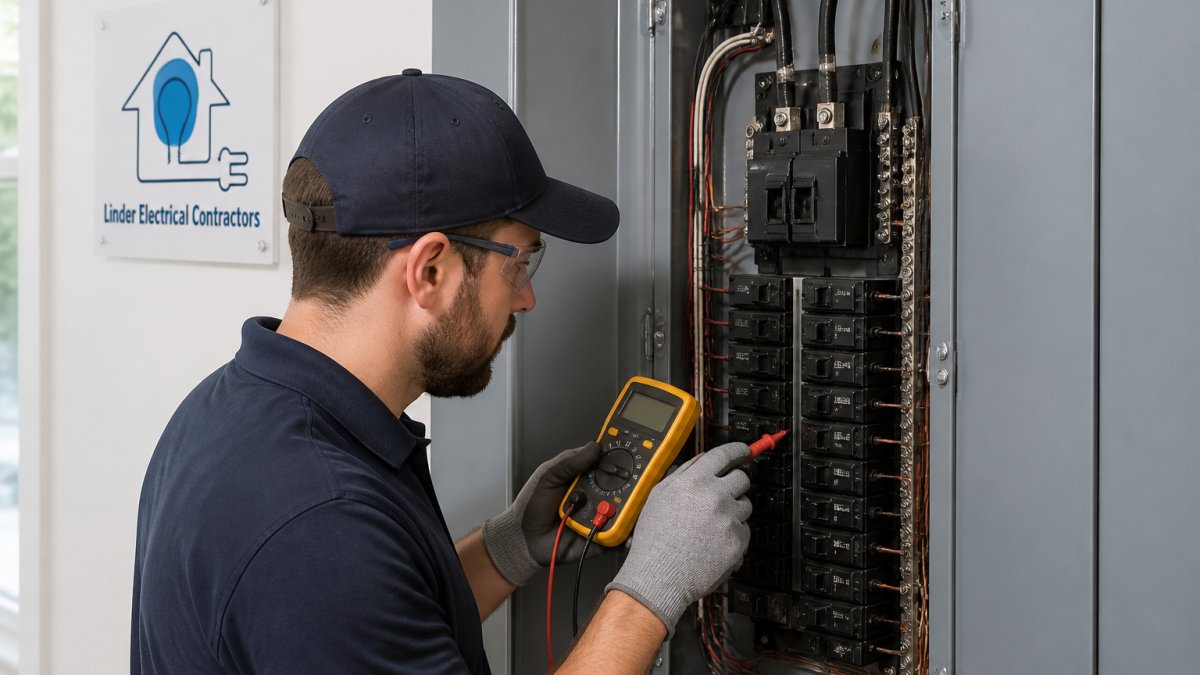
The right next step is a professional assessment. A licensed electrician will:
- Examine your existing panel and calculate your actual load
- Determine whether your 100 amp panel can support an EV charger
- Recommend either a load management device or a panel upgrade
- Explain the code requirements for your specific installation
- Provide a written estimate for the work
Contact Linder Electrical Contractors for a free assessment. We'll evaluate your panel, answer your questions, and tell you exactly what you need. No surprises, no pressure, just straight answers about whether you can charge your EV safely on your current service.
Adding an EV charger to a 100 amp panel is possible, but it requires careful planning and professional guidance. Load management devices solve the problem for many homeowners, while others need a full panel upgrade. The only way to know which applies to you is to get your specific situation evaluated by a licensed electrician. Linder Electrical Contractors offers free written estimates and handles the entire process from assessment through installation, permits, and inspection. Learn more about electrical code requirements for EV charger installation
Frequently Asked Questions
Is 100 amp service enough for Level 2 EV charging?
It depends on your home's total electrical load. A Level 2 charger typically requires 30-50 amps on a dedicated circuit. If your home's base load (heating, cooling, water heater, appliances) already consumes 60-80 amps, adding an EV charger will exceed your panel's capacity. A licensed electrician can perform an EV charger load calculation to determine if your 100 amp panel has available capacity or if you need a load management device or panel upgrade.
What is a load management device for EV chargers?
A load management device, often called an EVEMS (Electric Vehicle Energy Management System), automatically reduces charging speed or pauses charging when your home's electrical demand peaks. This allows you to use a Level 2 charger on a 100 amp panel without exceeding capacity. The device monitors real-time power consumption and adjusts the charger's amperage draw, preventing circuit breaker trips and overload conditions while still charging your vehicle.
Can I install a Tesla charger or other Level 2 charger on a 100-amp panel myself?
No. EV charger installation requires a licensed electrician, a permit from your local authority, and an inspection to ensure NEC (National Electrical Code) compliance. Improper installation creates serious fire and electrocution hazards. A licensed electrician will assess your panel capacity, run the correct gauge wire, install a dedicated circuit breaker, and ensure the installation meets all code requirements and safety standards.
What are the risks of installing an EV charger on an older 100 amp panel?
Older panels may have deteriorated wiring, corroded breakers, or insufficient available capacity, creating fire risk and electrical shock hazards. Overloading a 100 amp panel can cause breaker nuisance trips, voltage drop affecting other appliances, or worst-case, panel failure. A safety inspection by a licensed electrician will identify these risks and determine whether your panel needs a service upgrade, load management device, or cannot safely support an EV charger at all.