 How-to
Is It Safe to Add Circuits to an Old Panel?
Last Updated: November 21, 2026
Quick Summary
It is safe to add circuits to an old panel only when three things line up: you have open breaker space, the panel has capacity to spare, and the existing equipment is in good condition. If any one of those fails, it isn't safe. A panel can have open breaker spaces and still fail the load calculation.
- Open breaker spaces are the empty slots where a new breaker would go.
- A panel labeled 30/40 has 30 full-size spaces but can accept up to 40 half-size breakers.
- A load calculation adds up every appliance and circuit to estimate total demand.
- A tandem breaker fits two switches into one slot but doesn't increase total capacity.
- Federal Pacific Stab-Lok and Zinsco panels are associated with breakers that fail to trip under overload.
Table of Contents
- The Short Answer: When Adding Circuits Is Safe and When It Isn't
- How Do I Know If I Can Add a Breaker to My Panel?
- How to Add a Breaker to a Full Panel Without Overloading It
- The Subpanel for an Older Home: A Middle Path When the Main Panel Is Full
- Cost to Add a Circuit to a Panel: What Drives the Price
- Warning Signs Your Old Panel Is Unsafe and Should Be Replaced
- Permits, Inspections, and What Homeowners Can Safely Check Themselves
- Get a Free Estimate Before You Add Another Circuit
- Frequently Asked Questions
The Short Answer: When Adding Circuits Is Safe and When It Isn't
When you add circuits to an old panel, it is safe only when three things line up: you have open breaker space, the panel has capacity to spare, and the existing equipment is in good condition. If any one of those fails, it isn't safe. This guide walks you through how to check each one.
The short answer matters because most homeowners ask the wrong question first. They ask "can I add a circuit?" when they should ask "can my panel handle one more?" Those are different questions with different answers.
A circuit is a single path that carries power from your panel to one area or appliance. Each new circuit adds load. Old panels have limits.
Below, we break down the safe checks you can do yourself and the point where you should call a licensed electrician.
How Do I Know If I Can Add a Breaker to My Panel?
You can add a breaker if your panel has an open space, a bus rating above its current load, and no signs of damage. That's the whole test. Everything else is detail.
Here's the simple decision path we use on service calls:
- Open space + spare capacity + sound equipment: add the breaker.
- No open space + spare capacity: consider a tandem breaker or subpanel.
- No spare capacity: you need a panel upgrade, not another breaker.
- Damaged or recalled equipment: replace the panel before adding anything.
The rest of this section explains how to check each condition.
Step 1: Check for Open Breaker Spaces
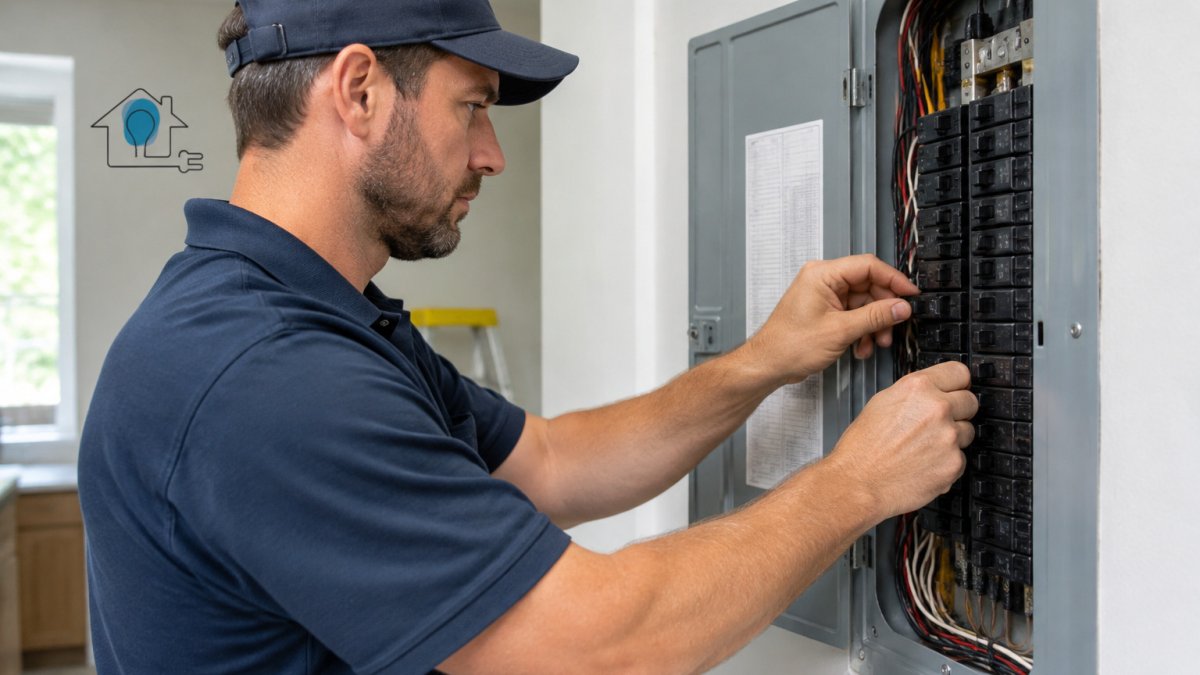
Open breaker spaces are the empty slots in your panel where a new breaker would go. Look at the panel cover. If you see blank spots with no switch, you may have room.
Count the empty slots. Then check whether they're "full-size" or "half-size" spaces. Some panels only accept certain breaker types in certain spots.
Watch out: a blank spot doesn't always mean an open slot. Some panels have covers over unused spaces that are not wired for a breaker at all.
Step 2: Read the Panel Rating and Bus Rating
The panel rating tells you the maximum amps the whole panel can handle. The bus rating tells you the maximum amps the internal metal bars can carry.
Look for a sticker inside the panel door. It lists the amp rating, the bus rating, and the maximum breaker size allowed.
A 100-amp panel with a 100-amp bus rating has less room than a 200-amp panel. Older homes often have 100-amp or even 60-amp service.
Step 3: Run a Load Calculation
A load calculation adds up every appliance and circuit in your home to estimate total demand.
The math includes your square footage, major appliances, and any new load you want to add. For a deeper look at how modern appliances stack up against older panels, see our guide on electrical panel capacity for modern appliances.
If the total load is close to the panel rating, you have no room to add circuits safely. If it's well under, you likely do.
Watch out: a panel can have open breaker spaces and still fail the load calculation. Physical space and electrical capacity are separate checks.
The decision comes down to three checks, and the answer depends on how they combine.
| Situation | What it means | Next step |
|---|---|---|
| Open space + spare capacity + sound equipment | Safe to proceed | Add the breaker |
| No open space + spare capacity | Room is the only limit | Consider a tandem breaker or subpanel |
| No spare capacity | Load is already at the ceiling | Panel upgrade, not another breaker |
| Damaged or recalled equipment | Panel is compromised | Replace the panel before adding anything |
| Open slots but load near panel rating | Space and capacity are separate checks | Cannot safely accept another circuit |
How to Add a Breaker to a Full Panel Without Overloading It
A full panel doesn't always mean a dead end. You have two options: tandem breakers or combining circuits. Both have limits.
A tandem breaker fits two switches into one slot. It lets you add a circuit without adding physical space. But not every panel accepts them, and they don't increase your total capacity.
Combining circuits means merging two low-use circuits onto one breaker. This frees a slot. It works when the combined load stays within the breaker's rating.
Tandem Breakers and Combine Circuits: What Works and What Doesn't
Tandem breakers work only in panels rated to accept them. Check the panel label. If it doesn't list tandem use, don't force it.
Combining circuits works for lightly used outlets, like a bedroom and a hallway. It fails when both circuits carry heavy loads, like a kitchen and a laundry room.
What most guides miss: combining circuits can create a code violation if the combined load exceeds the breaker rating. A licensed electrician checks this before touching anything.
The Subpanel for an Older Home: A Middle Path When the Main Panel Is Full
A subpanel is a smaller panel fed from your main panel. It adds breaker space without replacing the main service. For older homes with a full main panel, it's often the smartest option.
Subpanel installation works when your main panel still has capacity to feed it. It doesn't create power out of nowhere. It just gives you more places to put breakers.
Cost to Add a Circuit to a Panel: What Drives the Price
The cost to add a circuit to a panel depends on distance, wire size, and whether your panel has room. Pricing depends on the run length, the amperage, and whether a permit is required. For current prices or a quote, contact Linder Electrical Contractors directly.
Factors that raise the price:
- Long wire runs through finished walls
- Higher amperage circuits, like for an EV charger
- Panel upgrades or subpanel additions
- Permit and inspection fees
Factors that keep it lower:
- Short runs in an unfinished basement
- Open breaker space already available
- Simple 15- or 20-amp circuits
Warning Signs Your Old Panel Is Unsafe and Should Be Replaced
Some panels are not suitable for another circuit and should be evaluated for replacement.
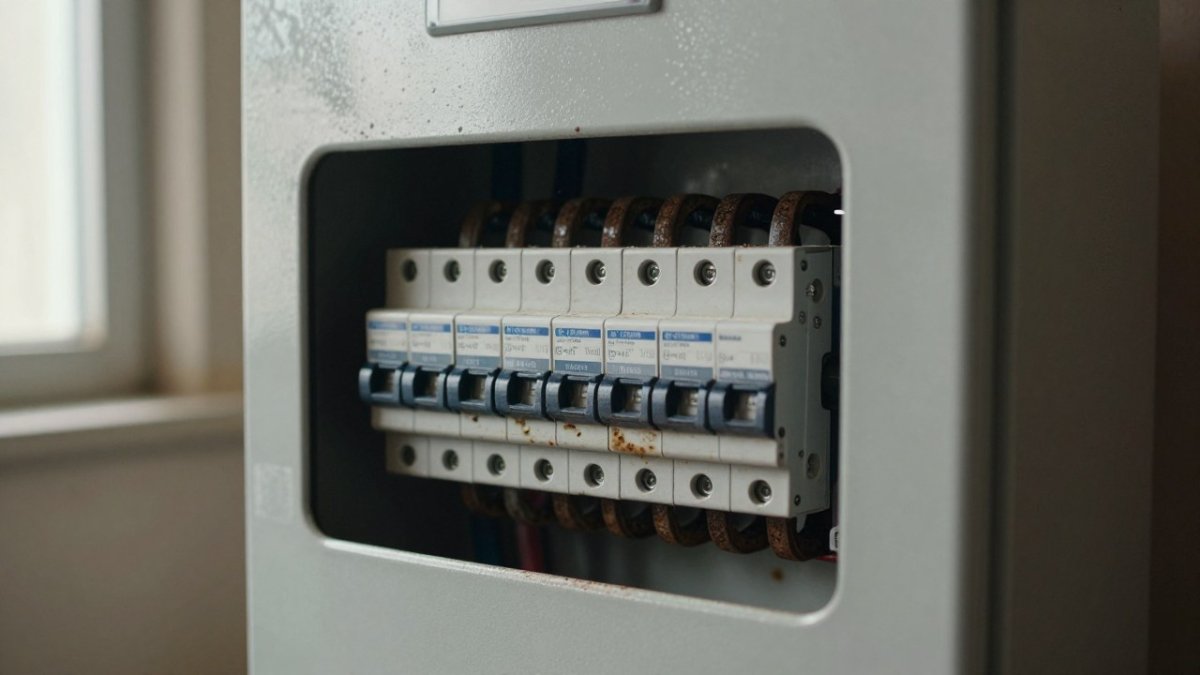
Look for these red flags:
- Rust or corrosion inside the panel box
- Scorch marks or a burning smell near breakers
- Flickering lights across multiple rooms
- Breakers that trip often or feel warm
- A fuse panel instead of breakers
- A known-hazard brand like Federal Pacific
If you spot any of these, stop. Our guide on signs you need an electrical panel upgrade covers each one in detail. And if you suspect a Federal Pacific panel, here's how to identify a Federal Pacific panel in your home.
How to Identify Hazardous or Recalled Panel Equipment
Some panel brands and models have documented failure histories. The two most common in older homes are Federal Pacific Electric (FPE) Stab-Lok panels and Zinsco panels.
A fuse panel is another stop sign. Fuse panels predate modern breaker protection and often lack the capacity and grounding modern circuits require.
Watch out: a panel can look clean and still be a known-hazard model. The brand name and model number matter more than appearance.
Why Adding a Circuit to a Compromised Panel Is Risky
A new circuit adds load to the bus bars, the main breaker, and the service conductors.
This is why the safety check comes before the space check. A panel with open slots but visible rust or a recalled brand is not a candidate for another circuit. It is a candidate for replacement.
If you are unsure what you have, a licensed electrician can identify the panel model and tell you whether it is on a known-hazard list. That inspection is faster and cheaper than guessing.
Permits, Inspections, and What Homeowners Can Safely Check Themselves
Permits and inspections are typically required when adding a circuit, and the business handles the permit and inspection process.
Homeowners can safely check a few things:
- Whether the panel has open spaces
- Whether the panel label is readable
- Whether breakers trip or feel warm
- Whether lights flicker
Homeowners should not open the panel, touch wiring, or work on a live circuit. That's a job for a licensed electrician. The electrical permit process for homeowners explains what to expect from start to finish.
Get a Free Estimate Before You Add Another Circuit
Before you add another circuit, get a professional opinion. A quick inspection tells you whether your panel can take the load or whether it's time to upgrade.
At Linder Electrical Contractors, we handle the whole job: the inspection, the load calculation, the permit, and the inspection sign-off.
If you want pricing context before you commit, our electrical panel replacement cost guide breaks down what drives the number.
Get started with Linder Electrical Contractors and add your circuit safely, with the paperwork handled for you.
Adding a circuit to an old panel comes down to three checks: space, capacity, and condition. Get all three right and the job is straightforward. Get one wrong and you risk a fire or a failed inspection. A free estimate from our team takes the guesswork out of it.
Frequently Asked Questions
Can I add another circuit to my electrical panel?
Often yes, but only after confirming three things: open breaker space, spare capacity in the panel rating, and a load calculation that leaves headroom. A 100-amp panel serving an all-electric home may already be near its limit, while a 200-amp panel with gas appliances usually has room. A licensed electrician can verify capacity and breaker compatibility before any work begins.
Is it safe to add a circuit to an old fuse box?
Usually no. Fuse panels typically lack the capacity, grounding, and modern protection (AFCI and GFCI) that new circuits require, and many contain hazardous or recalled equipment. Adding a circuit to a fuse box is often a code violation and a fire risk. In most cases the safer path is a panel upgrade or a subpanel fed from a new service, assessed by a licensed electrician.
How much does it cost to add a circuit to an electrical panel?
The cost to add a circuit to a panel depends on distance from the panel to the outlet, wire gauge, whether the wall is finished, permit fees, and whether the panel has space. A short run in an open basement costs far less than a long run through finished walls. Linder Electrical Contractors provides free written estimates so you know the scope before committing.
When should an older electrical panel be replaced instead of expanded?
Replace rather than expand when the panel is a known hazardous model, shows rust, scorch marks, or buzzing, has no open spaces and no capacity for a subpanel, or fails a load calculation. Panels with a 60-amp or 100-amp service serving modern loads often fall into this group. An electrician can confirm with an inspection and load calculation.
Should I install a subpanel to add circuits to an older home?
A subpanel for an older home is a practical middle path when the main panel has capacity but no open spaces. It adds breaker positions for new circuits without replacing the service. It only works if the main panel's bus rating and load calculation allow it, and the subpanel must be properly grounded and permitted. An electrician can tell you if your service supports it.