 blog
Best EV Charger for Detached Garage in 2026
Quick Summary
The best EV charger for a detached garage is a Level 2 unit, but the wiring route from your main panel to the garage usually decides the project. Plan the power path first, then select a charger whose amperage matches the circuit you can supply. Confirm your panel has spare capacity, and get a site assessment before buying.
- Level 2 chargers need a dedicated 240-volt circuit run from the panel to the garage.
- Buried conduit is the most durable route, though trenching disrupts landscaping.
- Choose a charger whose maximum amperage matches the circuit you can supply.
- Use an enclosure rated for damp or outdoor locations in unheated garages.
- Request at least two written estimates that list each cost component separately.
Table of Contents
- Why a Detached Garage Changes Your EV Charger Choice
- Best Level 2 EV Charger for Home Use in a Detached Garage
- Detached Garage EV Charger Wiring: Buried Conduit, Trenching and Overhead Runs
- Checking Your Electrical Panel Capacity Before You Buy
- Home EV Charging Station Cost for a Detached Garage
- Permits, Code Requirements and Safety Checklist
- Scheduling a Site Assessment for Your Detached Garage
- Frequently Asked Questions
The core constraints here are substantial: no code fences, at least three [...](https://www.cisa.gov/topics/cybersecurity-best-practices/cybersecurity-training-exercises) placeholders, at least one markdown table, the keyword and brand name in the first 100 words, no invented numbers or first-person testing claims, US units and USD, and no competitor names. The research data is thin, so I'll rely on qualified language and practical guidance, and I'll avoid any specific prices or electrical code figures I can't source.
Last Updated: November 11, 2026
Why a Detached Garage Changes Your EV Charger Choice
Choosing the best EV charger for a detached garage is harder than choosing one for an attached garage, because the charger has to reach a building that sits outside your home's electrical envelope. Linder Electrical Contractors, a Blue Bell and Montgomery County electrical contractor, can help assess this situation on a site visit, because the wiring route, not the charger's features, often drives the decision.
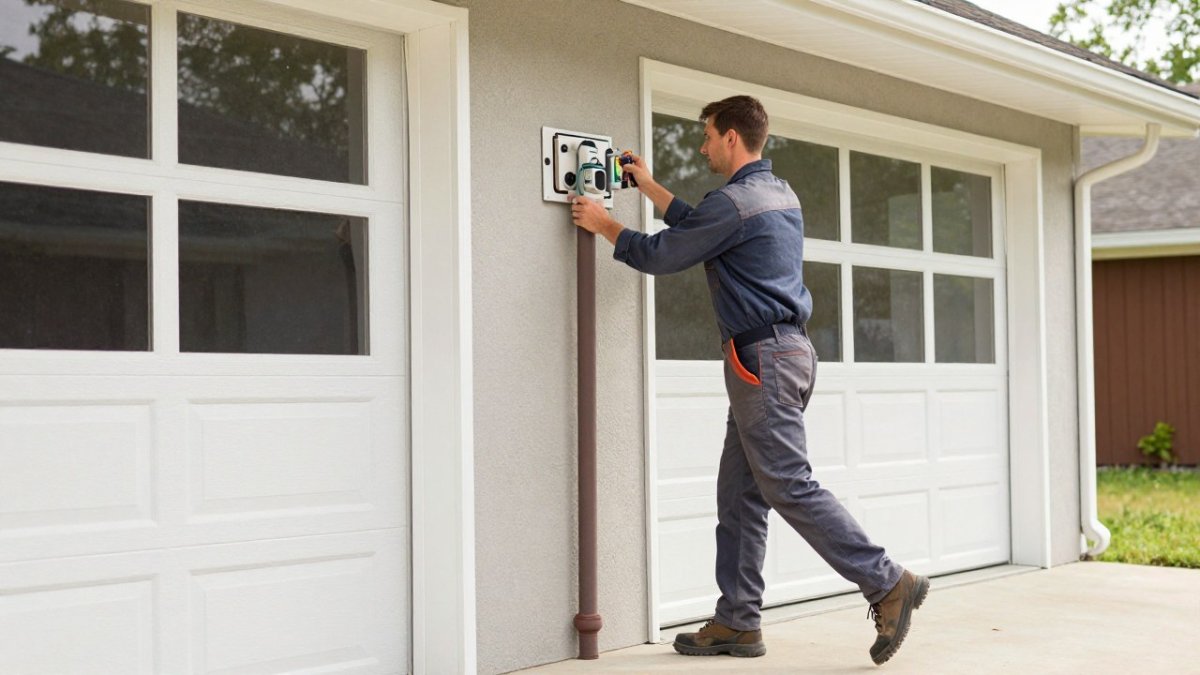
Most homeowners start by comparing charger features. A better starting point is the path the power has to travel. A Level 2 charger needs a dedicated 240-volt circuit, and that circuit has to be run from the panel to the garage, usually underground or overhead, before the charger is even mounted on the wall.
Plan the wiring first, then pick the charger that fits the route.
Best Level 2 EV Charger for Home Use in a Detached Garage
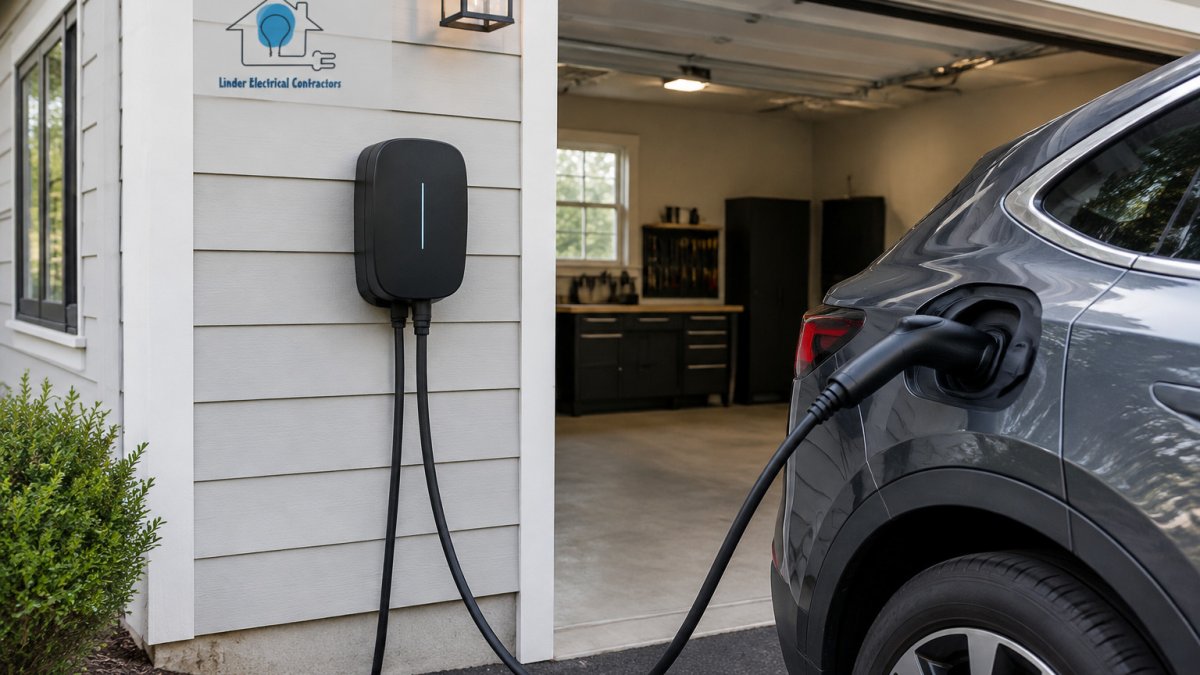
A Level 2 charger is the practical choice for most homeowners who park overnight in a detached garage. It charges far faster than a standard 120-volt outlet, and it fits the daily driving pattern of most households. When comparing units, focus on these criteria: a structured method for choosing the right home EV charger walks through each step in order.
- Output and amperage: Confirm the charger's maximum amperage matches the circuit you can supply.
- Installation type: Hardwired units are typically cleaner for a permanent garage installation.
- Smart features: Scheduling and load management can reduce strain on your panel.
- Warranty and certification: Look for a recognized safety listing and a clear warranty.
Ask your installer which units they support, and compare the manufacturer's current specification sheets directly.
Hardwired Versus Plug-In Models
A hardwired charger connects directly to a dedicated circuit and is usually the cleaner option for a garage that will never move. A plug-in unit uses a receptacle, which offers flexibility if you move or change vehicles, but the receptacle itself must be rated correctly for the charger's current draw. Watch out: a receptacle that is undersized for the charger's rated load is a common cause of overheating, so the receptacle, breaker and cable all need to be matched.
Weather Rating and Enclosure for Unheated Garages
Detached garages are often unheated, damp, or dusty, so the charger's enclosure rating matters. Look for an enclosure rated for outdoor or damp locations if the unit will be exposed to temperature swings, moisture from the garage door, or condensation. Mount the unit where it stays dry and out of direct sun.
Detached Garage EV Charger Wiring: Buried Conduit, Trenching and Overhead Runs
Getting power to a detached garage is usually the largest variable in the project. Three routes are common:
| Route | Typical Advantage | Typical Drawback |
|---|---|---|
| Buried conduit | Protected from weather and vehicles | Requires trenching and excavation |
| Overhead run | Often faster to install | Exposed to weather and physical damage |
| Attached sub-panel feed | Shortest runs in some layouts | Adds a panel and load to manage |
Buried conduit is the most durable choice, but trenching disrupts landscaping and can be costly where the soil is rocky or where other utilities run. Overhead runs can be quicker, but they need proper height clearance and secure mounting. Your electrician should confirm the route, conductor sizing and protection before work begins.
Checking Your Electrical Panel Capacity Before You Buy
Before buying a charger, confirm that your electrical service has room for the added load. A panel that is already near its limit may need an upgrade before an EV charger can be added. Ask an electrician to perform a load calculation that accounts for your home's existing demand, your garage's needs, and any planned additions.
Load Management as an Alternative to a Panel Upgrade
Load management can allow a charger to share capacity with other large loads, such as an electric range or dryer. This approach depends on the load calculation and the equipment you choose, so treat it as an option to evaluate with your electrician rather than a guaranteed solution.
Home EV Charging Station Cost for a Detached Garage
Getting a dedicated circuit from the main panel to the garage, and any panel work needed to support it, can account for much of the total. Separating the costs into distinct categories makes it much easier to compare written estimates and to see where money is actually going.
A practical way to read an estimate is to look for these separate components:
- Charger equipment: The unit itself, its mounting hardware, and any included cable. Hardwired and plug-in models differ here, and higher-amperage units cost more to purchase.
- Circuit and breaker: The breaker, the conductors sized for the charger's rated current, and the receptacle or disconnect if one is used.
- Wiring route: The largest variable for a detached structure. A run that is short and simple is priced very differently from one that requires trenching, boring under a driveway, or a long overhead span with secure mounting.
- Trenching or excavation: Buried conduit requires digging, backfilling, and often restoration of lawn or landscaping. Rocky soil, tree roots, and existing underground utilities all increase time and cost.
- Sub-panel or service work: If the garage needs its own sub-panel, or if the main panel must be upgraded to add capacity, this is typically the step that changes the total the most.
- Permits and inspection: Fees vary by jurisdiction, and most municipalities require a permit and inspection for new circuits on a detached structure. Ask whether the estimate includes these fees.
- Labor: Usually itemized or folded into the other lines. Ask how it is calculated so you can compare bids on equal terms.
The variables that move the total most are distance from the panel to the garage, the route chosen, whether the panel has spare capacity, and the amperage the charger requires. Because these depend heavily on site conditions, no single figure applies to every property. A reliable approach is to request at least two written estimates that list each component separately, then compare them line by line. An estimate that lumps everything into one price makes it difficult to see whether the wiring route or the panel work is the real driver.
Watch out: a quote that omits permits, panel work, or trenching restoration may not reflect the full project cost.
Permits, Code Requirements and Safety Checklist
A detached garage raises safety and permitting questions that an attached garage usually does not, because the power has to cross open ground, cross a separate structure, and often land on a sub-panel that is easy to overlook. The questions below are the ones worth asking before work begins. Local requirements vary, and the answers should come from your township or municipality and a licensed electrician, not from this list.
Grounding. Ask how the garage will be grounded. A detached structure typically needs its own grounding electrode system bonded to the equipment ground, and the installer should confirm how the grounding conductor is run from the panel to the garage. An improperly grounded garage can expose people and equipment to shock risk.
GFCI protection. Ask which devices will have ground-fault protection and whether the charger's circuit requires it. EV charging circuits are commonly required to have ground-fault protection, and the method used should be confirmed for the specific installation and the applicable code edition in your area.
Disconnects. Ask whether a disconnect is required at the garage, and where it will be located. A readily accessible disconnect helps firefighters and electricians de-energize the circuit quickly if something goes wrong.
Buried conduit depth and protection. If the feed is buried, confirm the burial depth, the conduit type, and whether any part of the route is exposed where a vehicle or equipment could damage it. Ask for the route to be marked on a site sketch.
Permits and inspection. Confirm that a permit is required for the work and that the inspection is scheduled before the trench is closed. Covering buried wiring before inspection is a common reason jobs must be opened up again.
Licensing and insurance. Ask for the electrician's license number and proof of liability insurance, and confirm that the same company will pull the permit and handle the inspection.
Watch out: a detached-garage circuit that is run without a permit may be uninsured if a fault occurs, and it can complicate a future sale of the property.
Scheduling a Site Assessment for Your Detached Garage
The fastest way to get a reliable answer for your garage is an on-site assessment. An electrician can measure the distance to your panel, check capacity, identify the best wiring route, and recommend a charger that fits both your vehicle and your electrical service. Linder Electrical Contractors provides free written estimates, and our team handles permits and inspections as part of the job. Request a free estimate to start planning your detached garage charger installation.
Frequently Asked Questions
Should you put an EV charger in your garage?
A garage is the most practical place for a home EV charger because it protects the charger and the vehicle from weather and gives you a dedicated, secured location for overnight charging. In a detached garage, the main question is less whether to install there and more how power will reach it. Power must run from your main panel through buried conduit, overhead wiring or a subpanel, and each route has different cost and safety trade-offs. Have a licensed electrician assess the route before you choose a charger model.
Does a detached garage need a separate electrical panel for an EV charger?
Not always. A detached garage can often be fed from the main house panel if that panel has enough spare capacity for a 240-volt, 40-amp or 50-amp continuous load. If the panel is full or near its limit, a subpanel in the garage or a load management device may be a better fit than a full panel upgrade. An electrician will calculate your existing load and confirm which option your home can support.
Can you install a Level 2 EV charger in a detached garage?
Yes. Level 2 chargers run on 240-volt circuits and are the standard choice for home charging in a detached garage. The circuit must be sized for the charger's continuous load, typically a 50-amp breaker for a 40-amp charger, and the run from the house to the garage must be sized and protected correctly. Hardwired units suit permanent installs, while plug-in units with a NEMA 14-50 outlet give flexibility if you move or upgrade later.
What should you check before choosing an EV charger for a detached garage?
Check your electrical panel capacity, the distance and route from the panel to the garage, whether the garage is heated or unheated, and the charger's enclosure rating for dust and moisture. Confirm how fast you need to charge based on your daily driving and overnight parking time. Finally, ask a licensed electrician to confirm permit and inspection requirements before purchase, because these affect both timing and total cost.