 How-to
7 Steps to Choose the Right Home EV Charger in 2026
Last Updated: November 4, 2026
Quick Summary
To choose a home EV charger, start with your daily driving and battery size, then decide between Level 1 and Level 2 charging. Check your electrical panel capacity before buying, and match the charger's amperage to what your vehicle can actually accept.
- Level 1 charging uses a standard 120-volt outlet and adds only a few miles of range per hour.
- A licensed electrician performs a load calculation using the methodology in Article 220 of the National Electrical Code.
- Hardwired chargers allow higher amperage, while plug-in chargers are easier to move or replace.
- Many EVs cap Level 2 acceptance at 7.7 kW, 9.6 kW, or 11.5 kW, so a higher-rated charger won't charge faster.
- Mount the charger close to where you park and secure permits before any wiring begins.
Table of Contents
- Start With Your Daily Driving and Battery Size
- Level 1 vs. Level 2 Home Charging: Which Fits Your Routine
- Check EV Charger Electrical Panel Capacity Before You Buy
- Hardwired vs. Plug-In EV Charger: Weighing the Tradeoffs
- How to Pick the Best Level 2 EV Charger for Home Use
- Plan the Installation Location, Cable Reach, and Permits
- Get a Free Estimate From Linder Electrical Contractors
- Frequently Asked Questions
Start With Your Daily Driving and Battery Size
The fastest way to narrow down how to choose an EV charger for home use is to start with your commute, not the catalog.
Here is the math that matters. A typical commute of 30 to 40 miles a day uses only a slice of a modern EV's battery.
Ask yourself three questions:
- How many miles do you drive on a normal day?
- How many hours is the car parked at home overnight?
- How big is your vehicle's battery, in kilowatt-hours?
A larger battery takes longer to fill from empty, but you rarely fill from empty. Daily top-ups are short.
| Driving pattern | Daily miles | Typical need | Charger fit |
|---|---|---|---|
| Short commute, errands | Under 30 | Overnight top-up | Level 1 often works |
| Average commute | 30-50 | Reliable overnight charge | Level 2 recommended |
| Long commute or two EVs | 50-80+ | Fast turnaround | Level 2, higher amperage |
| Weekend road trips | Varies | Full battery by morning | Level 2 with smart scheduling |
Level 1 vs. Level 2 Home Charging: Which Fits Your Routine
Level 1 charging uses a standard 120-volt household outlet and adds only a few miles of range per hour (Alternative Fuels Data Center: Electric Vehicle Charging Stations).
Think of Level 1 as a trickle and Level 2 as a proper fill. Level 1 plugs into the wall outlet you already have. It is slow, but for low-mileage drivers it can be enough.
The tradeoffs:
- Level 1: No wiring, no permit, lowest cost. Best for renters or very light driving.
- Level 2: Faster charging, wall-mounted or plug-in, needs a 240-volt circuit. Best for most owners.
Most households land on Level 2 once they factor in winter range loss and the occasional busy day. If you are weighing the two, our team can check your panel and tell you which one your home supports.
Check EV Charger Electrical Panel Capacity Before You Buy
EV charger electrical panel capacity is the single most common surprise in this process. A charger is a big new load, and your panel has to carry it safely alongside everything else in the house. The good news is that this is a solvable math problem, not a guess.
How a load calculation actually works
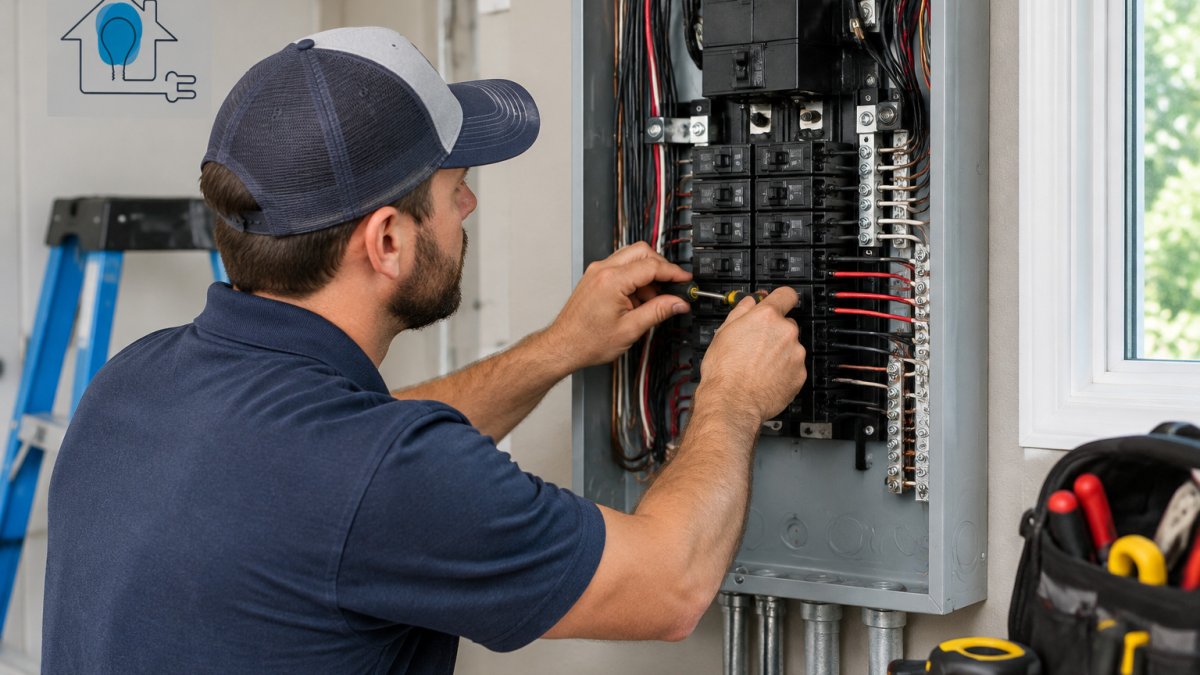
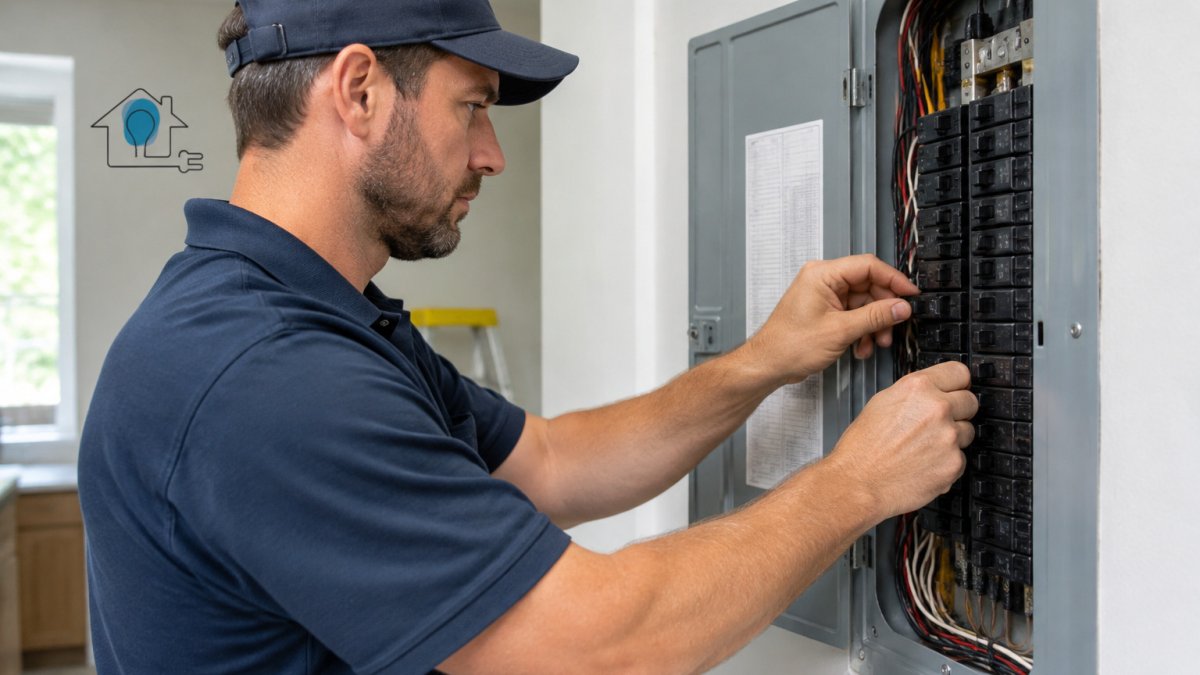
A licensed electrician performs a load calculation using the methodology in Article 220 of the National Electrical Code (NEC). The calculation adds up the general lighting and receptacle load, the small-appliance and laundry circuits, and the nameplate ratings of fixed appliances, then applies demand factors that account for the fact that not everything runs at once. The result is your service load in amps.
The three paths when your panel is tight
- Downsize the charger. A 32-amp or 24-amp Level 2 charger may fit within existing capacity and still refill most daily driving overnight. This is the lowest-cost path and often the smartest one.
- Add load management. A load-management device or energy-management system monitors total household draw and automatically reduces or pauses charger output when other large loads run. Load-management hardware can sometimes allow a charger to be installed without a service upgrade. Confirm with your local authority having jurisdiction, because acceptance varies.
- Upgrade the service. A service upgrade to 200 amps or 320/400 amps involves new service entrance conductors, a new panel, possibly a new meter base, coordination with the utility, permits, and inspection. It is the most expensive path and the one to choose only when the load calculation genuinely requires it or when you have other planned electrification (heat pump, induction range, second EV).
What to gather before you call an electrician
- The main breaker rating and panel bus rating (often printed inside the panel door)
- A photo of the panel with the cover off, if you are comfortable doing so safely
- The nameplate ratings of your largest appliances
Watch out: A panel that has physical space for a breaker is not the same as a panel with electrical capacity for the load. Breaker slots are not the test, the load calculation is.
If your panel is tight, you have options: a lower-amperage charger, load management, or a service upgrade. To assess your own setup first, read can my panel support an EV charger. If you have an older 100-amp panel, this guide answers can I add an EV charger to a 100 amp panel directly.
Hardwired vs. Plug-In EV Charger: Weighing the Tradeoffs
Hardwired chargers connect straight to the circuit and allow higher amperage, while plug-in chargers use a 240-volt outlet and are easier to move or replace. Neither is universally better; the right call depends on your power needs and plans.
| Factor | Hardwired | Plug-in |
|---|---|---|
| Max amperage | Higher | Limited by outlet |
| Installation | Electrician wires it in | Needs a 240-volt outlet |
| Portability | Fixed in place | Can unplug and move |
| Cost | Varies by circuit | Outlet adds a step |
| Best for | High-mileage drivers | Flexibility and renters |
Hardwiring suits drivers who want the fastest home charging and plan to stay put. Our complete guide to installing a Level 2 home EV charger covers both approaches step by step.
How to Pick the Best Level 2 EV Charger for Home Use
The best Level 2 EV charger for home use matches your vehicle's onboard charger, your panel's capacity, and your daily routine. Buying more amperage than your car can accept wastes money. But the decision does not stop at the spec sheet, the charger that costs the least to own over five years is often not the one with the highest amperage or the longest feature list.
Size the charger to your driving, not the catalog
Start with the energy you actually need to replace each day. As an illustration, a vehicle that uses about 0.3 kWh per mile and drives 40 miles a day needs roughly 12 kWh overnight.
Match the charger's output to what your car's onboard charger can accept. Many EVs cap Level 2 acceptance at 7.7 kW, 9.6 kW, or 11.5 kW.
Total cost of ownership: equipment, installation, and electricity
A realistic five-year view includes four cost buckets:
- Equipment: Level 2 chargers span a wide range of models and features. Higher price does not automatically mean faster charging.
- Installation: A short run from a panel with available capacity is the low end. Long conduit runs, trenching to a detached garage, or a service upgrade push the number up substantially. Get a written estimate that itemizes wire, conduit, breaker, labor, permit, and any panel work.
- Panel or service work: If a load calculation shows your panel is tight, add the cost of load-management hardware or a service upgrade to the project budget before you compare chargers.
A worked example using off-peak rates
Suppose you drive 12,000 miles a year at about 0.3 kWh per mile, roughly 3,600 kWh annually. Multiply that annual energy by your utility's residential rate, then compare it with the off-peak EV rate, if one is offered. The difference over several years shows how much scheduled charging could save, and whether that savings is meaningful compared with the price difference between charger models.
Features worth paying for, and features to skip
- Worth it: safety certification (look for a nationally recognized testing laboratory mark), a cable long enough to reach your parking spot without strain, weather resistance rated for outdoor installation if the unit lives outside, and scheduling and app control for off-peak charging.
- Situational: cellular connectivity if Wi-Fi does not reach the garage, RFID or access control for shared parking, and higher amperage if your vehicle can actually accept it.
- Skip unless you have a specific need: premium finishes, oversized displays, and amperage beyond what your vehicle or panel can support.
Watch out: Confirm the circuit requirement for any charger before you assume a plug-in installation will work.
Check these before buying:
- Amperage the charger delivers versus what your car accepts
- Safety certification and weather resistance for outdoor installation
- Cable length and connector compatibility with your vehicle
- Smart charging features and app control
A common mistake is buying the highest-amperage unit without checking the panel, the car, or the electricity rate. All three have limits, and the cheapest charger to own is the one sized correctly for your routine.
Plan the Installation Location, Cable Reach, and Permits
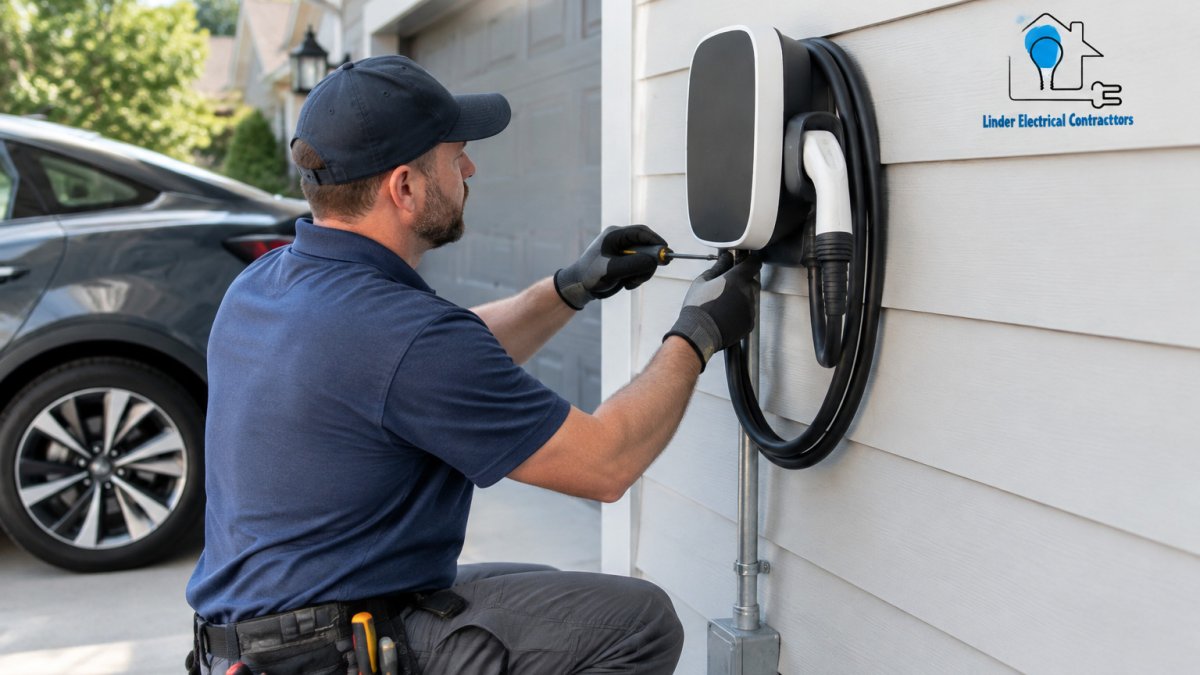
Mount the charger close to where you park, keep the cable reach in mind, and secure the right permits before any wiring begins. A little planning here prevents expensive rework.
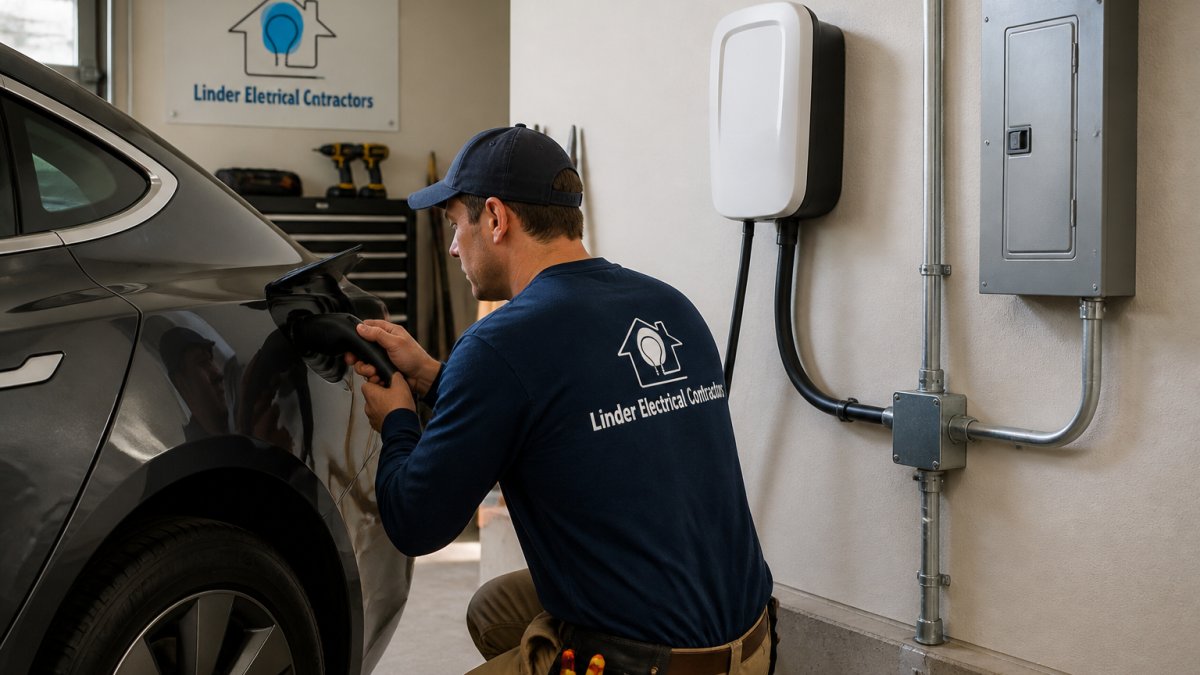
Measure the distance from the panel to the mounting spot. Longer runs mean more wire and higher cost. To understand the steps, read our electrical permit process guide.
Get a Free Estimate From Linder Electrical Contractors
Choosing a home EV charger comes down to your driving, your panel, and your parking setup. Get those three right and the rest is straightforward.
If you are unsure whether your panel can handle the load, or whether your installation is covered by insurance, start there. Our guide on whether EV charger installation is covered by insurance answers that before you commit.
At Linder Electrical Contractors, we are licensed and insured, offer free written estimates, and provide 24/7 emergency service. We handle the full job, including permits and inspections, so you get safe, reliable work and peace of mind. Get started with Linder Electrical Contractors and charge at home with confidence.
Frequently Asked Questions
How do I check whether my electrical panel can support a Level 2 charger?
A licensed electrician performs a load calculation that totals your home's existing electrical demand and compares it to your panel's rated capacity. Many older homes have 100-amp service, and adding a 40-amp or 50-amp EV circuit may exceed that limit. The electrician inspects the panel, available breaker spaces, and wiring, then tells you whether you can add the circuit as-is, need a panel upgrade, or can use load management to share capacity.
Do I need a Level 1 or Level 2 charger at home?
Level 1 charging uses a standard 120-volt outlet and adds only a few miles of range per hour, which suits low-mileage drivers or plug-in hybrids. Level 2 charging on a 240-volt dedicated circuit adds far more range overnight and fits most daily commutes and larger battery packs. If you drive more than about 40 miles a day or want to recharge quickly between trips, Level 2 home charging is usually the practical choice.
Should I choose a hardwired or plug-in home EV charger?
A hardwired charger connects directly to a dedicated circuit and supports higher amperage, which means faster charging and a cleaner installation. A plug-in charger uses a NEMA outlet, so you can unplug it or take it with you when you move, but it is typically capped at lower amperage. Hardwiring is common for permanent outdoor installations, while plug-in models suit renters or anyone who may relocate the unit.
How much does it cost to install a Level 2 EV charger at home?
Installation pricing depends on your panel capacity, the distance from the panel to the charger location, whether the run is indoor or outdoor, and whether a permit or panel upgrade is required. A straightforward install near the panel costs far less than one that needs a service upgrade or a long conduit run. Linder Electrical Contractors provides free written estimates that cover the full scope, including permits and inspections, so you know the total before work begins.
The real challenge is not picking a charger; it is knowing what your home can safely support. That is where a professional assessment saves you from costly mistakes. Linder Electrical Contractors brings licensed and insured workmanship, free written estimates, and full permit and inspection handling to every job. Get started with Linder Electrical Contractors and get the right charger for your home.