 blog
Is a Whole-Home Generator Worth It for Your House?
Last Updated: November 4, 2026
Quick Summary
A whole-home generator is worth it if you lose power several times a year or need medical equipment running, since it starts automatically and powers your whole home. If outages are rare and short, the case rests on convenience or property protection rather than payback.
- Equipment is only part of the bill; labor, wiring, gas work, permits, and a concrete pad make up the rest.
- Every standby generator installation needs an electrical permit and inspection, and your utility must approve the connection.
- Natural gas is the most convenient fuel because it comes from your existing utility line and never runs out during a local outage.
- An oversized unit costs more and burns more fuel, while an undersized unit trips breakers when your air conditioner kicks on.
- Most manufacturers require documented maintenance and professional installation by a licensed contractor to protect your warranty.
Table of Contents
- The Real Cost of a Whole-Home Generator Installation
- What a Backup Generator for Home Cost Actually Includes
- Whole-Home vs. Portable Home Generator: Which Fits Your Needs?
- Fuel Types and Automatic Transfer Switch Functionality
- Sizing a Generator for Your Home and Critical Circuits
- Whole-Home Generator Maintenance and Long-Term Reliability
- Insurance, Warranty, and Smart Home Integration Considerations
- Getting a Free Estimate for Your Backup Power Plan
- Frequently Asked Questions
The Real Cost of a Whole-Home Generator Installation
If you are weighing whether a whole-home generator is worth it, start with the installed cost, not the sticker price. Equipment is only part of the bill; the rest goes to labor, wiring, gas work, permits, and the concrete pad.
A whole-home generator is a permanently installed standby system that runs on natural gas or propane and starts automatically during an outage. It connects directly to your electrical panel through a transfer switch.
Equipment and Labor Breakdown
The unit itself is the easy part to price. What varies is everything around it:
- Generator and enclosure: sized to your home's load
- Automatic transfer switch: isolates your home from the grid safely
- Electrical labor: conduit, panel wiring, transfer switch connection
Homes with an older electrical panel may need an upgrade before a generator can be connected. That is a separate project with its own cost.
Permits, Inspections, and Utility Coordination
Every standby generator installation needs an electrical permit and inspection. Local jurisdictions may also require a gas permit, and your utility must approve the connection before energizing.
Permits and inspections can be handled as part of the job. If you want to understand what that process looks like before you commit, our guide to the electrical permit process for homeowners walks through each step.
What a Backup Generator for Home Cost Actually Includes
The true backup generator for home cost is a bundle, not a single line item. Ask any contractor for a written estimate and check that it covers these items:
- Generator and transfer switch equipment
- Electrical labor and materials
- Gas line or propane tank installation
- Permit fees and inspection scheduling
- Startup, testing, and owner walkthrough
Pricing depends on unit size, distance to your panel and gas meter, and whether your panel needs work. Contact us for a free written estimate.
What Drives the Number Up or Down
The variables that move the price most are:
- Unit size. A larger kilowatt rating means a larger engine, transfer switch, and gas capacity; moving up a size class is not a linear cost increase.
- Distance runs. Every extra foot of conduit between the generator, panel, and gas meter is labor and material.
- Gas capacity. A line sized for a furnace and water heater may not carry a generator at full load; upsizing the meter or service line is a real line item.
A Payback Framework You Can Run Yourself
Most articles stop at the upfront price. The better question is what the system costs per year of protection, and whether that beats the alternatives. You can estimate it without a spreadsheet:
- Count your outages. Pull three years of outage events from your utility's reliability reports. Note average duration, not just count.
- Put a cost on each hour without power. Spoiled food, a sump pump that cannot run, a well pump that leaves you without water, hotel nights, lost work time. Use your own numbers.
- Add the carrying cost. Annual maintenance, fuel, and any extended warranty. Divide the installed price by an expected service life for an annualized equipment cost.
- Compare to the portable alternative. A portable unit plus transfer switch, fuel storage, and setup time is the real benchmark, not zero.
If the annualized cost is in the same range as the losses you would absorb in a bad year, the system is defensible on economics alone. If outages are rare and short, the case rests on convenience, medical need, or property protection rather than payback.
Where the Money Actually Goes
That is why two quotes for the "same" generator can differ by thousands: one prices the full scope, the other prices the box.
U.S. Department of Energy guidance on home backup power
Whole-Home vs. Portable Home Generator: Which Fits Your Needs?
A portable home generator costs far less and can move between properties. A whole-home system costs more but runs your lights, heat, refrigerator, and well pump without you lifting a finger.
| Factor | Whole-Home Generator | Portable Generator |
|---|---|---|
| Startup | Automatic | Manual, you set it up |
| Fuel | Natural gas or propane | Gasoline or propane |
| Powers | Entire home or selected circuits | Selected appliances via cords |
| Installation | Professional, permitted | None |
| Weather exposure | Runs in rain and snow | Needs shelter from weather |
| Best for | Frequent outages, medical needs | Occasional short outages |
Portable units have real limits: you cannot run one in an enclosed space because of carbon monoxide risk, and you cannot safely operate one in heavy rain without protection. For the safety side, read our breakdown of running a generator in the rain safely.
For homeowners who lose power several times a year, or who need medical equipment running, the automatic whole-home system usually earns its cost.
Fuel Types and Automatic Transfer Switch Functionality
Natural gas is the most convenient fuel because it comes from your existing utility line and never runs out during a local outage.
The automatic transfer switch makes a standby system "automatic." It monitors the utility line, senses a grid failure, and switches your home to generator power within seconds.
Two details matter. The transfer switch must be sized to your service, not just your generator. And local code may require load management so the generator does not run everything at once.
Sizing a Generator for Your Home and Critical Circuits
Generator size is measured in kilowatt capacity, and bigger is not automatically better. An oversized unit costs more, burns more fuel, and can run inefficiently. An undersized unit trips breakers the moment your air conditioner kicks on.
Start by listing what you need during an outage:
- Heating or cooling equipment
- Refrigerator and freezer
- Well pump or sump pump
Wattage requirements, including surge draw from motors at startup, should be calculated before selecting a unit. Homes with older 100-amp service raise a separate question, and our article on installing a generator on 100-amp service explains what your panel can support before you buy anything.
Whole-Home Generator Maintenance and Long-Term Reliability
A standby generator is a small engine, and like any engine it needs regular attention.
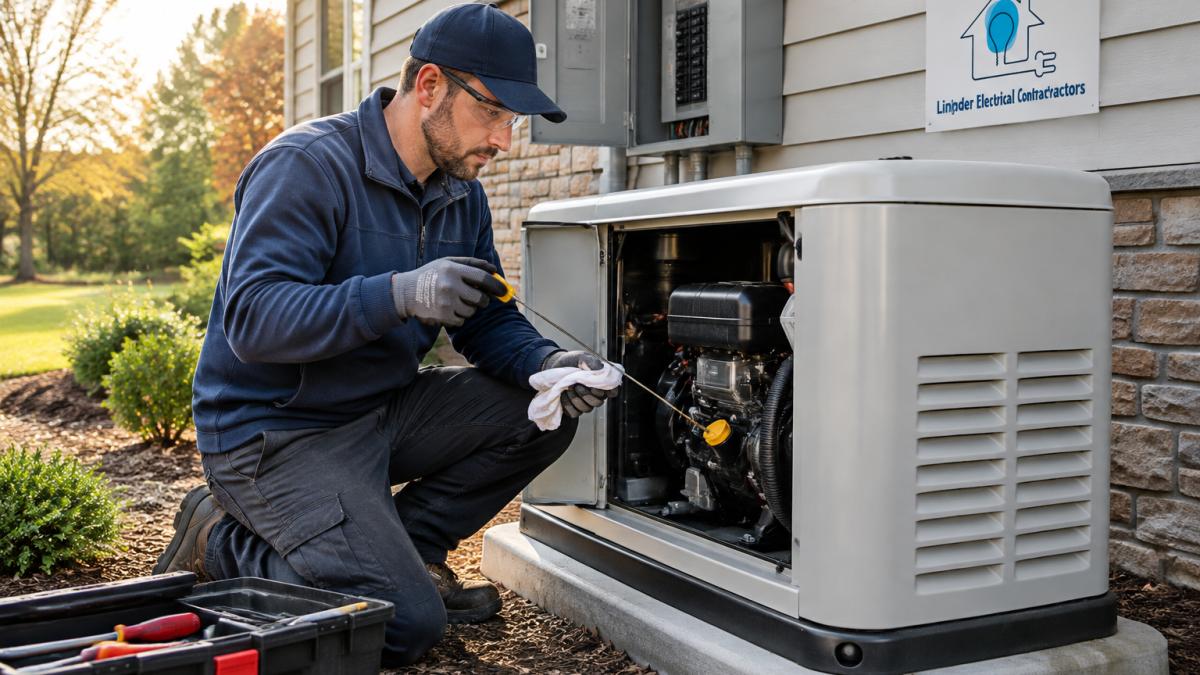
Most modern units run an automatic cycling routine once a week, keeping the engine lubricated and confirming readiness.
Skipping maintenance is the most common cause of a generator that fails exactly when you need it, and most manufacturers require documented service to protect your warranty.
If your home is older, long-term reliability starts at the panel. Our guide to the signs you need an electrical panel upgrade helps you spot the warning signs before they become a generator problem.
Insurance, Warranty, and Smart Home Integration Considerations
Three things most buyers do not think about until after the install, and where the details matter more than the headlines:
How a Standby Generator Affects Your Homeowners Policy
A permanently installed standby generator is usually treated as attached equipment, similar to a built-in appliance, rather than personal property. That distinction matters at claim time: if the unit is not scheduled or listed on your policy, a covered loss such as fire or storm damage may be settled under a lower personal-property sublimit instead of dwelling coverage.
The practical steps are simple:
- Tell your agent before the install, not after. Ask whether the unit needs to be scheduled or endorsed onto dwelling coverage, and get the answer in writing.
- Confirm what perils are covered. Wind, hail, fire, and theft are commonly covered; mechanical breakdown and wear are not. Some carriers offer equipment breakdown coverage as an add-on.
- Ask about the deductible interaction. A generator claim is subject to your deductible, so a small repair may not be worth filing.
Watch out: do not assume the contractor's insurance covers the equipment after handoff. Once the system is installed and accepted, it is your property and your policy's responsibility.
What Manufacturer Warranties Actually Require
Standby generator warranties are typically tiered: a shorter comprehensive period covering parts and labor, then a longer period covering major components such as the engine and alternator, and sometimes a separate corrosion or enclosure warranty. The headline length is not the whole story.
The conditions that void or limit coverage are where homeowners get surprised:
- Professional installation by a licensed contractor. An unpermitted or DIY install is the most common reason a claim is denied.
- Documented maintenance. Most manufacturers require service at specified intervals; a folder of service invoices is your proof.
- Approved fuel and site conditions. Improper gas sizing, a missing pad, or installation below clearance requirements can be cited for denial.
Smart Home Integration: What It Actually Does
Some standby generators include a monitoring module that connects to a manufacturer app. The useful functions are narrower than the marketing suggests, but genuinely valuable:
- Run status and exercise logs. Confirm the weekly self-test actually ran instead of guessing from the sound.
- Fault and service alerts. A low battery or failed test shows up on your phone before a storm, not during one.
- Fuel and runtime visibility. On propane, see consumption and plan a refill before a long outage drains the tank.
What the app generally does not do is control your home's circuits.
Integration with broader smart-home platforms varies by manufacturer and is often limited to status and alerts rather than full control.
Noise is the other factor neighbors notice. Modern standby units run quieter than older models, but placement still matters. Placement near windows and property lines is worth discussing before installation.
Getting a Free Estimate for Your Backup Power Plan
The fastest way to know whether a whole-home generator is worth it for your house is a site visit. A site visit can review your panel, gas service, and load, followed by a written estimate.
We are licensed and insured, and we offer free written estimates. If you are still choosing a contractor, our guide on finding a reliable local electrician covers the questions worth asking.
Frequently Asked Questions
What are the disadvantages of a whole-house generator?
The main drawbacks are upfront cost, ongoing maintenance, and fuel dependency. A whole-home generator requires professional installation, an automatic transfer switch, and a stable fuel source like natural gas or propane. You will also need a maintenance schedule with annual servicing to prevent engine wear. Noise decibels vary by model, and placement must follow local permit requirements and carbon monoxide safety clearances. For some homeowners, a portable home generator may be enough if they only need to power a few critical circuits during a blackout.
Is a whole-house generator a tax write-off?
Tax treatment depends on individual circumstances. Tax rules can change, and exceptions may apply if the generator is required for a home-based business or medical necessity. Consult a qualified tax professional about your specific situation before assuming any deduction. The cost is typically treated as a home improvement rather than a deductible expense.
How often should a whole-home generator be serviced?
Many manufacturers recommend periodic professional servicing and regular automatic cycling to keep the engine and battery in working order. Whole-home generator maintenance includes oil and filter changes, spark plug inspection, battery testing, and a load test to confirm voltage regulation. Skipping service shortens run time reliability and can void your warranty. A preventative maintenance schedule is the best way to ensure the unit starts during a power outage or grid failure.
How does a whole-home generator compare with a portable generator?
A whole-home generator is permanently installed, runs on natural gas or propane, and starts automatically through an automatic transfer switch when the utility provider loses power. A portable home generator costs less upfront but requires manual setup, extension cords, and fuel storage, and it cannot power an entire electrical panel. Whole-home units handle large loads like HVAC and well pumps, while portables are best for a few critical circuits. The right choice depends on your outage frequency and wattage requirements.
Losing power once is inconvenient. Losing it every storm season is a decision point. Linder Electrical Contractors can size the right system for your home, manage the permits and inspections, and keep it running with a maintenance plan. Get started with Linder Electrical Contractors and get a free written estimate for your backup power plan.