 how-to
Troubleshooting Dead Outlets in Older Walls
Table of Contents
- Why Dead Outlets Happen in Older Walls
- Step 1: Test the Plugged-In Device First
- Step 2: Check Nearby Outlets and Wall Switches
- Step 3: Inspect Your Electrical Panel for a Tripped Circuit Breaker
- Step 4: Find and Reset Related GFCI Outlets
- Electrical Outlet Safety Warning Signs You Cannot Ignore
- Dead Outlet No Tripped Breaker: When an Upstream Connection Fails
- When to Call an Electrician for a Dead Outlet
- Frequently Asked Questions
Last Updated: October 10, 2026
Why Dead Outlets Happen in Older Walls
A dead outlet in an older wall often signals one of several common electrical issues. The most frequent culprits are tripped circuit breakers, blown fuses, faulty outlets, or failed GFCI protection devices.
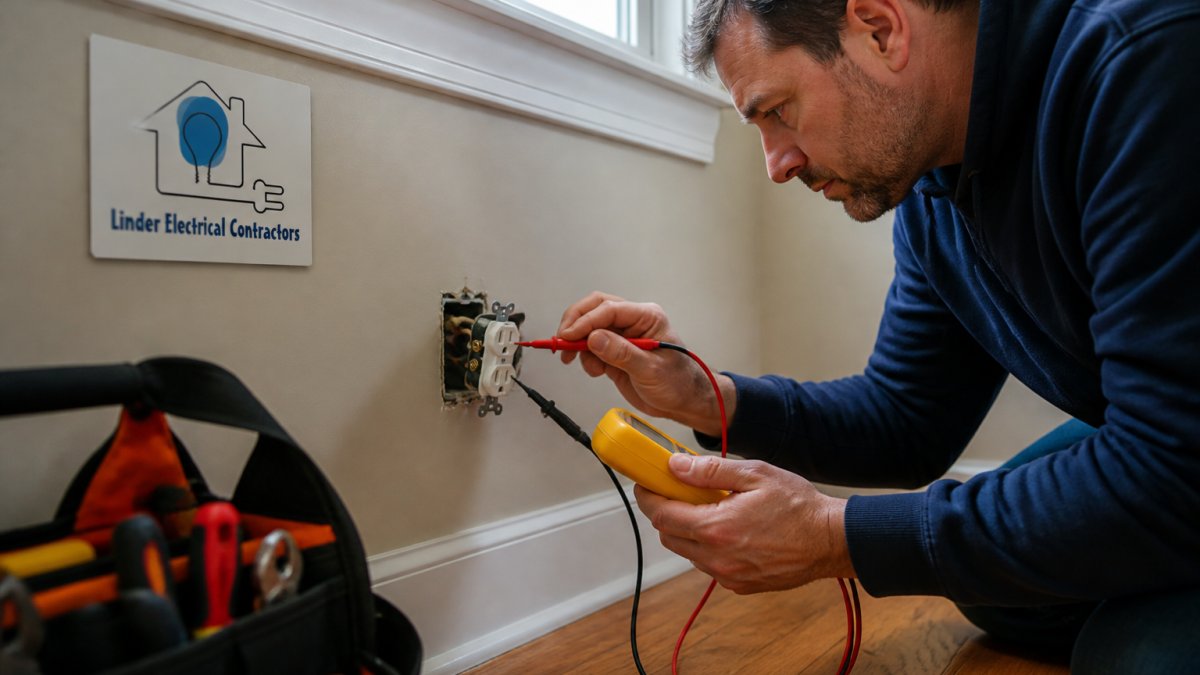
Understanding why dead outlets happen is the first step toward safe troubleshooting. Troubleshooting dead outlets in older walls requires patience and a systematic approach. At Linder Electrical Contractors, we inspect your panel, test your circuits, and identify whether the problem is a simple reset or a deeper wiring issue.
Older wiring presents unique challenges. Many homes built in the 1950s and earlier used aluminum wiring or cloth-wrapped copper wire. These materials can corrode or degrade over time. The insulation breaks down, connections loosen, and the outlet contacts inside the receptacle wear out.
Another common reason outlets fail in older walls is that they may be on the same circuit as other high-draw devices. When you plug in a space heater or air conditioning unit, the circuit overloads. The breaker trips or the fuse blows to protect your wiring from overheating. The outlet appears dead, but the real problem is circuit overload.
Step 1: Test the Plugged-In Device First
Before you assume the outlet is dead, test whether the problem is actually the device you plugged in. A faulty lamp, phone charger, or appliance will look exactly like a dead outlet to an untrained eye.
Plug a device you know works into the outlet. Use something simple like a table lamp or a phone charger. If the device powers on, your outlet is fine. The original device may have a burned-out bulb, a broken cord, or internal damage.
If the test device doesn't work either, move on to the next step. You've confirmed the outlet itself is the problem. Write down which outlet is dead so you can track it through the rest of your troubleshooting.
Step 2: Check Nearby Outlets and Wall Switches
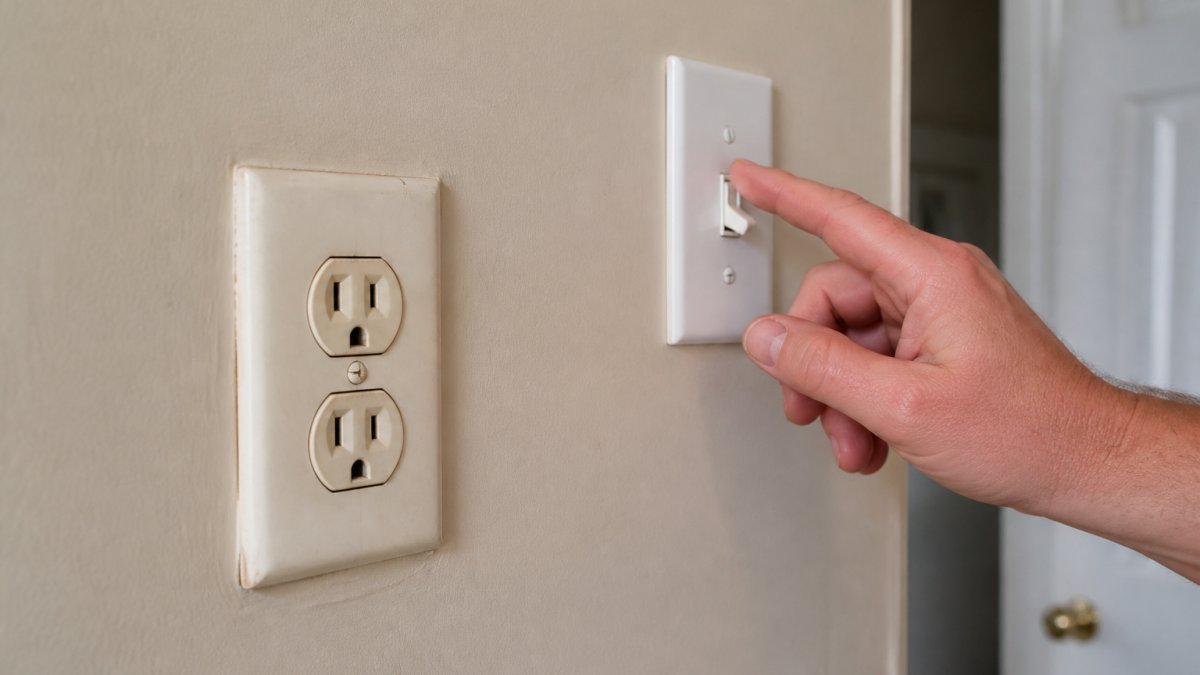
Dead outlets often affect multiple outlets on the same circuit. Check the outlets and switches near the dead one. Flip light switches on and off. Plug a test device into nearby outlets.
Many older homes have outlets wired in series along the same circuit. If one outlet fails due to a loose connection upstream, outlets downstream may also go dead.
Look for wall switches that may control the outlet. Some outlets are controlled by switches, especially in bedrooms and living rooms. Flip every switch near the dead outlet. If a switch controls it, the outlet will power on when you flip the switch.
Inspect the outlets themselves for visible damage. Look for scorch marks, discoloration, or burn marks around the outlet face. Older outlets may show signs of arcing or heat damage. These are warning signs that the outlet has failed and needs replacement.
Step 3: Inspect Your Electrical Panel for a Tripped Circuit Breaker
Your electrical panel is the control center for your home's circuits. If a circuit overloads, the breaker trips automatically to prevent a fire. A tripped breaker cuts power to all outlets on that circuit.
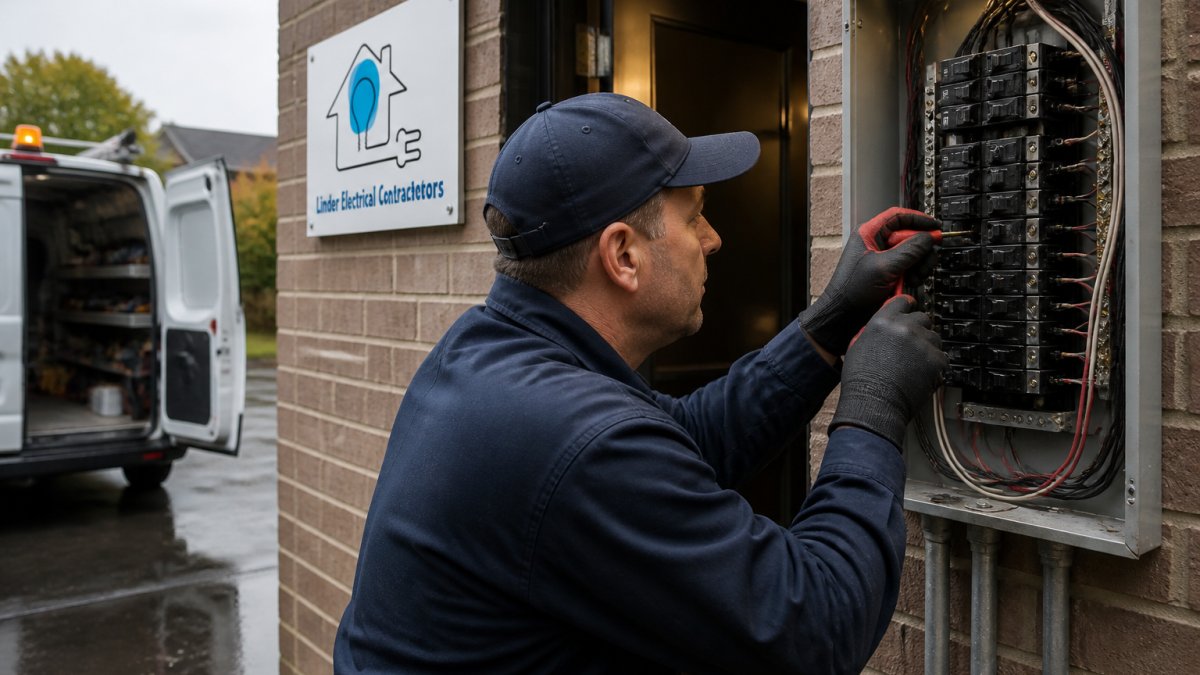
Locate your electrical panel. It's usually in the basement, garage, or utility closet. Open the panel door. Look at the row of breakers inside. Each breaker controls one circuit.
Find the breaker that serves the dead outlet. This requires knowing your home's circuit map. If your panel is labeled, find the breaker labeled for that room or outlet.
Look for a breaker in the middle position. A tripped breaker sits between fully ON and fully OFF. It's your signal that the circuit overloaded. Flip the breaker all the way OFF, then flip it back ON.
Power should return to the outlet. If the breaker trips again immediately, the circuit has a serious fault. Stop troubleshooting and call an electrician.
Reset a Blown Fuse in Older Homes
Older homes built before the 1960s often have fuse boxes instead of circuit breakers. If your home has a fuse box, the troubleshooting process is slightly different.
Open your fuse box. Look for a fuse that appears burned or blackened. A blown fuse has a broken filament inside. You can often see the damage through the glass top of the fuse.
Turn off the main disconnect switch before you remove any fuse. This protects you from electrical shock. Unscrew the blown fuse from its socket. Screw in a new fuse of the same amperage. Never use a higher-amperage fuse than the original. Using a fuse that's too large defeats the safety purpose and creates a fire hazard.
If the new fuse blows immediately, the circuit has a fault. Stop and call an electrician. Repeatedly blown fuses mean there's a serious wiring problem that requires professional repair.
Step 4: Find and Reset Related GFCI Outlets
GFCI outlets are ground fault circuit interrupter devices designed to protect you from electrical shock. They're common in kitchens, bathrooms, and outdoor areas. A GFCI outlet has two buttons on its face: a TEST button and a RESET button.
When a GFCI detects a ground fault, it trips and cuts power. It also cuts power to any regular outlets downstream on the same circuit. This is why a dead outlet may actually be caused by a tripped GFCI somewhere else on the circuit.
Walk through your home and look for GFCI outlets. Check the kitchen, bathrooms, garage, and any outdoor outlets. Look for outlets with TEST and RESET buttons on the face.
Press the RESET button on any GFCI outlet you find. Hold it for a second. You should hear a click. If the button pops back out, the GFCI was tripped. Resetting it should restore power to the dead outlet.
If you don't find a tripped GFCI, the dead outlet may be controlled by a GFCI breaker in your electrical panel. These look like regular breakers but have TEST and RESET buttons on them. Look for a breaker with these buttons.
Electrical Outlet Safety Warning Signs You Cannot Ignore
Certain signs mean you should stop troubleshooting immediately and call a professional electrician. These warning signs indicate a serious electrical fault that poses fire or electrocution risks.
Scorch marks or burn marks around the outlet. Black, brown, or charred discoloration means the outlet has overheated. This indicates arcing or a short circuit inside the outlet.
A burning smell near the outlet or electrical panel. This smell indicates overheating wiring or a failing component. Turn off the breaker that serves that outlet immediately.
Sparks when you plug in a device. Sparks mean there's an arc inside the outlet. This is a fire hazard. Do not use the outlet.
Tingling or shock when you touch the outlet. This means there's a fault in the grounding system. You could receive a serious electrical shock. Do not touch the outlet.
Flickering lights throughout the home. This often signals a loose connection at the main service or a failing breaker. It can indicate a serious wiring problem in older homes.
Outlets that are warm to the touch. An outlet should never feel warm. Heat means excessive current is flowing through the outlet. This is a fire hazard.
Dead Outlet No Tripped Breaker: When an Upstream Connection Fails
Sometimes you'll find a dead outlet with no tripped breaker and no blown fuse. The breaker is ON, the fuse is good, but power still doesn't reach the outlet. This usually means there's a problem upstream.
In older wiring systems, outlets are often wired in series. Power flows from the panel to the first outlet, then to the second outlet, then to the third, and so on.
A loose connection inside the first outlet can cut power to every outlet that follows it on the circuit. Corrosion on the wire terminals can prevent current from flowing.
To identify an upstream problem, check which outlets are dead. If outlets in a line are all dead but outlets on other parts of the circuit work fine, you likely have an upstream connection failure.
Tracing the circuit in an older home with finished walls is difficult without professional tools. You cannot see the wiring inside the walls.
This is one of the most common situations where homeowners should call a professional. Older wiring requires careful inspection to locate hidden faults safely.
When to Call an Electrician for a Dead Outlet
You've tested the device, checked nearby outlets and switches, reset your breaker or fuse, and looked for tripped GFCI outlets. The outlet is still dead. At this point, you've done the basic troubleshooting that's safe for a homeowner.
Call an electrician if:
- The breaker trips repeatedly after you reset it
- The fuse blows again immediately after replacement
- You see scorch marks, burn marks, or discoloration around the outlet
- You smell burning near the outlet or panel
- You see sparks when plugging in a device
- The outlet feels warm to the touch
- You find no obvious cause after checking breakers, fuses, and GFCI outlets
- Multiple outlets on the same circuit are dead with no tripped breaker
Older homes often have wiring issues that require professional diagnosis. Loose connections, corroded terminals, and deteriorated insulation aren't always visible. An electrician has tools and training to locate these faults safely.
At Linder Electrical Contractors, we handle dead outlet troubleshooting for homeowners throughout the area. We inspect your panel, test your circuits, and identify whether the problem is a simple reset or a deeper wiring issue. We pull permits and follow all electrical codes when repairs are needed. Our goal is to restore safe, reliable power to your home.
A dead outlet in an older wall often points to a tripped breaker, blown fuse, or failed GFCI device. Start with simple checks: test your device, inspect nearby outlets and switches, and reset your breaker or fuse. If these steps don't restore power, the outlet may have a loose connection or internal corrosion that requires professional repair.
Frequently Asked Questions
Why is my outlet dead even though the circuit breaker isn't tripped?
A dead outlet with no tripped breaker often means the problem lies upstream, at an outlet or connection earlier in the circuit, or at a GFCI outlet controlling that receptacle. Test nearby outlets and look for a GFCI reset button. If you find no obvious upstream issue, the receptacle itself may have loose internal contacts, corrosion, or a failed component. This is when you should call a licensed electrician to inspect the wiring and internal contacts safely.
Can a GFCI outlet make other outlets stop working?
Yes. GFCI outlets are designed to protect downstream outlets on the same circuit. If a GFCI outlet trips, it cuts power to all receptacles connected after it. Check nearby outlets for a GFCI reset button, you may find one in a bathroom, kitchen, or garage. Press the reset button. If the dead outlet is on the load side of a tripped GFCI, resetting it will restore power to the entire group.
What safety warning signs mean I should stop troubleshooting and call an electrician?
Stop immediately if you see scorching or burn marks around the outlet, smell burning plastic or electrical odors, notice the outlet is hot to the touch, see exposed wiring or damaged insulation, or find corrosion inside the outlet box. Older wiring may use outdated or unsafe materials. Do not attempt to repair these issues yourself. Call a licensed electrician, these are signs of serious electrical faults that can cause fires or shock hazards.
How do I know if I should replace an old receptacle or call a professional?
If the outlet is simply not receiving power and you've confirmed the circuit breaker and GFCI are not the issue, a replacement receptacle may solve it. However, in older walls, the problem may involve loose connections, corroded wiring, or outdated wiring types that require professional diagnosis. If you are unsure, call a licensed electrician. They can test the outlet safely, identify whether the fault is in the receptacle or the circuit itself, and ensure any replacement meets current code.