 how-to
Emergency Electrical Services in Blue Bell: What You Need to Know
Table of Contents
- What Counts as an Electrical Emergency
- 24/7 Emergency Electrical Services: Response and Availability
- Electrical Emergency Warning Signs in Residential and Commercial Settings
- How to Hire an Electrician for Emergency Repairs
- Understanding Emergency Electrician Cost and Pricing Factors
- Electrical Safety Inspection: Prevention and Peace of Mind
- What to Do While Waiting for Emergency Service
- Frequently Asked Questions
Last Updated: October 6, 2026
What Counts as an Electrical Emergency
An electrical emergency is any situation where faulty wiring, power loss, or electrical failure poses an immediate risk to safety or property. Not every problem requires a late-night call, emergency response times differ from routine repairs.
Signs You Need Immediate Help
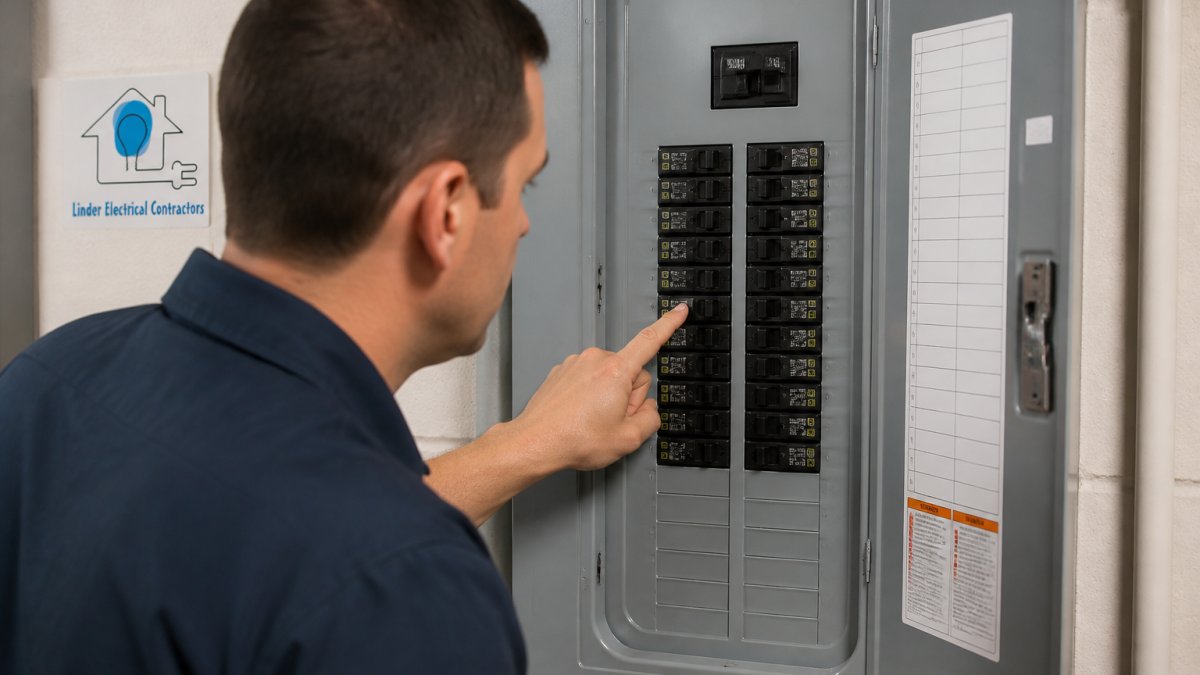
Certain warning signs demand urgent attention. Sparking outlets, burning smells, or scorch marks indicate active hazards. Flickering lights throughout the house, complete power loss, or a breaker that trips repeatedly suggest dangerous faults in your wiring or panel.
At Linder Electrical Contractors, we help homeowners and business owners recognize which situations cannot wait. A single dead outlet can hold until business hours. A burning smell in your walls cannot.
Safety Steps Before the Electrician Arrives
Your first priority is preventing injury or fire. If you smell burning or see sparks, turn off power to that circuit at the breaker panel if safe. Do not attempt repairs yourself.
For whole-home power loss, check whether your neighbors have power. If they do, the issue is isolated to your panel or service line; if not, contact your utility company.
24/7 Emergency Electrical Services: Response and Availability
Emergency electrical services in Blue Bell operate around the clock for urgent situations that cannot wait for business hours. The best providers maintain rapid response times.
When you call for emergency electrical service, describe the problem clearly so the dispatcher can assess urgency and send the right technician with appropriate tools and parts.
The decision to call hinges on safety and impact. A flickering light is inconvenient.
Electrical Emergency Warning Signs in Residential and Commercial Settings
Warning signs differ between residential homes and commercial or multi-unit properties, though the hazards overlap.
Residential Warning Signs
Home electrical emergencies often announce themselves through sensory cues. Burning smells near outlets, switches, or the panel indicate overheating components or insulation failure.
Breakers that trip repeatedly reveal circuit overloads or short circuits. A single trip might mean too many devices on one circuit, but repeated trips after unplugging everything suggest a dangerous fault. Flickering that worsens during high-demand periods points to inadequate service capacity, while random flickering suggests loose connections or failing panel components.
Loss of power to one room typically means a tripped breaker or failed outlet. Loss of all power, after confirming the utility hasn't had an outage, points to a main panel failure or service line problem requiring immediate professional attention.
Commercial and Property Manager Concerns
Commercial properties face additional complexity. Multi-tenant buildings depend on reliable power for tenants, security systems, HVAC, and elevators.
Code violations found during inspections, or tenant complaints about inadequate outlets or flickering lights, create safety and legal exposure.
Property managers should establish relationships with reliable emergency electrician providers before a crisis hits, eliminating decision-making delays when tenants report hazards.
How to Hire an Electrician for Emergency Repairs
Choosing the right electrician during an emergency requires quick judgment about credentials, reliability, and trustworthiness. You cannot spend hours researching at 2 a.m., but you also cannot hire an unqualified or uninsured technician.
Vetting Credentials and Insurance
Every electrician you hire must hold a valid license from the state or local jurisdiction where they work, in Pennsylvania, through the Department of Labor & Industry. Ask for proof of licensure before work begins.
Linder Electrical Contractors maintains full licensing and insurance, shielding you from legal and financial exposure. When you call any emergency electrician service, request proof of both credentials before committing, legitimate providers expect the question.
What to Ask Before You Commit
Ask about pricing structure upfront. Many emergency services charge a service call fee plus hourly labor, with materials added separately, understanding this breakdown prevents bill shock.
Inquire about response time guarantees, if they promise 30-minute response, confirm it applies to your area.
Finally, ask what happens if the repair requires parts they don't have on hand, will they return the next day, or source components quickly? For true emergencies, same-day completion is critical.
Understanding Emergency Electrician Cost and Pricing Factors
Emergency electrical work costs more than the same repair during business hours, and the reason is structural: after-hours dispatch means technician overtime, pulling a crew off standby, and running a truck when the shop would otherwise be closed. Expect that premium before you call.
The Three Line Items on Almost Every Emergency Bill
Most emergency electrical invoices break down into three parts:
- Service call or dispatch fee. A flat charge for rolling a truck to your address, typically quoted when you call. This fee usually applies whether or not the technician performs a repair.
- Labor. Billed hourly or in fixed blocks, with a higher rate for nights, weekends, and holidays than for standard business hours.
- Materials. Breakers, outlets, switches, wire, and connectors are billed at a markup over the technician's cost. Simple parts are cheap; a replacement breaker for an older panel can be surprisingly expensive because the part may be discontinued.
Ask the dispatcher to confirm all three before you authorize a visit.
What Actually Moves the Number Up or Down
A handful of variables separate a modest emergency bill from a large one:
- Diagnosis difficulty. A tripped breaker that resets cleanly is a short visit. An intermittent fault that only appears under load can take an hour or more to isolate.
- Access. A panel in a finished basement behind stored boxes takes longer to reach than one in an open garage.
- Parts availability. If the technician carries the breaker or outlet on the truck, the repair finishes same-day. If the part must be sourced, you may pay a return-trip charge or wait for a supply house to open.
- Permit and inspection requirements. Panel replacements and service upgrades generally require a permit and an inspection, which adds cost and a second visit. A simple outlet swap usually does not.
- Time of day. A 2 a.m. call on a holiday sits at the top of the rate scale. The same repair at 7 p.m. on a Tuesday is cheaper.
How to Get a Real Number Before Work Starts
Ask two questions when you call: what is the dispatch fee, and will the technician provide a written estimate after diagnosis but before starting the repair. Reputable providers diagnose first, present a price, and wait for approval.
Be cautious with any provider who quotes a firm total over the phone before seeing the problem. Electrical faults hide behind drywall, and a phone quote is either a guess or a sales tactic.
What You Can Reasonably Expect to Pay
Exact figures vary by provider, time of day, and scope, so treat any single number with suspicion. What you can control is the process: get the dispatch fee in writing, insist on a written estimate after diagnosis, ask whether the fee is credited toward the repair, and confirm whether the price includes any required permit. Linder Electrical Contractors offers free written estimates and manages the entire process including permits and inspections.
Check current licensing and complaint history for electrical contractors
Electrical Safety Inspection: Prevention and Peace of Mind
Regular electrical safety inspections catch problems before they become emergencies. Inspections are especially valuable for older homes, properties with recurring breaker trips or flickering lights, or buildings that have undergone renovations.
What Happens During an Inspection
A thorough inspection covers the main panel, branch circuits, outlets, switches, grounding, and bonding. The electrician looks for code violations, overheating, loose connections, outdated components, and capacity issues, tests outlets for grounding and polarity, and verifies breakers are properly sized.
For homes planning major additions or upgrades, like an EV charger or backup generator, an inspection reveals whether your service can support the new load or a panel upgrade is necessary, preventing expensive surprises mid-project.
Post-Repair Follow-Up and Long-Term Reliability
After emergency repairs, ask the electrician what caused the problem and how to prevent recurrence. If a breaker tripped from an overloaded circuit, you know to redistribute loads; if a component failed from age or defect, you understand the risk to similar components.
Request documentation of the work performed, including what was replaced or repaired, the parts used, and any code violations discovered. This record is valuable for future electricians, insurance claims, and home resale.
What to Do While Waiting for Emergency Service
The minutes between your call and the technician's arrival are when most preventable injuries happen. What you do, and refuse to do, during that window matters more than anything the electrician does on arrival.
A Symptom-by-Symptom Action Guide
You see sparks or arcing. Do not touch the device.
Your main breaker trips and will not reset. Do not hold the breaker on or tape it down.
You have lost power to the whole home. Check whether your neighbors still have power.
Water is touching or near electrical equipment. Do not enter standing water near outlets, appliances, or a panel.
One room or one outlet is dead. This is usually not an emergency.
Information to Gather Before the Technician Arrives
A technician who arrives with context diagnoses faster. While you wait, note or photograph:
- When the problem started and what you were doing at the time.
- Whether the issue affects one outlet, one room, one floor, or the whole home.
- Any sounds (buzzing, popping, humming) or smells you noticed.
- Whether any breaker has tripped, and which one.
- Whether the problem is intermittent or constant.
Photograph anything visibly damaged, scorch marks, melted outlet covers, water intrusion, before the technician touches it. Those photos support an insurance claim and record the original condition.
What Not to Do
Do not open the panel and start moving breakers to "see what happens." Do not re-plug a device into an outlet that sparked, or use extension cords to route power around a dead circuit. Do not backfeed a generator into a household outlet, that practice can electrocute utility workers and is illegal in most jurisdictions. If you need temporary power, have a licensed electrician install a transfer switch.
When to Call 911 Instead of an Electrician
Call 911 first, not the electrician, if you see active flames, smell smoke you cannot trace, see a downed power line, or witness someone being shocked. An electrician cannot respond to a fire, and a downed line is a utility and emergency-services matter. Once the danger is handled, call the electrician to assess and repair the damage.
Frequently Asked Questions
What would be considered an electrical emergency?
An electrical emergency includes sparking outlets, burning smells from the panel or wiring, complete power loss, repeated tripped breakers, flickering lights throughout your home, or exposed wiring. Any situation involving fire risk, shock hazard, or total loss of power requires immediate attention from a licensed electrician. If you're unsure, call, it's better to have a professional assess than to risk safety.
How much does emergency electrician service typically cost?
Emergency electrician cost depends on the time of call, severity of the problem, parts needed, and travel distance. After-hours and weekend calls usually carry a higher service fee than standard business hours. The best approach is to contact a licensed electrician for a free estimate. Linder Electrical Contractors offers free written estimates, which lets you understand the investment upfront.
How do I know if an electrician is qualified and insured?
Ask for proof of licensure with the state licensing board, current liability insurance, and workers' compensation coverage. Licensed contractors understand local electrical codes and permit requirements, protecting both you and your property from code violations and safety risks.
What should I do while waiting for an emergency electrician to arrive?
Turn off power to the affected area using the circuit breaker if safe to do so. Avoid touching wet areas near electrical outlets, and keep children and pets away from the problem zone. If there's a burning smell or visible sparks, evacuate and call 911. Do not attempt DIY repairs, document what you observed and describe it to the electrician when they arrive so they can diagnose quickly.