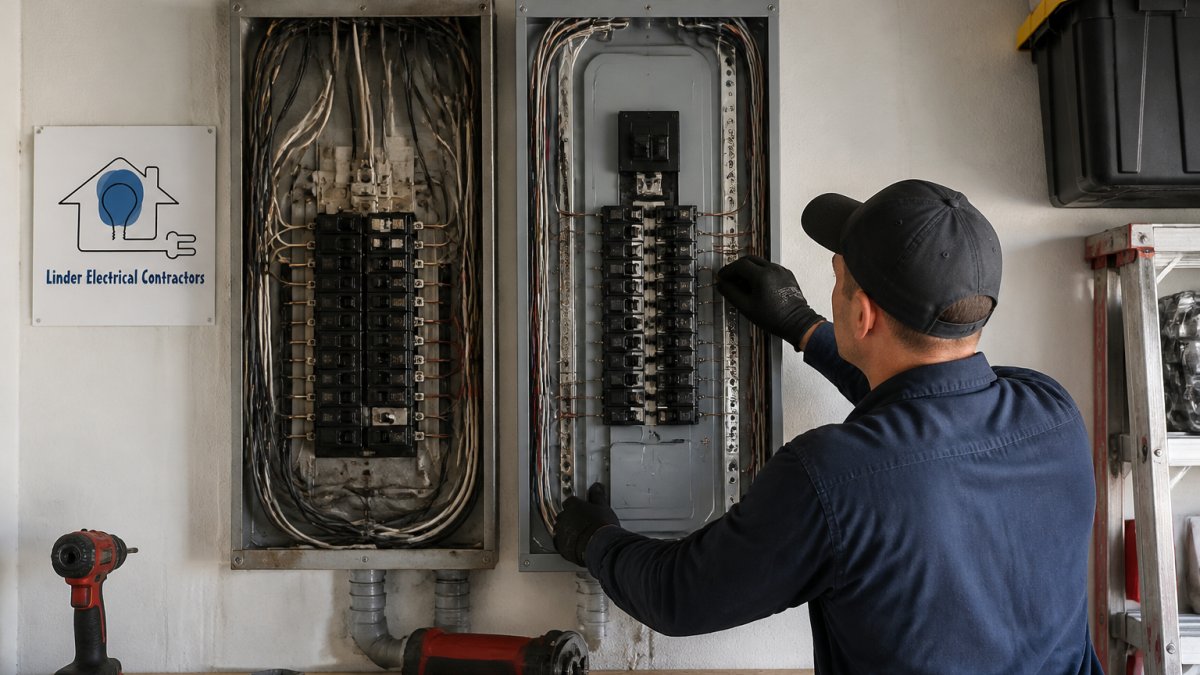
 listicle
Signs You Need an Electrical Panel Upgrade
Table of Contents
- Why Your Electrical Panel Matters
- Breakers That Trip Repeatedly or Under Normal Loads
- Signs of an Overloaded Electrical Panel
- Visible Damage, Burning Smells, and Unusual Sounds
- Electrical Panel Capacity for Home Additions and New Circuits
- Dedicated Circuit for Home Gym Equipment and High-Demand Appliances
- Electrical Panel Upgrade Cost, Timeline, and What to Expect
- When to Call a Licensed Electrician
- Frequently Asked Questions
Last Updated: October 7, 2026
Why Your Electrical Panel Matters
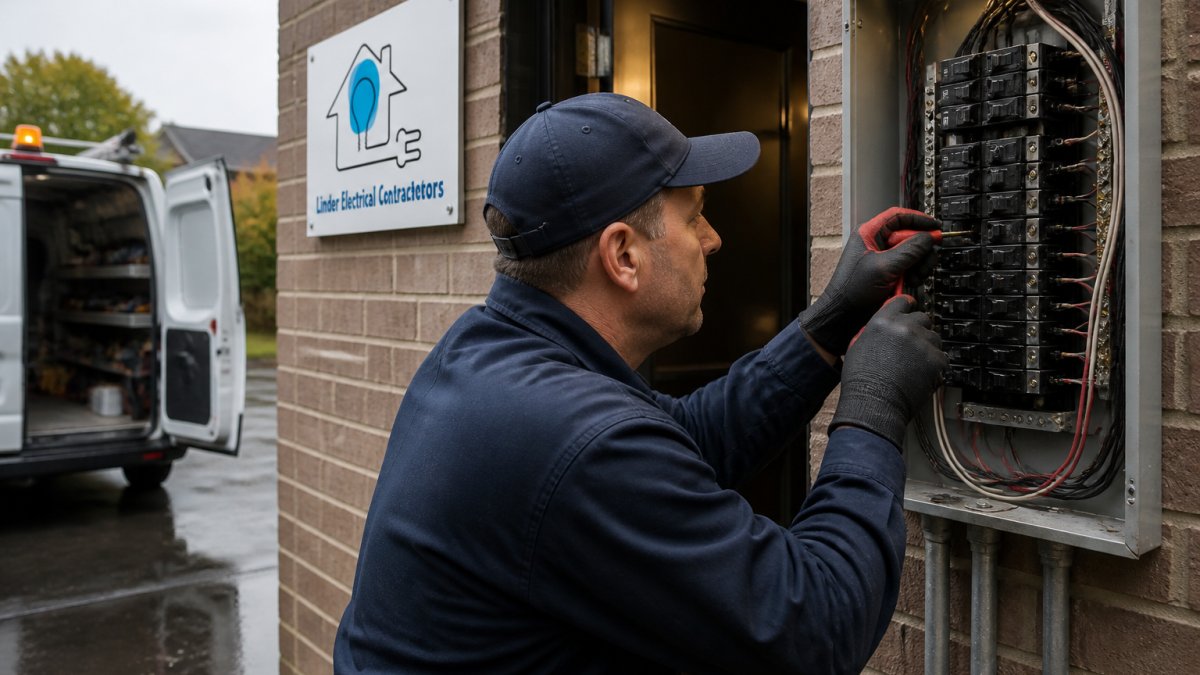
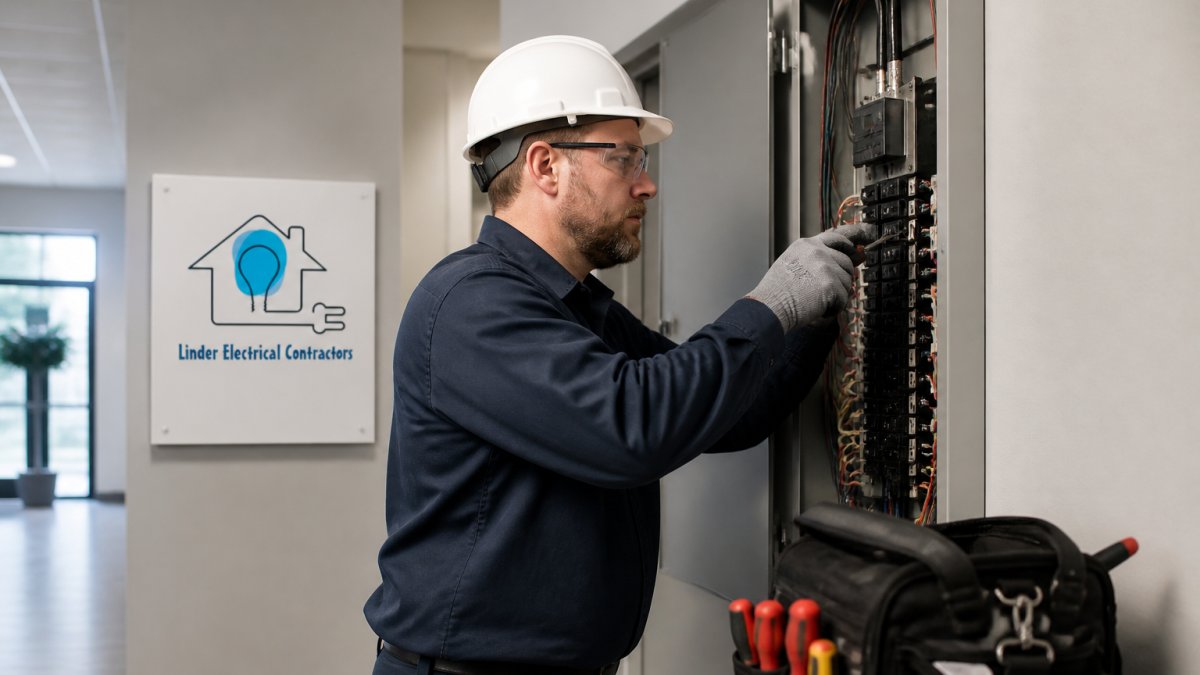
Your electrical panel distributes electricity from the utility to circuits throughout your house, protecting each with breakers that trip on overload. When it can't keep up with demand, safety becomes a serious concern. At Linder Electrical Contractors, we help homeowners recognize when an electrical panel upgrade is necessary.
A functioning panel handles your home's load safely, but homes change: you add appliances, install new circuits, upgrade systems. A panel adequate 20 years ago may be insufficient today. Recognizing the signs you need an electrical panel upgrade early prevents dangerous situations and costly emergency repairs.
Breakers That Trip Repeatedly or Under Normal Loads
When a breaker trips, it's doing its job: cutting power to prevent overheating and fire risk. But the meaning depends on which breaker trips and when, the difference between a $200 repair and a $2,500 panel upgrade.
The diagnostic question: one breaker or many?
Start by tracking the pattern for a week. Write down which breaker trips, what was running at the time, and how long it ran before tripping.
One breaker, tripping under a light load. If a 15-amp bedroom circuit trips with only a lamp and phone charger running, the breaker may be weak or there's a wiring fault.
Multiple breakers tripping across different areas. When the kitchen, laundry, and bathroom circuits all trip within the same week, with nothing unusual plugged in, your service is likely undersized.
Why you should never upsize the breaker
Many homeowners replace a tripping 15-amp breaker with a 20-amp breaker. Don't. The breaker protects the wire behind it: a 14-gauge wire is rated for 15 amps, so a 20-amp breaker lets it carry more current than its insulation can handle, making the wire, not the breaker, the failure point. That failure mode is a fire inside your walls.
The same logic applies to the main breaker: you can't simply swap a 100-amp main for a 200-amp main. The service entrance conductors, meter socket, and utility transformer must all support the higher amperage, which is why a service upgrade is a coordinated project, not a parts swap.
What the pattern tells you
| What you observe | Likely cause | Typical next step |
|---|---|---|
| One breaker, one appliance combination | Circuit overload | Redistribute loads or add a dedicated circuit |
| One breaker, light load, no pattern | Weak breaker or wiring fault | Electrician tests breaker and circuit |
| Several breakers, different rooms, same week | Undersized service | Load calculation and panel evaluation |
| Main breaker trips | Total load exceeds service amperage | Service upgrade assessment |
A licensed electrician confirms the diagnosis with a load calculation, a room-by-room tally using the National Electrical Code method, rather than guessing from symptoms. That calculation separates a trustworthy recommendation from a sales pitch.
Signs of an Overloaded Electrical Panel
An overloaded electrical panel shows itself in several ways: lights flicker or dim when you turn on major appliances, outlets feel warm, or you notice a burning smell near the panel.
Flickering lights happen because the panel can't maintain stable voltage when multiple high-demand appliances run at once, start the AC while someone turns on the electric oven and the lights dim noticeably, stressing wiring and components.
A warm outlet or breaker means electricity is meeting resistance and generating heat, a fire hazard. Insulation degrades under sustained heat, eventually exposing live conductors.
A burning smell near your panel is the most urgent sign, insulation breaking down from heat or arcing inside the panel. Turn off the main breaker, leave the home, and call a licensed electrician right away.
Many homes built in the 1950s and 1960s were wired for 60-amp or 100-amp service; modern homes typically need 150-amp or 200-amp service.
Flickering lights, warm outlets, and burning smells are not normal. Each one signals that your electrical panel is working beyond its safe capacity.
Visible Damage, Burning Smells, and Unusual Sounds
Listen near your panel too. A healthy panel is quiet; buzzing, crackling, or popping means arcing, electricity jumping a gap it shouldn't cross, generating extreme heat that can ignite nearby materials.
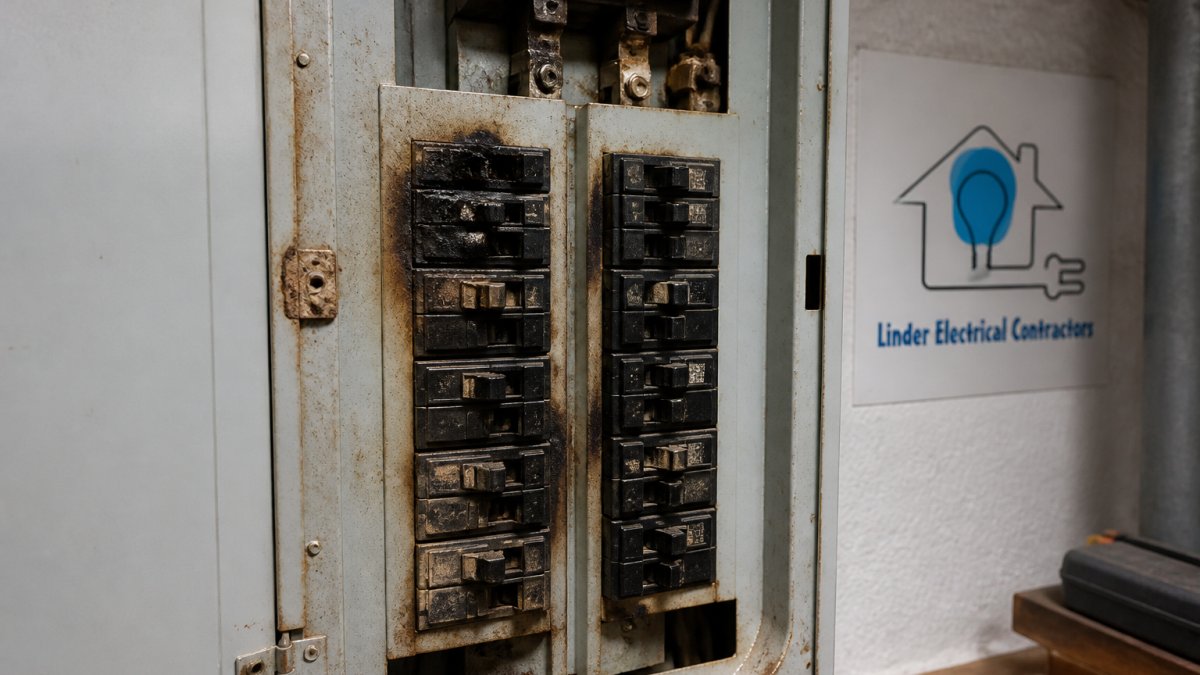
Frayed or damaged wires inside the panel are also red flags. Don't open the panel yourself, the shock risk is real, but a professional can inspect inside. Any visible damage warrants a professional evaluation.
Corrosion on the exterior often indicates moisture exposure. In damp basements or coastal areas with salt air, panels deteriorate faster, and moisture inside a panel is a serious safety issue.
Electrical Panel Capacity for Home Additions and New Circuits
Planning a major addition or renovation? Your panel needs to support new circuits for the expanded space.
Likewise, a dedicated circuit for a home gym or EV charging requires available capacity. A 200-amp panel can handle these loads, but only if existing circuits aren't already using most of it.
Before any major project, have a licensed electrician assess your panel's available capacity. They'll tell you whether to add circuits or whether an electrical panel upgrade is necessary, preventing costly mid-project surprises.
Additions often reveal that seemingly adequate service is insufficient: add square footage, outlets, and fixtures, and your panel hits 80 or 90 percent capacity.
Dedicated Circuit for Home Gym Equipment and High-Demand Appliances
High-demand appliances need dedicated circuits. A dedicated circuit for home gym equipment, an EV charger, or a large HVAC system ensures consistent power without competing with other loads.
Many older homes lack dedicated circuits: the kitchen may share with the dining and living rooms, and bedrooms have only one or two outlets.
A dedicated circuit for home gym equipment matters especially with heavy-duty gear like a treadmill or sauna, these draw significant current and should never share a circuit with general loads.
Upgrading your panel often means adding new circuits for specific purposes, more efficient than squeezing loads onto circuits already at capacity.
Electrical Panel Upgrade Cost, Timeline, and What to Expect
An electrical panel upgrade is a significant project, but understanding what's involved, and what drives the price, helps you plan and budget without surprises.
What drives the cost
Panel upgrade pricing isn't a single number, it's the sum of several variables. Knowing them lets you compare estimates fairly instead of wondering why two quotes differ by thousands.
Panel location. If the new panel can go where the old one was, the project is simpler.
Wiring condition. In older homes, existing branch wiring sometimes can't be reused.
Permits and inspections. A permit is required for a panel replacement in essentially every jurisdiction, and the work must be inspected before the utility reconnects service.
Utility coordination. The utility disconnects service before the old panel comes out and reconnects after inspection. Some do this free; others bill.
What the project actually involves
- Assessment and load calculation. The electrician tallies your existing and planned loads to confirm the service size you need.
- Permit application. The contractor files with the local building department and, where required, submits equipment specifications to the utility.
- Utility disconnect. The utility cuts power at the meter so the panel can be worked on safely.
- Old panel removal and new panel installation. The new panel, main breaker, and branch breakers go in. New circuits are run if the scope includes them.
- Grounding and bonding. The panel is bonded to the grounding electrode system, a step that is frequently deficient in older installations and is a common inspection failure point.
- Inspection. The local authority inspects the work and issues approval.
- Utility reconnect. The utility restores service once it has the inspection approval on file.
Timeline
The electrical work typically takes one to three days for a straightforward panel replacement, but the full timeline includes permit issuance, utility disconnect scheduling, inspection, and reconnect. Expect one to three weeks from signed contract to restored power, with utility scheduling the most common delay.
What to ask before you sign
- Is the permit included in the quoted price, or billed separately?
- Who schedules the utility disconnect and reconnect, you or the contractor?
- Does the quote assume the existing branch wiring can be reused, and what happens to the price if it can't?
- Will the new panel be a 200-amp service, and does the quote include the grounding and bonding work?
- Is the estimate written and itemized, or a verbal range?
Linder Electrical Contractors handles the entire process, including permits and inspections, you don't need to chase the township or utility yourself. We ensure all work meets code, and provide free written estimates so you know the cost upfront.
When to Call a Licensed Electrician
If you notice any warning signs in this guide, don't delay, call a licensed electrician. Burning smells, crackling sounds, or warm outlets should be addressed the same day.
Even if you're unsure whether your panel needs upgrading, a professional evaluation costs less than an emergency repair from panel failure.
Attempting electrical panel work yourself is dangerous and illegal without a license. The utility won't reconnect service to a panel installed by an unlicensed person, and improper installation creates serious fire and electrocution hazards.
Linder Electrical Contractors is licensed, insured, and available 24/7 for emergencies, serving residential and commercial clients in Blue Bell and Montgomery County, PA.
Frequently Asked Questions
How do I know if my electrical panel needs to be upgraded?
Your electrical panel likely needs an upgrade if you experience frequent breaker trips, flickering lights, dead outlets, burning smells near the panel, hot outlets or breakers, or if you're adding major appliances like an EV charger, home gym equipment, or HVAC system. Older panels (30+ years) and homes with 100-amp service often need upgrades to handle modern electrical loads. A licensed electrician can inspect your panel and service amperage to confirm whether an upgrade is necessary or if a simpler repair will resolve the issue.
What is the difference between an overloaded circuit and an overloaded panel?
An overloaded circuit affects one breaker and the outlets connected to it; a licensed electrician can often add a new dedicated circuit to resolve this. An overloaded electrical panel means your entire service capacity is insufficient; the main breaker trips frequently, lights flicker throughout your home, and multiple circuits fail under normal use. Panel overload requires a full upgrade to increase your service amperage, typically from 100 amps to 200 amps. Distinguishing between the two is critical because a panel upgrade is a larger project than adding a single circuit.
Does an older electrical panel automatically need to be replaced?
Not automatically, but older panels (40+ years) deserve careful inspection. Fuse boxes and older breaker panels can develop corrosion, loose connections, and deteriorated wiring, all of which increase fire and shock risk. Even if an older panel still functions, it may lack the capacity for modern appliances and cannot safely handle additional circuits. A licensed electrician can assess whether your panel is safe to keep with repairs or whether age and condition warrant replacement. Building codes and insurance may also require upgrades for older homes during renovations.
Can I add a dedicated circuit for high-demand equipment without upgrading my whole panel?
Yes, if your main panel has available breaker slots and your service amperage is adequate. Adding a dedicated circuit for home gym equipment, EV charger, or major appliance is often simpler than a full panel upgrade. However, if your panel is already near capacity or lacks available breaker spaces, a full upgrade may be necessary. A licensed electrician can evaluate your current load and available capacity to determine whether a new circuit or a panel upgrade is required for your specific project.
When your lights flicker, breakers trip repeatedly, or you smell burning near your electrical panel, the problem rarely resolves itself. An electrical panel upgrade may be the solution. Linder Electrical Contractors specializes in panel upgrades including permits, inspections, and complete service management. We provide free written estimates and handle the entire process so you can focus on your home. Get a free estimate today and find out whether your panel needs upgrading.