 how-to
How to Troubleshoot Flickering Lights: A Step-by-Step Guide
Table of Contents
- Safety First: When Flickering Lights Signal Danger
- Common Causes of Flickering Lights
- How to Fix a Flickering Light Bulb: Immediate Checks
- Lights Flickering When Appliances Turn On: Circuit Load Issues
- Diagnosing the Scope: Single Fixture vs. Multiple Lights
- When to Call an Electrician for Flickering Lights
- Frequently Asked Questions
Last Updated: October 5, 2026
Safety First: When Flickering Lights Signal Danger
Flickering lights might seem like a minor annoyance, but they can signal serious electrical problems that pose fire and shock hazards, which is why knowing how to troubleshoot flickering lights is essential. Before you start troubleshooting, you need to know when flickering lights demand immediate professional attention.
Stop and call a licensed electrician right away if you notice any of these warning signs:
- Flickering accompanied by a burning smell or scorch marks around the fixture
- Lights that flicker in a pattern tied to a specific appliance turning on
- Flickering that affects your entire home or a large section of it
- Dimming or flickering that occurs after an electrical storm or power surge
- A flickering light fixture that feels warm to the touch or shows visible damage
If you don't see any of these danger signals, you can safely move forward with troubleshooting. Most flickering light issues stem from simple fixes, a loose bulb, a worn switch, or an incompatible dimmer.
Common Causes of Flickering Lights
Flickering lights happen for a reason. Understanding the most common culprits helps you pinpoint the exact problem and fix it without guesswork.
Loose or Improperly Seated Light Bulbs
The simplest cause of flickering lights is also the most overlooked: a bulb that isn't sitting properly in the socket.
When a light bulb isn't fully seated, the contact points inside the socket don't make a solid electrical connection. This creates intermittent contact, which causes the light to flicker or dim.
Check every flickering light by:
- Turn off the light switch
- Wait 30 seconds for the bulb to cool
- Gently twist the bulb clockwise until it stops (do not force it)
- Turn the light back on and observe
If the flickering stops, you've found your culprit. If the bulb still flickers after you've seated it firmly, the socket itself may be damaged or corroded, and you'll need a replacement fixture.
Faulty Light Switches and Worn Contacts
A worn-out light switch is another frequent cause of flickering lights in a single fixture or room.
Inside every light switch are metal contacts that complete the electrical circuit when you flip the switch. Over time, these contacts wear down, oxidize, or accumulate debris. When contacts degrade, they create an unreliable connection that causes flickering.
Signs your switch needs replacement:
- The switch feels loose or rattles when you flip it
- Flickering happens only when you use that specific switch
- The switch makes a crackling or popping sound
- The switch feels warm after normal use
Replacing a faulty light switch is straightforward for most homeowners, but if you're unsure about working with live electrical circuits, a licensed electrician can handle it safely and quickly.
Loose Fixture Wiring and Connections
Inside every light fixture are wire connections that carry power to the bulb. When these wires loosen over time, they create poor electrical contact.
Loose fixture wiring typically affects a single light or a few lights on the same circuit. You might notice the flickering gets worse when you bump the fixture or when vibrations from nearby appliances run.
Common sources of loose connections in fixtures:
- Wire nuts that have vibrated loose inside the fixture
- Corroded or loose terminal screws where wires connect
- Damaged wire insulation that creates intermittent contact
- A junction box that has shifted or settled
Diagnosing loose wiring requires opening the fixture and inspecting the connections.
Incompatible Dimmer Switches and LED Bulbs
Modern LED bulbs and older dimmer switches often don't work well together, and the result is flickering or erratic brightness changes.
Dimmer switches work by rapidly cutting power to the bulb. Older dimmers were designed for incandescent bulbs, which tolerate this rapid on-off cycle.
If you have LED bulbs installed with a dimmer switch, check the bulb packaging for a "dimmable" rating. Most standard LED bulbs are not dimmable.
For dimmer switches themselves, newer models are designed to work reliably with LED technology.
How to Fix a Flickering Light Bulb: Immediate Checks
Step 1: Check the bulb itself
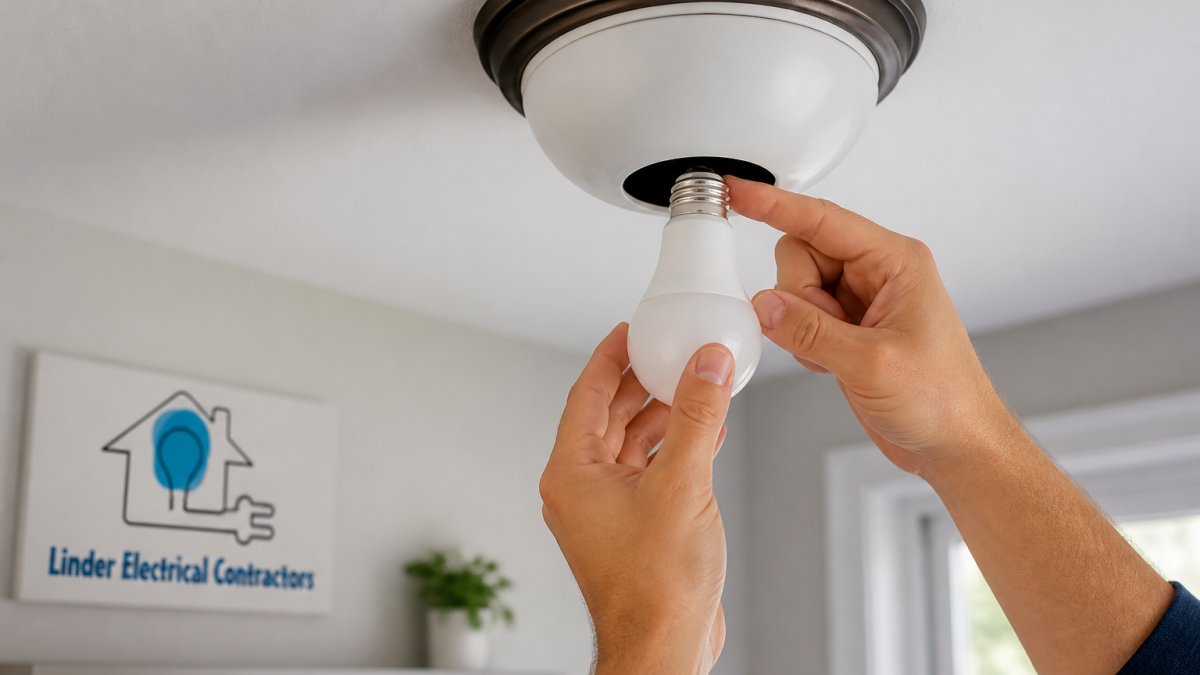
Remove the flickering light bulb and inspect it for visible damage.
Step 2: Clean the socket
Dust and corrosion inside the socket prevent proper contact.
Step 3: Reseat the bulb firmly
Insert the bulb back into the socket and twist it clockwise until it stops.
Step 4: Observe the result
Turn the light back on. If the flickering stops, the problem is solved.
Step 5: Test with a different bulb
If you have another bulb of the same type available, install it in the flickering fixture.
These five steps resolve the majority of single-fixture flickering issues.
Lights Flickering When Appliances Turn On: Circuit Load Issues
A specific pattern of flickering, lights dimming or flickering when your refrigerator, air conditioner, or washing machine starts up, points to a circuit load problem.
When large appliances start, they draw a surge of power.
This pattern tells you several things:
- The problem affects multiple lights, not just one
- The flickering is temporary and tied to appliance startup
- Your electrical panel or wiring may be undersized for your home's power needs
A single episode of flickering when an appliance starts is usually normal. But if this happens frequently, it suggests your electrical system is working at or near capacity.
Solutions depend on the severity:
- Minor flickering: Monitor the situation. If it happens only occasionally, your system is handling the load, though not optimally.
- Frequent or severe flickering: Have a licensed electrician evaluate your panel and wiring. You may need a service upgrade to handle your home's power demands safely.
- New appliance causing the problem: The appliance itself may be drawing more power than expected. Check the amperage rating on the nameplate and compare it to your panel's capacity.
Circuit load issues are one of the most serious causes of flickering lights because they indicate your electrical infrastructure may be stretched too thin.
Diagnosing the Scope: Single Fixture vs. Multiple Lights
Where the flickering occurs, and how it behaves over time, tells you more about its cause than any single visual inspection. Use this scope-and-pattern flow before you touch anything.
Step 1: Map the scope
Work outward from the smallest unit:
- One bulb in one fixture. Swap the bulb with a known-good one of the same type and wattage. If the flicker follows the bulb, the bulb is the problem. If it stays with the fixture, move to Step 2.
- One fixture, multiple bulbs. If only one bulb in a multi-bulb fixture flickers, the socket or that bulb is suspect. If all bulbs in the fixture flicker together, the fixture wiring, switch, or the circuit feeding it is suspect.
- Multiple fixtures on one circuit. Turn the breaker off, then back on, and note whether the flicker returns immediately or only under load. Lights on the same breaker that flicker together point to a shared connection, a shared neutral, or a circuit-level issue.
- Multiple circuits or the whole home. If lights on different breakers flicker, the problem is upstream of the branch circuits, at the main panel, the service entrance, or the utility supply.
Step 2: Read the flicker pattern
The timing and shape of the flicker narrows the cause fast:
- Flicker only when a large appliance starts (refrigerator, AC compressor, well pump, dryer). Momentary voltage drop on startup. Occasional is normal; frequent or severe points to an undersized service, a loose neutral, or a failing main lug.
- Flicker that pulses steadily, like a heartbeat. Often a dimmer or driver issue, or a failing LED driver inside the bulb.
- Flicker that worsens when you bump the fixture or walk across the floor. Loose connection inside the fixture or a backstabbed outlet/switch on the same circuit.
- Flicker that appears during wind, rain, or heat. Overhead service drop, mast, or meter-base issue, or a utility-side problem. Record the weather and time.
- Flicker that comes and goes with no pattern. Intermittent loose connection, often at a wire nut, backstab, or breaker terminal.
- Flicker that is getting brighter and dimmer in a slow cycle. Shared neutral or multi-wire branch circuit issue, which is a shock and fire hazard.
Step 3: Decide whether it is yours or the utility's
You can rule out the utility side with one check. Turn off your main breaker. If the flicker stops, the problem is inside your home. If lights on a generator or a neighbor's home flicker at the same time, the problem is likely on the utility side.
Before you call the utility, record:
- The exact times and dates the flicker occurs
- Which lights and circuits are affected
- Whether large appliances, weather, or nothing at all seems to trigger it
- Whether the flicker is a blink, a dim, or a rapid pulse
- Whether your neighbors are seeing the same thing
Utilities ask for this information because it helps them decide whether to send a crew to the transformer, the service drop, or the meter. Without it, the call often ends in a truck roll that finds nothing.
Step 4: Know when the scope itself is the answer
If the scope is one bulb, the fix is usually a bulb or socket. If the scope is one circuit, the fix is usually a connection. If the scope is the whole home, the fix is usually at the panel or the service, and that is electrician and utility territory. The scope does not tell you the exact cause, but it tells you which of the three repair paths you are on, and that is enough to stop guessing.
When to Call an Electrician for Flickering Lights
Some flickering light problems are straightforward DIY fixes. Others demand professional expertise. Here's how to decide.
Call a licensed electrician immediately if:
- Multiple lights flicker throughout your home
- Flickering started after an electrical storm or power surge
- You see scorch marks, burn smells, or warm fixtures
- The flickering is accompanied by buzzing, crackling, or popping sounds
- You've tried the basic troubleshooting steps and the problem persists
- The flickering correlates with large appliances turning on
Call within a few days if:
- A single fixture has flickered for weeks despite your troubleshooting
- You suspect a worn light switch or loose fixture wiring
- You want to upgrade old dimmers to work with LED bulbs
- You've noticed dimming or flickering that's getting worse over time
Don't delay calling if you're uncertain. Electrical problems can escalate quickly (CPSC, ESFI Warn Consumers About Electrical Hazards In The Home ""Inspect and Protect!""...).
The team at Linder Electrical Contractors can diagnose flickering light problems accurately. We handle everything from simple bulb and switch replacements to complex circuit and panel issues.
Frequently Asked Questions
Can a loose light bulb cause flickering?
Yes. A loose bulb creates an intermittent electrical connection. The bulb may flicker, dim, or go dark completely as the contact point moves. Tightening the bulb clockwise until snug usually resolves the problem immediately. If flickering continues after tightening, the issue lies elsewhere in the fixture or circuit.
Why are my lights flickering when large appliances turn on?
Large appliances like air conditioners, water heaters, and refrigerators draw significant electrical current when they start. This sudden demand can cause a temporary voltage drop across your household wiring, making lights flicker. If this happens occasionally, it's often normal. Frequent or severe flickering suggests an overloaded circuit or loose connection that needs professional evaluation.
What electrical fault causes flickering lights in multiple rooms?
Flickering in multiple fixtures usually points to a problem upstream: loose connections at the circuit breaker, damaged wiring in your main panel, or utility-side voltage fluctuations. Single-fixture flicker typically involves that fixture's bulb, switch, or wiring. Multiple-light flicker warrants a licensed electrician's inspection to rule out hazardous loose terminals or damaged wiring.
When should I call an electrician about flickering lights?
Call immediately if flickering is accompanied by burning smells, sparks, warm outlets, or buzzing sounds. Call within 24 hours if flickering persists after bulb replacement, affects multiple fixtures, or coincides with circuit breaker trips. Call for a routine inspection if flickering is intermittent but recurring, or if you suspect an old house's wiring may be failing.
Flickering lights are rarely a reason to panic, but they're always worth investigating. Most causes are simple and inexpensive to fix. But if you've ruled out a loose bulb or faulty switch and the flickering persists, professional help is the safest choice. Linder Electrical Contractors offers free written estimates and 24/7 emergency service for electrical problems that can't wait. Contact us today to schedule a diagnosis and get your lights working reliably again.