 How-to
How to Add a Dedicated Circuit for Home Gym Equipment
Last Updated: October 26, 2026
Quick Summary
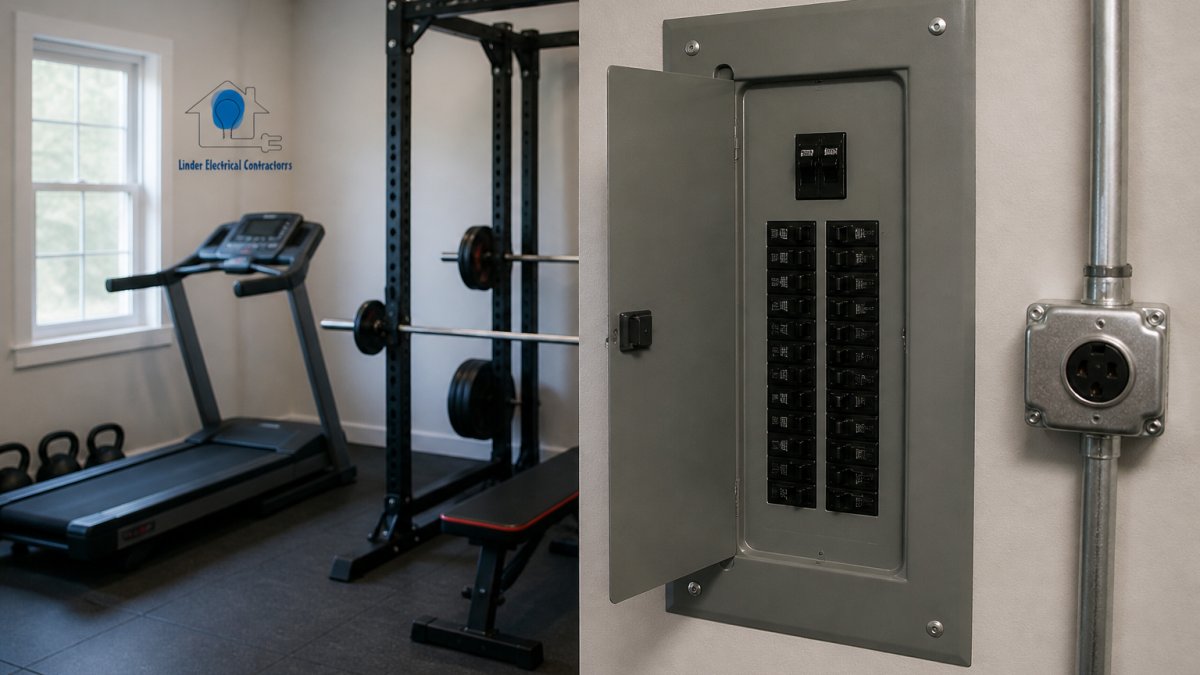
Adding a dedicated circuit for home gym equipment starts with reading the nameplate on each machine to find its voltage and amperage. A treadmill typically draws 10-15A at 120V, so plan a 20-amp dedicated circuit wired with 12/2 cable, then confirm your panel has space and capacity.
- A 20-amp circuit needs 12/2 cable, not the thinner 14-gauge wire used on 15-amp circuits.
- A 120V dedicated circuit needs one single-pole slot; a 240V circuit needs two adjacent spaces.
- GFCI protection is required for 125V, 15- and 20-amp receptacles in garages and basements.
- A GFCI breaker protects the whole circuit including wiring, making it the better default for a gym circuit.
- Plan equipment layout first, then place receptacles so cords never cross a walking path.
Table of Contents
- Home Gym Electrical Requirements: What Your Equipment Actually Draws
- Why a Dedicated Circuit for Treadmill and Cardio Gear Beats a Shared Outlet
- Adding a Circuit to an Electrical Panel: Checking Capacity First
- Step-by-Step: Running the Circuit From Panel to Outlet
- GFCI Breaker for Home Gym: Protection Where It Counts
- Outlet Placement, Cord Management, and Trip Hazards
- When to Hire a Licensed Electrician for Your Home Gym Circuit
- Frequently Asked Questions
Home Gym Electrical Requirements: What Your Equipment Actually Draws
Adding a dedicated circuit for home gym equipment starts with one number: the amps your machine pulls.
Before you buy cable or call anyone, read the label on each machine.
Reading the Nameplate Rating
Every motorized machine has a nameplate or spec sticker, usually on the back or underside, listing the voltage and amperage it needs.
Continuous Load and the 80 Percent Rule
| Equipment | Typical Voltage | Typical Amp Draw | Circuit to Plan For |
|---|---|---|---|
| Treadmill | 120V | 10-15A | 20-amp dedicated |
| Elliptical | 120V | 5-10A | 20-amp dedicated |
| Rower | 120V | 3-6A | 15 or 20-amp |
| Home gym with 240V gear | 240V | Varies by unit | 240V dedicated |
Why a Dedicated Circuit for Treadmill and Cardio Gear Beats a Shared Outlet
What most guides miss is that the wire matters as much as the breaker. A 20-amp circuit needs 12/2 cable, not the thinner 14-gauge wire on a 15-amp circuit. Match the wire to the breaker or the breaker protects nothing.
Adding a Circuit to an Electrical Panel: Checking Capacity First
Adding a circuit to an electrical panel is not just a matter of finding an empty slot. If you are unsure whether your panel is already showing signs you need an electrical panel upgrade, check that first. You also need to confirm the breaker panel has the physical room, the circuit capacity, and the service amperage to carry the new load.
Step 1: Physical space in the panel
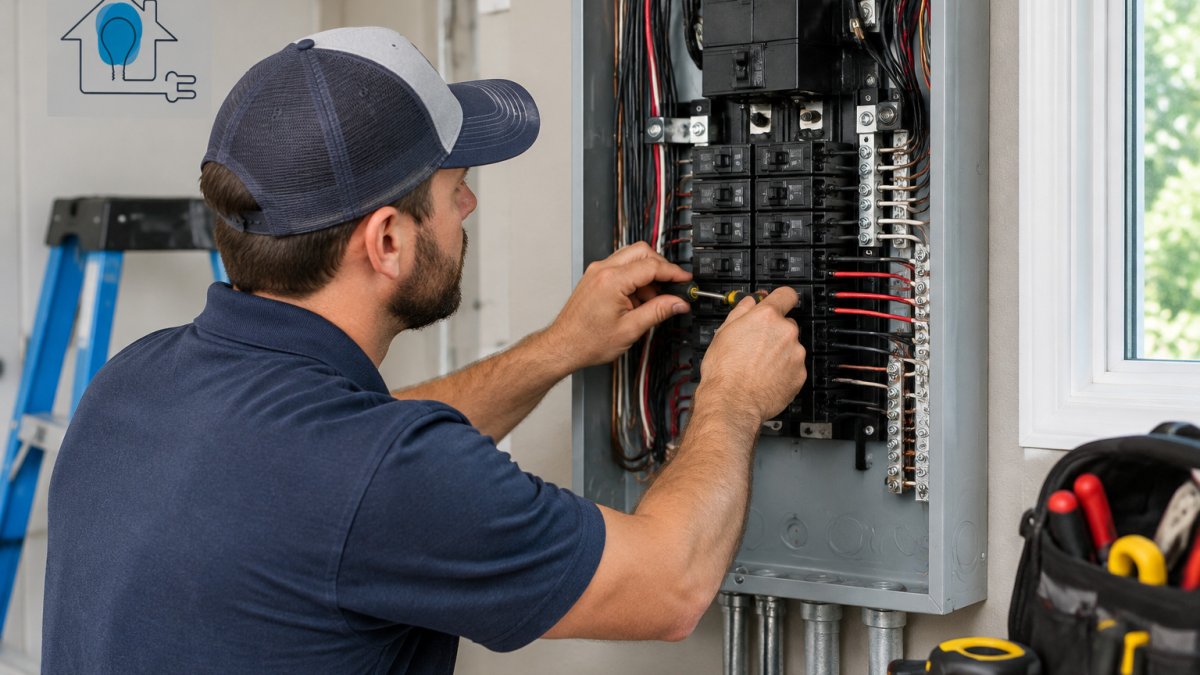
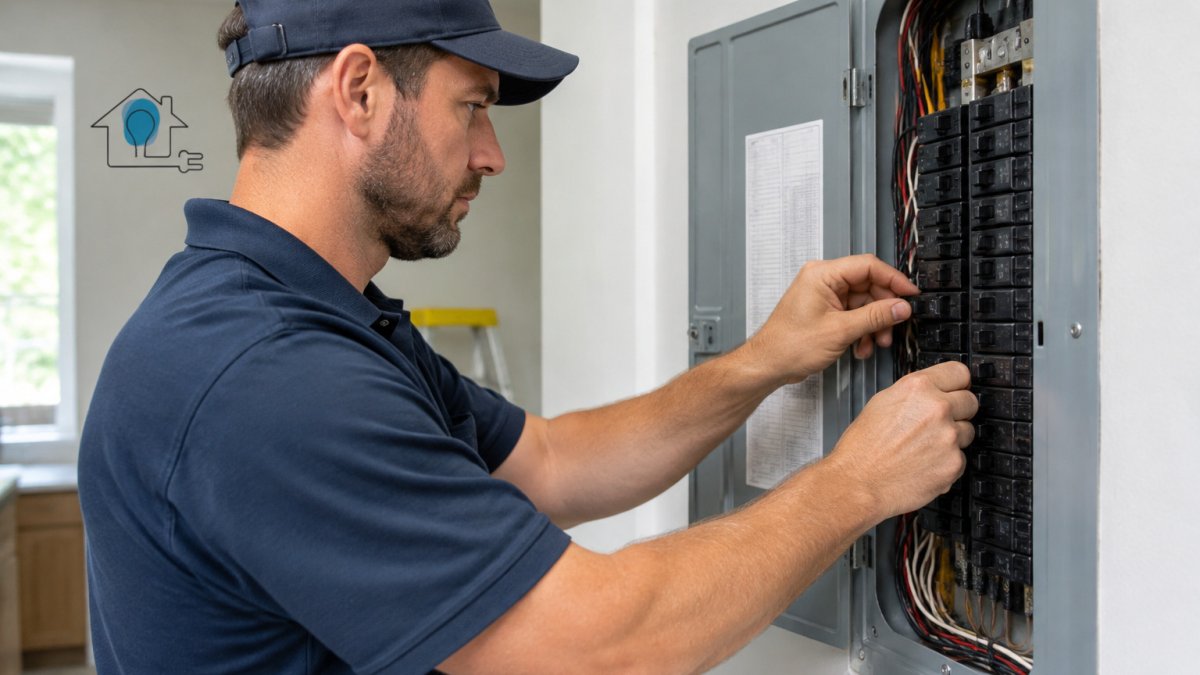
Open the panel cover (only if you are comfortable and the main is off) and count open breaker slots. A 120V dedicated circuit needs one single-pole slot; a 240V circuit needs a double-pole slot, meaning two adjacent spaces. If the panel is full, a tandem breaker can sometimes split one slot into two, but only if the panel is listed for tandem breakers and the slot is in the right position, the panel label inside the door lists the maximum allowed.
Step 2: Service size and the load calculation
Note the main breaker size, typically 100, 150, or 200 amps. Then run a load calculation rather than eyeballing it. The National Electrical Code (NEC) Article 220 and the standard calculation method in Article 220 Part IV give you the framework:
- Start with the general lighting load: 3 volt-amperes per square foot of living space for a dwelling unit.
- Add the small-appliance and laundry branch circuits: 1,500 VA each.
- Add the nameplate ratings of fixed appliances (range, dryer, water heater, AC, furnace) at their actual values.
- Apply the demand factors the code allows, for example, the first 10,000 VA of the general lighting and appliance load at 100 percent, the remainder at 40 percent for a typical dwelling calculation.
- Add the largest motor at 125 percent of its nameplate rating.
The resulting number usually lands well under the service rating for a typical home, which is why a 100-amp service often has room for one more 20-amp circuit. But the calculation is the only defensible answer, and your building department will want to see it on the permit application.
Step 3: The panel upgrade decision
Use this decision tree:
- Open slot, calculated load under 80 percent of service rating: add the circuit. No upgrade needed.
- No open slot, but calculated load is fine: look at tandem breakers or a subpanel. A subpanel fed from the main panel is often cheaper than a full service upgrade and gives you room for several future circuits.
- Calculated load over 80 percent of service rating, or a 100-amp service with electric range, dryer, and central AC: plan a 200-amp upgrade. Adding a gym circuit to a maxed-out service is how nuisance tripping becomes a house-wide problem.
- Federal Pacific Stab-Lok or Zinsco panel: replace the panel regardless of capacity. These brands have well-documented failure histories and most electricians will not add circuits to them.
Step 4: Permits and inspection
We handle permits and inspections as part of our full service.
Step-by-Step: Running the Circuit From Panel to Outlet
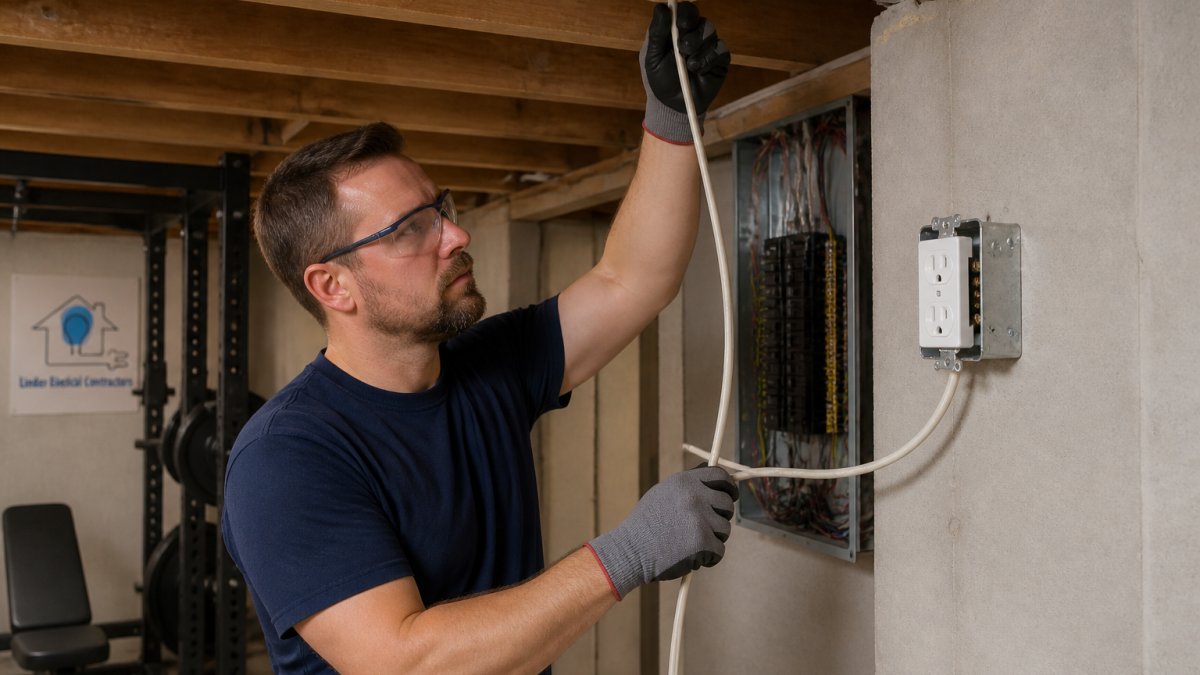
Watch out: pulling cable through finished walls without checking for existing wires and pipes is the most common way a simple job turns into a repair bill. Before running new wiring yourself, review the electrical permit process for homeowners.
GFCI Breaker for Home Gym: Protection Where It Counts
A GFCI breaker for home gym circuits adds shock protection to the whole branch. GFCI stands for ground fault circuit interrupter; it cuts power fast when current leaks to ground, the shock risk in a damp basement or garage gym.
What the code actually requires
The National Electrical Code (NEC) Article 210.8 drives GFCI requirements for dwelling units, and the 2020 and 2023 editions expanded the list of locations requiring protection. For a home gym, the relevant triggers are:
- Garages and accessory buildings: GFCI protection is required for all 125V, 15- and 20-amp receptacles in a garage, including a detached garage gym.
- Basements: GFCI protection is required for all 125V, 15- and 20-amp receptacles in a basement, with a narrow exception for a permanently installed alarm system.
- Outdoors and damp locations: any receptacle serving a covered porch, patio, or similar space.
- Within 6 feet of a sink, bathtub, or shower: relevant if your gym shares a wall with a bathroom or utility sink.
Your local jurisdiction may be on the 2017, 2020, or 2023 edition, and some states and cities amend the code. Check with your building department before you buy parts, the edition in force determines whether your gym outlet needs GFCI.
GFCI breaker vs. GFCI receptacle
You have two options:
- A GFCI breaker at the panel, protecting the whole circuit, including the wiring between the panel and the outlet.
- A GFCI receptacle at the point of use, protecting that outlet and anything downstream on the load side.
A GFCI breaker is often the cleaner choice for a gym circuit because it covers the wiring too, and it is the only option that protects a circuit run through a damp basement wall. A GFCI receptacle is cheaper and easier to replace but leaves the upstream wiring unprotected. For a dedicated gym circuit, the breaker is the better default.
GFCI vs. AFCI: they solve different problems
GFCI protects people from shock. AFCI (arc-fault circuit interrupter) protects against fires caused by arcing in damaged or loose wiring. The NEC requires AFCI protection for most 120V branch circuits in dwelling units under Article 210.12, and the 2020 and 2023 editions broadened that requirement. A dual-function breaker combines both in one device and is increasingly the standard choice for new branch circuits, if your panel accepts one, it gives you shock and fire protection on the same circuit.
Testing and troubleshooting
A GFCI that trips repeatedly is doing its job. Do not replace it with a standard receptacle to stop the tripping, that removes the protection and creates a real shock hazard. Find the fault instead.
Outlet Placement, Cord Management, and Trip Hazards
Outlet placement should follow the equipment, not the other way around. Plan the equipment layout first, then put the receptacle where the cord reaches without strain.
A few rules that save trouble later:
- Place outlets so cords never cross a walking path
- Use a floor receptacle near a treadmill if the cord would otherwise stretch across the room
- Keep cords short and route them along walls
- Never daisy-chain power strips to reach an outlet
Cord management is a safety issue, not a style choice. A cord across the floor is a trip hazard and a damaged cord is a shock risk. For a basement gym or garage gym, mount outlets higher if moisture is a concern, and keep cords off damp concrete.
When to Hire a Licensed Electrician for Your Home Gym Circuit
At Linder Electrical Contractors, we are licensed and insured, we give free written estimates, and we handle permits and inspections. If you would rather hire your own, follow these steps to find a reliable local electrician.
Linder Electrical Contractors is licensed and insured, provides free written estimates, and handles permits and inspections. Get a free estimate.
Frequently Asked Questions
Do I need a dedicated circuit for a treadmill?
Most treadmills draw 15 to 20 amps and should run on their own dedicated circuit. A treadmill motor pulls a heavy continuous load, and sharing that circuit with lights or other gym equipment invites nuisance tripping and an overloaded circuit. Check the nameplate rating on the motor or the manual: if it lists 15 amps or more, plan a 20-amp dedicated circuit wired with 12/2 cable. Smaller folding treadmills may run on a shared 15-amp circuit, but the manufacturer's manual is the final word.
How many amps does home gym equipment need?
Treadmills and ellipticals typically draw 15 to 20 amps at 120 volts, while rowers and spin bikes often need only 2 to 5 amps. Add up the nameplate ratings of everything you plan to run at once, then size the branch circuit so the total stays at or below 80 percent of the breaker rating. A 20-amp circuit safely carries 16 amps of continuous load. If your cardio equipment plus accessories exceed that, run a second circuit rather than pushing one.
Does adding a dedicated circuit require an electrical permit?
Linder Electrical Contractors handles permits and inspections as part of its full service.
Should a home gym circuit use a GFCI breaker?
A GFCI breaker is a smart choice for a home gym, especially in a basement or garage where damp concrete and sweat raise the shock risk. GFCI protection trips the circuit within milliseconds when current leaks to ground, protecting you and your equipment. Many garages and unfinished basements already require GFCI protection under the code. Pair it with proper grounding and a dedicated circuit, and you get both overload protection and shock protection from one breaker.