 Ultimate guide
Electrical Permit Process for Homeowners: A Step-by-Step Guide
Table of Contents
- Understanding When an Electrical Permit Is Required
- Permit Eligibility and Who Can Apply
- How to Apply for an Electrical Permit
- Electrical Permit Cost and Inspection Fees
- Plan Review and Approval Timeline
- Residential Electrical Inspection Checklist
- Consequences of Skipping the Permit Process
- Frequently Asked Questions
Last Updated: October 21, 2026
Understanding When an Electrical Permit Is Required
An electrical permit is official authorization from your local building department to perform specific electrical work. It ensures your project meets current electrical code and includes inspections to verify safety.
The key distinction is between minor maintenance and actual electrical work. Your local authority having jurisdiction (AHJ) determines what qualifies, but general guidelines exist. At Linder Electrical Contractors, we manage the entire process including permits and inspections.
Electrical Work That Requires a Permit
Most residential electrical work that modifies your home's electrical system requires a permit, including:
- Installing new circuits or outlets
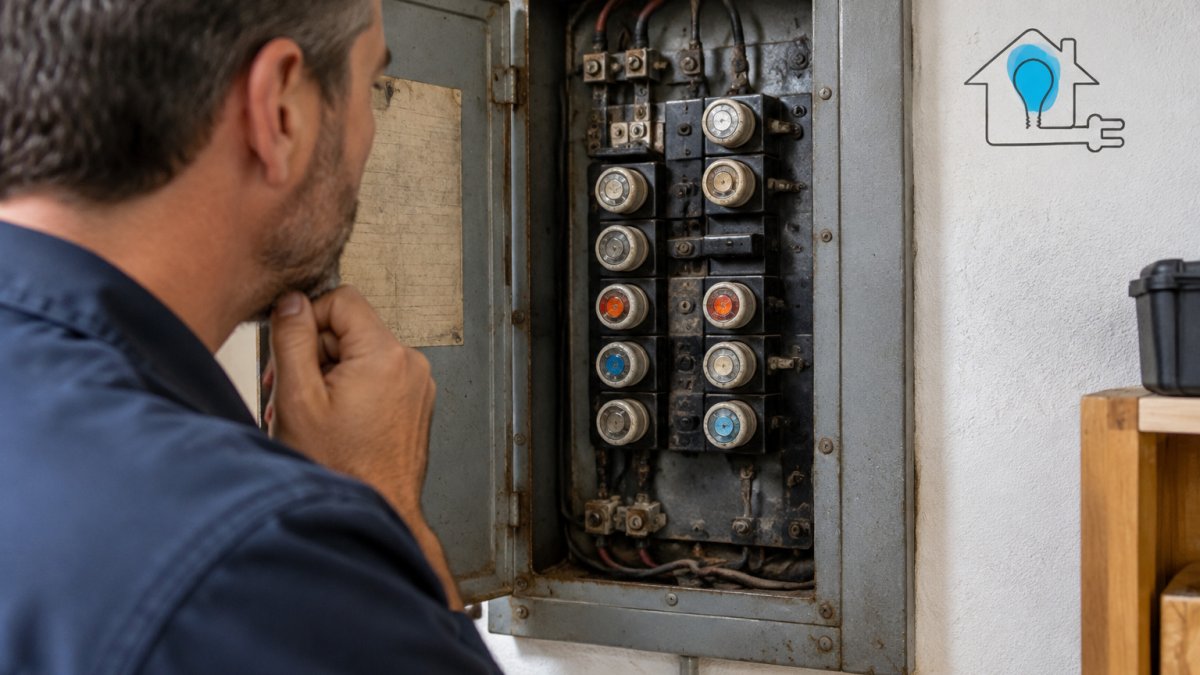
- Upgrading your electrical panel or service entrance
- Installing hardwired appliances (ranges, water heaters, HVAC systems)
The scope of work defines permit requirements: if you're adding capacity, changing the system, or introducing new electrical demand, a permit is required. The electrical code exists because improper wiring causes fires and electrocution, and inspections catch problems before they become dangerous.
Work That May Not Require a Permit
Some minor tasks fall outside permit requirements in most jurisdictions:
- Replacing outlets or switches with the same type (like-for-like replacement)
- Changing light bulbs or fixtures that don't require rewiring
- Replacing a doorbell transformer (in some jurisdictions)
The critical word is "minor." If you're uncertain, contact your local building department or ask a licensed electrician. A permit costs far less than fixing unpermitted work later.
Permit Eligibility and Who Can Apply
Your eligibility to apply for an electrical permit depends on your relationship to the property and local regulations.
Homeowners can typically apply for permits on their primary residence if they plan to do the work themselves.
Licensed contractors can apply for permits on any property and are often required to do so.
The eligibility rules exist to ensure qualified people perform electrical work.
How to Apply for an Electrical Permit
The application mechanics are similar almost everywhere, create an account, describe the work, upload documents, pay, wait for review, but the details that trip homeowners up are jurisdiction-specific.
Step 1: Identify Your Jurisdiction's Model
Permit authority for residential electrical work is not uniform. You will encounter three models:
- City or county building department with its own electrical permit process. The most common arrangement. You apply directly to the local building department, and its fee schedule and inspection cadence govern your project.
- State-level electrical permit system layered over local rules. Some states administer electrical permits through a state agency while cities retain zoning or inspection roles. In these areas you may file with the state rather than the city, and the state's fee schedule applies.
- Homeowner self-certification or exemption for defined minor work. A minority of jurisdictions allow homeowners to perform and self-certify certain low-risk tasks without a permit, but the list of exempt work is narrow and changes.
Search your city or county building department site for "electrical permit," then confirm whether the application link points to a local portal or a state one. If both exist, call the local counter and ask which governs a single-family home, getting this wrong is the most common cause of a rejected or misrouted application.
Step 2: Match Your Project to the Permit Type
Different projects trigger different application paths, plan requirements, and inspection counts:
- Replacing a fixture or like-for-like device. Often no permit or a minimal over-the-counter permit; usually no plan review and a single inspection, if any.
- Adding a circuit or a few outlets. Standard residential electrical permit; a simple description and sketch usually suffice; typically a rough-in and a final inspection.
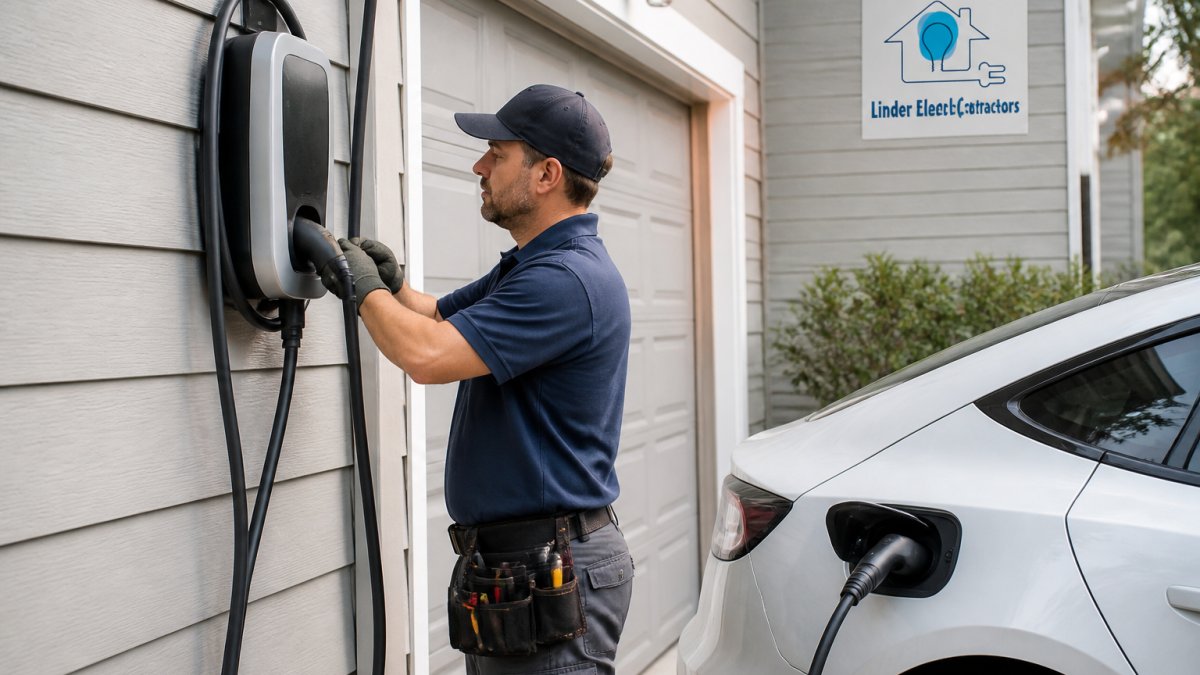
- Installing an EV charger. Permit required in most jurisdictions; plan review depends on whether a new circuit and panel capacity are involved; inspections cover the circuit, the disconnect, and the charger installation.
Confirm the permit type with the counter before you file. Filing a service upgrade as a simple circuit addition, or vice versa, is a fast way to get a correction notice.
Step 3: Assemble the Application Package
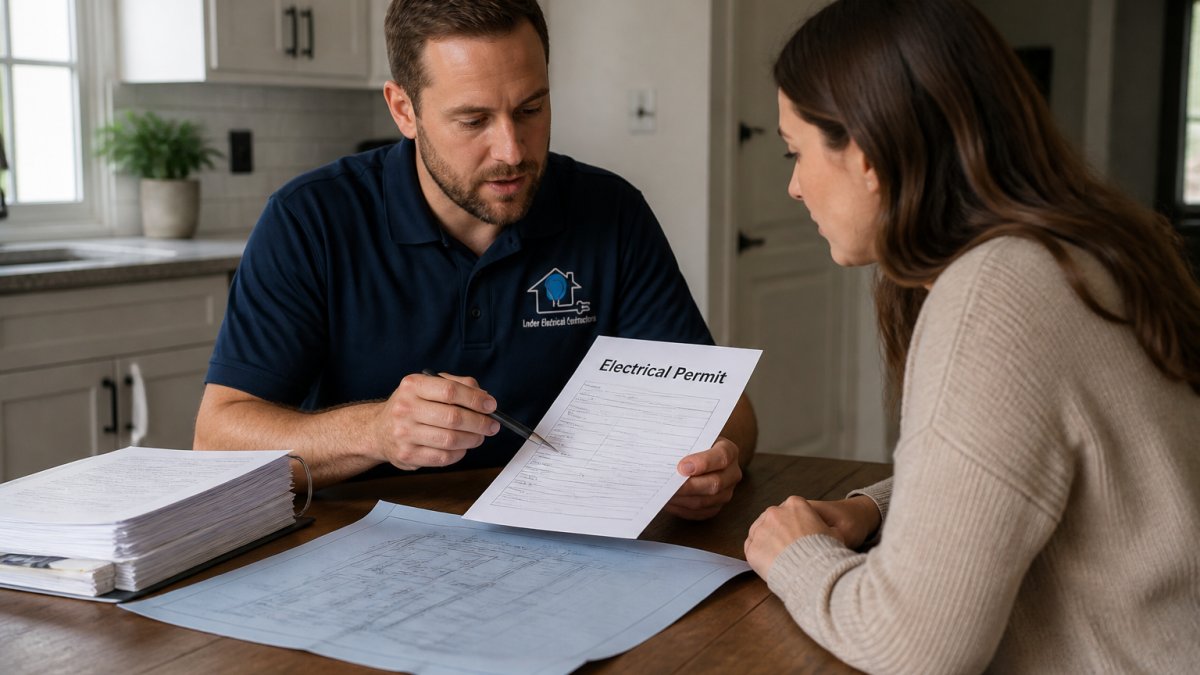
The core package is consistent: property address and parcel number, a plain-language scope of work, a sketch or electrical plan for anything beyond a like-for-like swap, contractor license and insurance information if a professional is pulling the permit, and the declared project valuation. For plan-review projects, add load calculations, wire and breaker sizing, and equipment cut sheets.
Step 4: Submit and Track
Most jurisdictions accept applications through an online portal with status tracking; some still require in-person or mail submission. Keep a copy of everything you submit and note the application number. If you get a correction notice, respond with the specific revisions requested rather than resubmitting the original package, that is what turns a one-cycle approval into a multi-week back-and-forth.
Step 5: Approval and What Comes Next
Once approved, the permit is issued with a validity window and an inspection schedule. Read the permit conditions before work starts, they tell you which inspections are required, in what order, and what must be visible when the inspector arrives. The application is not the finish line; it starts a sequence running through rough-in, final inspection, and permit closure.
Electrical Permit Cost and Inspection Fees
Permit pricing is where homeowners get the most unpleasant surprises, because the number on the fee schedule is rarely what you actually pay. Budget by separating costs into four buckets: the base permit fee, plan review charges, inspection and reinspection fees, and the labor/documentation cost of pulling the permit itself.
How Permit Fees Are Actually Calculated
Most building departments use one of three methods:
- Flat fee by project type. Common for simple residential work. A jurisdiction may charge one set price for "residential outlet addition" and another for "200-amp service upgrade" regardless of the exact scope.
- Valuation-based fee. The fee is a percentage of the declared project valuation, often with a minimum. A typical structure is a base fee plus a per-$1,000-of-valuation increment, so a $6,000 panel upgrade costs more to permit than a $600 fixture swap.
- Fixture or device count. Some jurisdictions charge per outlet, per circuit, or per device, which can make a whole-house rewire surprisingly expensive to permit even when the labor is straightforward.
Ask the permit counter which method your jurisdiction uses and request the written fee schedule. Most publish it online, listing the base fee, valuation tiers, and any separate plan review or inspection line items.
The Costs Beyond the Permit Fee
The permit fee is only one line. Budget for these as well:
- Plan review fee. Often charged separately for service upgrades, generator installations, and any project requiring stamped or detailed electrical plans. It may be a flat add-on or a percentage of the permit fee.
- Reinspection fee. If an inspector has to return because work was not ready or corrections were not made, many jurisdictions charge a reinspection fee per visit. This is the single most avoidable cost in the process.
- Contractor permit-handling cost. If a licensed electrician pulls the permit, the administrative time is typically built into the bid. It is usually modest relative to the electrical labor, but it is not free.
A Realistic Total-Cost Framework
Rather than quoting a single permit number, think in terms of total project cost including permit and inspection. The permit and inspection portion is typically a small fraction of the electrical labor and materials, but it scales with complexity because plan review and inspection count rise with scope. Treat permit-related costs as a line item you confirm with the building department before work starts, then add a contingency for reinspection and correction.
Never let a contractor talk you into skipping the permit to "save you money." The permit fee is a small fraction of the project, and the downside, failed inspection, forced removal, insurance denial, or a resale problem, dwarfs the savings.
What to Ask Before You Pay
Get answers to these five questions in writing:
- Which fee method applies to my project, and what is the base fee?
- Is plan review charged separately, and does my project require it?
- What is the reinspection fee, and how many inspections does my project typically need?
- How long is the permit valid, and is there a renewal fee?
- Are inspection fees included or billed separately?
Getting these answers up front turns a vague "$50 to $800" estimate into a real budget line and prevents the most common closing-cost surprise.
Plan Review and Approval Timeline
Once you submit your electrical permit application, the building department's plan review begins.
During plan review, the department checks that your proposed work meets current electrical code. If issues are found, they'll issue a correction notice detailing what needs to change; you'll revise and resubmit.
Once approved, your permit is issued and you can begin work.
Residential Electrical Inspection Checklist
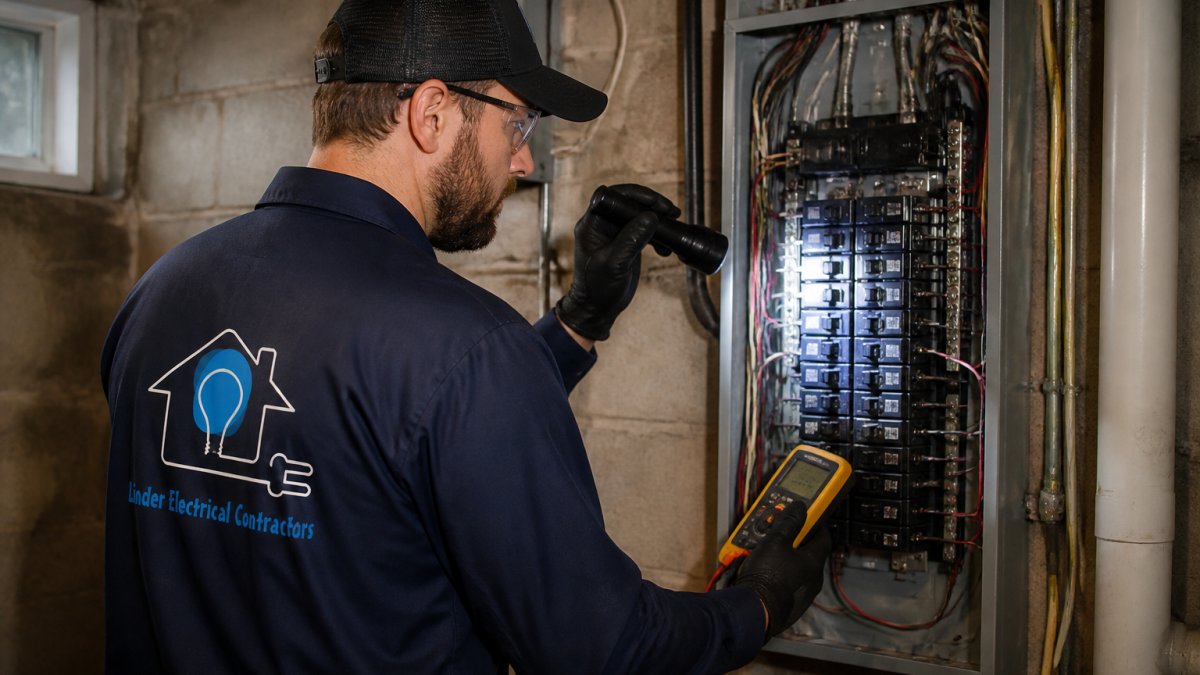
Inspections are the enforcement mechanism of the electrical code. Two main inspections occur during a residential electrical project: the rough-in inspection and the final inspection.
Rough-In Inspection
The rough-in inspection happens after wiring and equipment are installed but before walls are closed up. The inspector verifies:
- Wire sizing matches the circuit amperage
- Wiring is properly supported and secured
- Boxes and conduit are correctly installed
This inspection catches installation errors before they're hidden behind drywall. If issues are found, you correct them and request a reinspection. The rough-in inspection typically takes 30-45 minutes.
Final Inspection and Permit Closure
The final inspection occurs after all work is complete, outlets and switches are installed, and the system is energized. The inspector verifies:
- All outlets and switches are properly installed and functional
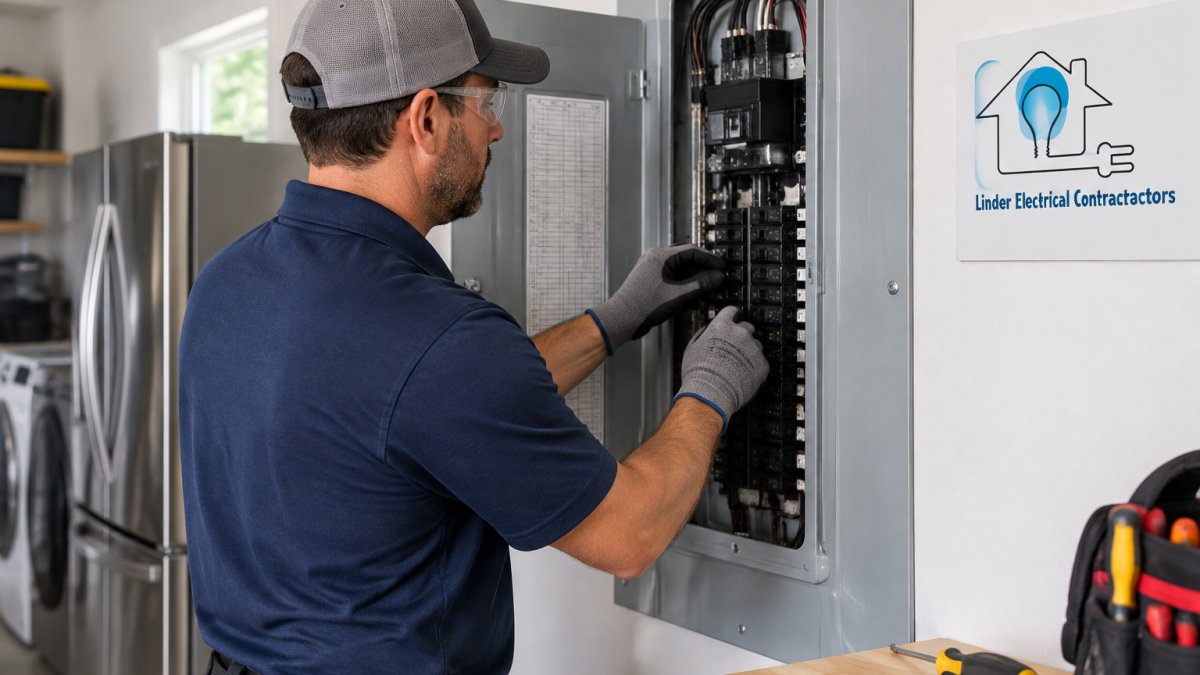
- The electrical panel is properly labeled and organized
- Service entrance and main breaker are correct for the load
Once the final inspection passes, the permit is closed and your work is officially approved. The building department issues a certificate of compliance or final permit sign-off, which you may need for insurance, property sales, or future renovations.
Consequences of Skipping the Permit Process
Working without a permit creates immediate and long-term problems: fines, forced remediation, insurance complications, and liability issues.
Safety risks are the primary concern.
Insurance complications arise when claims involve unpermitted work. Your homeowner's insurance may deny coverage for damage related to unpermitted electrical modifications.
Property sale complications occur when buyers or their inspectors discover unpermitted work.
Save time and avoid costly mistakes: hire a licensed electrician who manages permits as part of their service. They know your jurisdiction's specific requirements.
| Project Type | Typical Permit Cost | Timeline to Approval | Inspection Count |
|---|---|---|---|
| New outlets/switches | $50-$150 | 5-7 days | 2 |
| Hardwired appliance | $100-$250 | 7-10 days | 2 |
| Service upgrade | $300-$800 | 14-21 days | 2-3 |
| Generator installation | $200-$500 | 10-14 days | 2 |
| EV charger installation | $150-$400 | 7-14 days | 2 |
For accurate guidance on your specific project, consult your local building department's permit requirements or speak with a licensed electrician familiar with your area's electrical code. The National Electrical Code (NEC) standards provide the foundation for most jurisdictional electrical codes, though local amendments vary. Understanding GFCI and AFCI protection requirements helps ensure your project meets current safety standards for residential electrical installations.
Frequently Asked Questions
Can a homeowner pull their own electrical permit?
Yes, homeowners can typically apply for their own electrical permit in most jurisdictions. However, the specific rules vary by local building department and authority having jurisdiction. Some areas allow homeowner permits only for work on owner-occupied residential properties. It's best to contact your local building department to confirm eligibility and any restrictions. Many homeowners choose to have their licensed electrician handle the permit application as part of the service.
What electrical work requires a permit?
Most electrical work that modifies your home's electrical system requires a permit. This includes new circuits, outlet or switch installation, panel upgrades, wiring replacements, lighting installation, and EV charger or generator hookups. Minor repairs like replacing a light fixture or outlet cover typically don't require a permit. However, requirements vary by jurisdiction and electrical code. When in doubt, contact your local building department or ask your electrician whether a specific project needs a permit.
How much does an electrical permit cost?
Electrical permit costs vary significantly based on your location, project scope, and local fee structures. Fees typically range from $50 to several hundred dollars and often depend on factors like square footage affected or estimated project cost. Many jurisdictions also charge separate inspection fees. Since pricing depends on your specific jurisdiction and project details, contact your local building department for accurate fee information, or ask your electrician for a cost estimate that includes permit and inspection fees.
What happens if electrical work is done without a permit?
Unpermitted electrical work creates serious risks. You may face fines, be required to obtain a retroactive permit with additional fees, or need to hire an electrician to bring the work into compliance. Unpermitted work can complicate home sales, trigger insurance claim denials, and violate electrical code, creating fire and safety hazards. Additionally, if an accident or fire occurs involving unpermitted work, you could face legal liability. Always obtain the proper electrical permit before starting work to protect your safety, property, and legal standing.
How long does it take to get an electrical permit?
The timeline varies by jurisdiction and project complexity. Simple permits may be approved within a few days, while complex projects requiring detailed plan review can take 2-4 weeks or longer. After approval, you typically have a set period (often 6-12 months) to complete the work before the permit expires. Inspection scheduling also affects the overall timeline. Contact your local building department for specific processing times, or ask your electrician about typical timelines for your type of project.
What documents do I need to apply for an electrical permit?
Most applications require proof of property ownership or occupancy, a completed permit application form, electrical plans or a scope of work description, and identification. For larger projects, detailed electrical plans showing wire sizing, circuit layout, and code compliance may be necessary. Some jurisdictions require a contractor license number if a licensed electrician is performing the work. Requirements vary by local building department, so check your specific jurisdiction's requirements before submitting your application to avoid delays.