 how-to
Can a 1950s Home Handle 200-Amp Service?
Table of Contents
- Can a 1950s Home Handle 200-Amp Service? The Short Answer
- Assessing Your Current Electrical Service Capacity
- 1950s House Wiring Types and Safety Concerns
- Electrical Load Calculation for a House
- 200-Amp Service Installation Requirements
- How Long Does a 200-Amp Service Upgrade Take
- Your Next Step: Professional Assessment
- Frequently Asked Questions
Last Updated: October 12, 2026
Can a 1950s Home Handle 200-Amp Service? The Short Answer
Yes, a 1950s home can handle 200-amp service, but upgrading to 200-amp service in a 1950s home requires careful assessment and often significant upgrades.
Most 1950s homes came with 100-amp service. That was plenty when the biggest electrical load was a refrigerator and an electric stove. Today, with air conditioning, electric heat, EV chargers, and multiple high-demand appliances running simultaneously, many older homes simply don't have enough capacity.
The short answer: yes. The practical answer: it depends on your specific situation. Below, we'll walk you through exactly what to check, what might need replacement, and what the process actually looks like.
Assessing Your Current Electrical Service Capacity
Identifying 100-Amp vs. 200-Amp Service
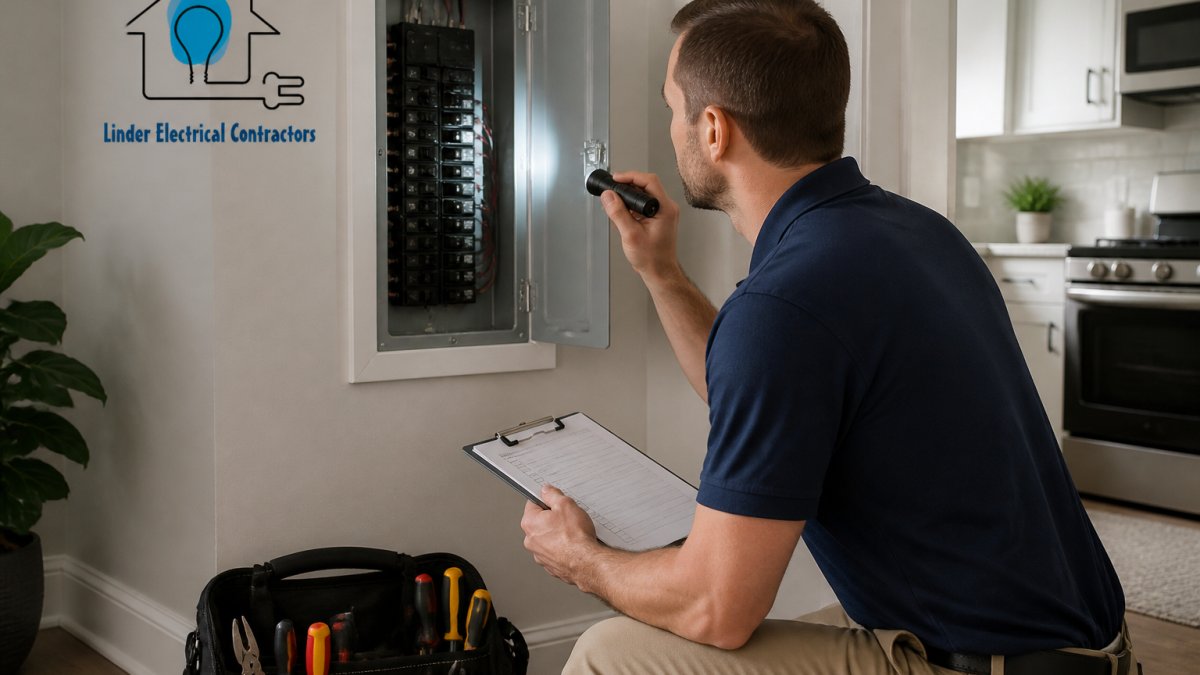
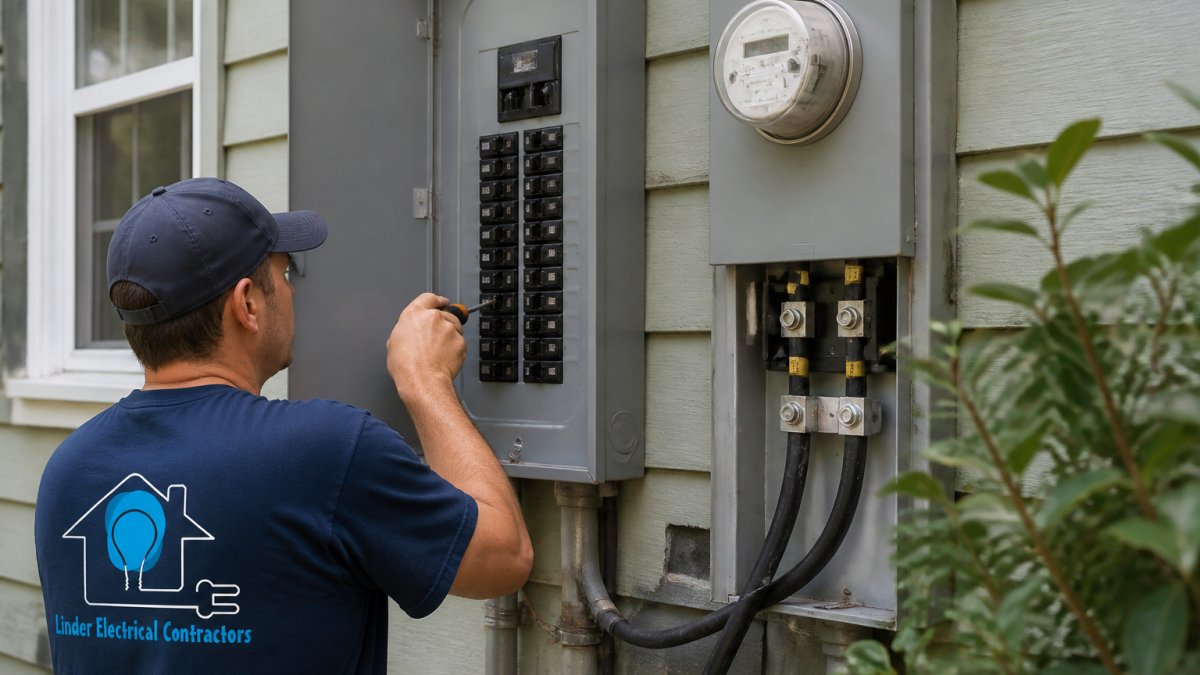
Your electrical service capacity is labeled right on your breaker box. Open the panel cover and look at the main breaker at the top. It will say either "100" or "200" (measured in amps). That number tells you your home's maximum electrical capacity.
A 100-amp service was standard in the 1950s. It powered basic appliances and lighting. A 200-amp service can handle modern electrical loads including:
- Central air conditioning
- Electric heating systems
- Multiple large appliances running at once
- EV chargers
- Home gym equipment
- Kitchen appliances and laundry simultaneously
The difference is significant. With 100 amps, running your air conditioner and electric dryer at the same time might trip your main breaker. With 200 amps, you have headroom.
Electrical Panel and Breaker Box Condition
The panel itself matters as much as the amperage rating. Some 1950s panels are dangerous and must be replaced entirely, regardless of whether you're upgrading to 200 amps.
Look for these red flags:
- Federal Pacific panels, These were common in the 1950s and 1960s. They have a known history of breaker failures and internal fires. If your panel says "FPE" or "Stab-Lok," replacement is mandatory.
- Rust or corrosion, Water damage inside the panel means it's failing. This requires replacement.
- Loose or burned breakers, A breaker that won't stay in place or shows burn marks indicates the panel is deteriorating.
- Cloth-wrapped wiring inside the panel, This insulation becomes brittle with age and can crack, creating fire hazards.
If your 1950s home has an older Federal Pacific panel or shows significant deterioration, the panel replacement cost will be part of your 200-amp upgrade. That's actually a safety win, you're solving two problems at once.
1950s House Wiring Types and Safety Concerns
Knob-and-Tube Wiring and Aluminum Conductors
1950s homes used several types of wiring that are either outdated or outright hazardous by today's standards.
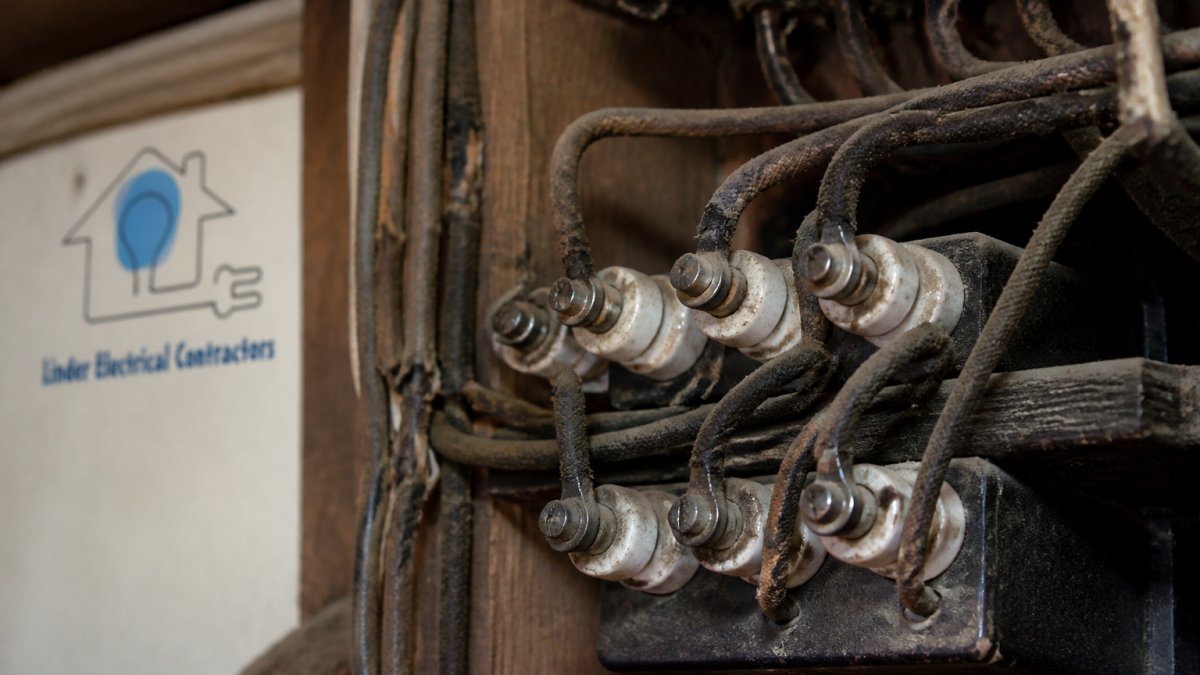
Knob-and-tube wiring was common in homes built before the 1950s and lingered into early 1950s construction. It consists of individual copper wires run through ceramic knobs and tubes, with no outer sheathing. This wiring is a fire hazard because:
- The insulation becomes brittle and cracks over time
- There's no ground wire for safety
- It can't handle modern electrical loads
- Insurance companies often won't cover homes with active knob-and-tube wiring
If your 1950s home still has knob-and-tube wiring, upgrading to 200-amp service means replacing it. That's additional cost, but it's necessary.
Aluminum wiring was used in many 1950s-1970s homes as a cheaper alternative to copper.
If your home has aluminum wiring, it must be addressed during any service upgrade.
Service Entrance Wiring and Utility Connection
The service entrance is the point where the utility company's lines connect to your home.
In a 1950s home, the service entrance wiring is often undersized for a 200-amp upgrade. The wires running from the utility pole to your meter might be rated for only 100 amps.
Here's the practical reality: your utility company has the final say on this. They own the lines from the pole to your meter.
The utility company also must approve the upgrade. They'll inspect your service entrance, meter, and connection point. If they find problems, they'll require fixes before energizing the new 200-amp service.
Electrical Load Calculation for a House
Modern Electrical Loads and Appliance Demand
A 200-amp service upgrade isn't just about having more capacity, it's about matching your home's actual electrical needs. Load calculation determines whether 200 amps is enough or if you need something larger.
Load calculation adds up the power draw of all your appliances and systems:
- Electric water heater: 4,500-5,500 watts
- Central air conditioner: 3,500-5,000 watts (running)
- Electric range/oven: 5,000-6,000 watts
- Electric dryer: 3,000-5,000 watts
- Heat pump or electric heating: 5,000-10,000 watts
- EV charger: 7,200-19,200 watts (depending on charger level)
The National Electrical Code (NEC) requires load calculations that account for simultaneous use. You don't add every device at full power, you apply demand factors. For example, your water heater and oven rarely run at the same time at full power.
A licensed electrician performs this calculation during the assessment. For most 1950s homes, 200 amps is sufficient. Some homes with multiple electric heating zones, large EV chargers, or extensive electric heating might need 300 amps, but that's less common.
Air Conditioning, Electric Heat, and EV Chargers
These three systems are the biggest drivers of 200-amp upgrades in older homes.
Central air conditioning draws 3,500-5,000 watts while running. In the 1950s, air conditioning was a luxury. Most homes didn't have it. If you're adding AC or upgrading an existing system, that's a major load increase your 100-amp service can't handle.
Electric heating, whether a furnace, heat pump, or baseboard system, draws 5,000-10,000+ watts depending on the system size and outdoor temperature. A 1950s home with oil or gas heat has minimal electric heating load.
EV chargers are the new wild card. A Level 2 home charger draws 7,200-19,200 watts, depending on the charger and your electrical panel capacity.
200-Amp Service Installation Requirements
What Needs Replacement and What Doesn't
A 200-amp service upgrade doesn't mean replacing everything. Here's what typically needs to change and what often stays:
Must be replaced:
- The main breaker (from 100 amp to 200 amp)
- The electrical panel itself (if it's a Federal Pacific or deteriorated)
- Service entrance wiring (if undersized)
- Any knob-and-tube or aluminum wiring in active use
- The meter (utility company requirement)
Usually stays:
- Branch circuit wiring inside walls (if it's in good condition and copper)
- Existing breakers for individual circuits (they remain in the new panel)
- Outlets and switches (they work with any amperage)
- Conduit and raceways (unless damaged)
The key is: only what's unsafe or inadequate gets replaced. A quality electrician won't recommend unnecessary work, but won't skip necessary safety upgrades either.
Permits, Utility Coordination, and Inspection
A 200-amp service upgrade requires permits and inspections. This isn't optional, it's required by electrical code and your local building department.
The permit process:
- Your electrician or you apply for an electrical permit with your local building department
- The permit includes a plan showing the new service entrance, panel location, and load calculation
- Permit fees vary by jurisdiction but typically range based on the project scope
- The permit process takes 1-2 weeks in most cases
Utility coordination:
- Your electrician notifies the utility company before work begins
- The utility company inspects the service entrance and meter location
- They may upgrade their lines from the pole if needed (they do this work)
- They energize the new service once everything passes inspection
Inspections:
- The local building inspector inspects the work before the utility company energizes it
- The inspection covers the panel installation, service entrance wiring, grounding, and bonding
- If work doesn't meet code, the inspector will require corrections before approval
This process typically takes 2-4 weeks from permit to final approval. It's not fast, but it's necessary for safety and legal compliance.
How Long Does a 200-Amp Service Upgrade Take
The timeline depends on the scope of work and whether complications arise.
If your panel is accessible and wiring is in good condition:
- 1-2 days for the electrician's work
- 2-4 weeks for permits and inspections
- Total time: 2-4 weeks
If your panel requires relocation or wiring replacement:
- 3-5 days for the electrician's work
- 3-6 weeks for permits and inspections
- Total time: 3-6 weeks
If knob-and-tube or aluminum wiring must be replaced:
- 1-2 weeks for the electrician's work
- 4-8 weeks for permits and inspections
- Total time: 4-8 weeks
The biggest variable is whether existing wiring needs replacement. If your 1950s home has original wiring and it's in poor condition, the project expands significantly.
Your Next Step: Professional Assessment
The only reliable way to know if your 200-amp service 1950s home upgrade is feasible is a professional electrical inspection. An electrician will:
- Test your current service capacity and load
- Inspect your panel for safety issues
- Check your service entrance wiring
- Identify any unsafe wiring inside walls
- Perform a load calculation for your planned upgrades
- Estimate the scope of work and timeline
We assess your specific situation, explain what needs to happen, and give you a clear picture of the work involved before you commit to anything.
The cost of an assessment is far less than the cost of guessing wrong. Many homeowners find that their 1950s home is upgradeable without major complications. Others discover problems that need addressing regardless of whether they upgrade service.
Can a 1950s home handle 200-amp service? Yes. But the real answer depends on your home's wiring condition, panel type, and utility connection. The best first step is a professional inspection that identifies what's safe, what needs upgrading, and what the actual timeline and scope look like.
Frequently Asked Questions
Can a 1950s home be upgraded to 200-amp service?
Yes, but it depends on the condition of your existing wiring, service entrance, and utility infrastructure. Most 1950s homes have 100-amp service with knob-and-tube or early Romex wiring. Upgrading to 200-amp service requires replacing the main service conductors, the electrical panel, and often the service entrance wiring. A licensed electrician must inspect your home first to determine if the utility line to your property can support 200 amps and whether your existing wiring is safe to work with.
What is the old-style wiring in a 1950s house called?
1950s homes typically have knob-and-tube wiring or early Romex (cloth-wrapped cable). Knob-and-tube uses individual copper wires held in place by ceramic knobs and run through porcelain tubes. This wiring lacks a ground wire and deteriorates over time, making it a fire and shock hazard. Some 1950s homes also used aluminum service conductors, which corrode and overheat. Modern electrical code requires grounded wiring and proper bonding for safety.
Does upgrading to 200-amp service require replacing all the wiring?
Not necessarily all of it, but the main service conductors from the utility meter to your electrical panel must be replaced with larger copper wire rated for 200 amps. Branch circuits inside your home (the wiring to individual outlets and switches) may remain if they are in good condition and properly protected by circuit breakers. However, if your home has knob-and-tube wiring or deteriorated insulation, your electrician may recommend replacing those circuits for safety. A full inspection determines what must be replaced.
How much can a 200-amp service handle?
A 200-amp service can supply approximately 48,000 watts of continuous electrical load (200 amps × 240 volts). In practice, the National Electrical Code limits continuous loads to 80% of service capacity, so plan for about 38,400 watts. This is sufficient for most modern homes with central air conditioning, electric heating, an electric water heater, major appliances, and an EV charger. Your electrician will calculate your specific load requirements during the assessment to confirm 200 amps meets your needs.