 ultimate-guide
Benefits of 200 Amp Panel Upgrade: What You Need to Know
Table of Contents
- What Is a 200-Amp Electrical Panel and Why It Matters
- Signs You Need an Electrical Panel Upgrade
- 150 Amp vs 200 Amp Service: Key Differences
- 200 Amp Electrical Service Requirements and Capacity
- Core Benefits of Upgrading to 200 Amps
- 200 Amp Panel Upgrade Cost and What Affects Pricing
- The Upgrade Process: Timeline, Permits, and Inspections
- Alternatives to a Full Service Upgrade
- Frequently Asked Questions
Last Updated: October 17, 2026
What Is a 200-Amp Electrical Panel and Why It Matters
A 200-amp electrical panel is the main distribution hub that receives power from your utility company and channels it throughout your home through individual circuits. It's the central nervous system of your electrical system, controlling how much power flows to each area of your house. The "200 amps" refers to the maximum current capacity your service entrance can safely deliver at any given moment.
Most homes built before the 1980s came equipped with 100-amp or 150-amp service, which was adequate when households had fewer appliances and lower power demands. Today's homes are fundamentally different. Modern living includes air conditioning, electric water heaters, multiple televisions, home offices with extensive equipment, and increasingly, electric vehicle charging stations and solar installations. A 200 amp panel upgrade addresses this reality head-on.
At Linder Electrical Contractors, we've worked with hundreds of homeowners facing the same decision: whether their current electrical capacity can support their lifestyle and future plans. The answer often depends on what you're actually trying to power and whether your current panel leaves room for growth. Understanding what a 200-amp panel does, and what it doesn't, is the first step toward making the right choice for your home.
Signs You Need an Electrical Panel Upgrade
Your electrical system sends clear warning signals when it's being pushed beyond its limits. The most obvious sign is frequent breaker trips. If you're constantly resetting the same circuit breaker, or if multiple breakers trip simultaneously when you run the dishwasher and air conditioning together, your panel is telling you it's overloaded.
Flickering or dimming lights are another red flag. When lights flicker when you turn on a major appliance, the voltage is dropping because your panel can't deliver steady power to everything at once. This happens because the total demand exceeds what your service entrance can safely provide.
Burning smells near the electrical panel or a warm-to-touch panel itself demands immediate attention. These are signs of dangerous overheating and potential fire risk. Similarly, if you notice scorch marks around outlets or breakers, or if outlets feel warm, stop using them and call a licensed electrician immediately.
Older homes with original 100-amp service almost always need an upgrade if you're installing modern heating systems, air conditioning, or electric vehicle chargers. The math is straightforward: if you want to add a 40-amp EV charger to a 100-amp panel that's already running close to capacity, you don't have the headroom.
150 Amp vs 200 Amp Service: Key Differences
The practical difference between 150-amp and 200-amp service comes down to simultaneous power demand. A 150-amp panel can safely deliver 150 amps of current at the same time. A 200-amp panel delivers 200 amps. That 50-amp difference might sound incremental, but it translates directly to what you can run without overloading.
In a 150-amp home, running your central air conditioning, electric water heater, and electric range simultaneously might max out your available capacity. Add an EV charger drawing 40 amps, and you're over the limit. The same scenario in a 200-amp home leaves you with substantial headroom. You can run all those devices at once without triggering breaker trips or voltage sag.
The upgrade also affects future flexibility. A 200-amp electrical service provides the foundation for adding dedicated circuits for home gyms, hot tubs, backup generators, or solar installations without constantly managing which appliances you can use together. Homes with 150-amp service often force these choices.
From a resale perspective, 200-amp service is increasingly expected in the market. Buyers evaluating homes with older electrical systems often factor in the cost of an upgrade into their offers. A modern 200-amp service is a selling point, not a liability.
200 Amp Electrical Service Requirements and Capacity
A full 200-amp electrical service isn't just about upgrading the panel itself. The service entrance conductors, the wires that run from the utility meter to your panel, must be sized to handle 200 amps safely.
Your utility company also plays a role. They must upgrade the service lines running to your home if they're undersized. In some cases, they'll need to install a new transformer or upgrade existing infrastructure. This coordination happens during the permitting process and is handled by licensed electricians who work directly with the utility.
The main breaker in your panel is another critical component. A 200-amp main breaker replaces whatever you currently have, and it's the master switch that controls all power entering your home. This breaker must be properly rated and installed according to the National Electrical Code.
Inside the panel, the circuit breakers themselves distribute power to individual circuits throughout your home. A 200-amp panel provides more space and capacity for adding circuits than a smaller panel. This flexibility is valuable if you plan renovations or need to add dedicated circuits for specific loads.
Core Benefits of Upgrading to 200 Amps
Supporting Modern Appliances and Electrical Loads
Modern homes demand more power than ever. A central air conditioning system alone can draw 40-60 amps. Add an electric water heater (another 30-40 amps), an electric range (40-50 amps), and a clothes dryer (20-30 amps), and you're already at or exceeding what a 100-amp or 150-amp panel can safely deliver simultaneously. A 200-amp electrical service upgrade provides the capacity to run these appliances without constant circuit breaker management.
The benefit isn't just about preventing breaker trips. When your electrical system has adequate capacity, voltage remains stable throughout your home. This protects sensitive electronics like computers, televisions, and smart home systems from voltage fluctuations that can shorten their lifespan or cause malfunctions.
Homes with dedicated circuits for major appliances also experience fewer power quality issues. Each appliance gets its own pathway to power, reducing interference and ensuring consistent performance.
Enabling EV Charging and Solar Integration
Electric vehicle charging is reshaping residential electrical requirements. A Level 2 home charger typically requires 30-50 amps of dedicated capacity. Installing this on a 100-amp or 150-amp service often requires removing capacity from other circuits or installing the charger on a shared circuit, which creates bottlenecks.
A 200-amp electrical service upgrade provides the headroom for a dedicated EV charging circuit without compromising other electrical needs. You can charge your vehicle overnight while running your air conditioning and other appliances without concern.
Solar panel systems also benefit from adequate electrical service. A solar installation requires proper integration with your main panel, and having 200-amp service ensures the system can operate efficiently without creating bottlenecks between solar generation and home consumption. Battery storage systems add another layer of electrical demand that 200-amp service accommodates more gracefully.
Preventing Overloaded Circuits and Breaker Trips
Breaker trips are your panel's way of protecting your home from electrical fires. When a circuit draws more current than it's designed to handle, the breaker trips to interrupt the flow. This is a safety feature, not a flaw. However, frequent trips indicate that your electrical system is constantly operating at or beyond its design limits.
A 200-amp electrical service upgrade eliminates this constant stress. With more total capacity available, individual circuits operate below their maximum load more often. This reduces breaker trips, extends the life of your electrical equipment, and removes the frustration of losing power to sections of your home.
The safety benefit is substantial. Overloaded circuits generate heat, which can damage insulation and create fire risk. Adequate electrical capacity keeps wires cooler and safer.
200 Amp Panel Upgrade Cost and What Affects Pricing
The cost of a 200-amp electrical service upgrade varies based on several factors. The primary variables are the condition of your home's existing electrical infrastructure, the distance from the utility meter to your panel, whether service lines need upgrading, and local labor rates.
Homes with modern wiring and accessible panels cost less to upgrade than older homes where walls may need opening to run new service entrance conductors. If your utility company needs to upgrade infrastructure on their side, that's an additional cost, though often the utility covers their portion.
The permitting and inspection process adds to the timeline and cost, but this is non-negotiable for safety and legal compliance. Unpermitted electrical work creates liability and can affect your home's resale value or insurance coverage.
For a realistic picture of what a 200-amp electrical service upgrade will cost in your specific situation, contact a licensed electrician for a free written estimate. They'll assess your home's current condition, determine what upgrades are needed, and provide transparent pricing before work begins. Linder Electrical Contractors provides free estimates and handles the entire process, including all permits and inspections, so you know exactly what to expect.
The Upgrade Process: Timeline, Permits, and Inspections
A 200-amp electrical service upgrade typically takes 1-3 days of actual work, though the full timeline from initial estimate to completion can extend 2-4 weeks depending on permit processing time and utility company scheduling.
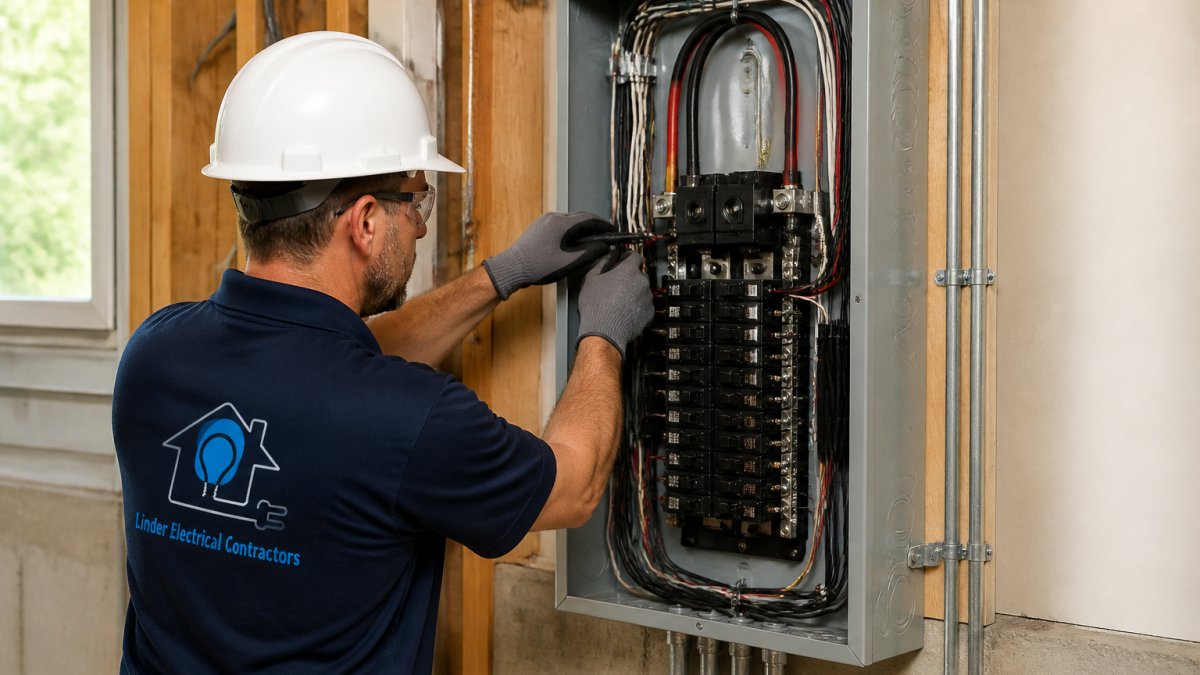
The process begins with a site visit and assessment. The electrician evaluates your current panel, determines what upgrades are needed, and identifies any complications.
Permits are essential. Your local authority having jurisdiction requires permits for any electrical service upgrade to ensure the work meets the National Electrical Code and local amendments. The permitting process typically takes 1-2 weeks.
The actual installation day involves shutting off power to your home while the main breaker and service entrance conductors are replaced.
Throughout this process, a licensed electrician handles coordination with the utility company and the permitting authority. You don't need to chase down paperwork or manage multiple contractors. Everything flows through one point of contact.
Alternatives to a Full Service Upgrade
Not every situation requires a full 200-amp electrical service upgrade. Understanding your alternatives helps you make the right decision for your needs and budget.
Load management is the simplest approach. If your breaker trips only when you run multiple high-demand appliances simultaneously, you can manage usage, avoiding running the air conditioning and electric range at the same time, for example.
Dedicated circuits for specific appliances can reduce overall panel stress. If you're installing an EV charger or hot tub, a dedicated circuit ensures those devices don't compete with other loads.
Subpanels are a middle-ground option. A subpanel is a secondary electrical panel fed by a large breaker in your main panel. It provides additional circuit capacity without upgrading the main service entrance.
Demand-side efficiency can help in some cases. Upgrading to high-efficiency air conditioning, heat pumps, or water heaters reduces overall electrical demand.
A full 200-amp electrical service upgrade remains the most comprehensive solution for homes that need reliable power for modern appliances, EV charging, and future flexibility.
If you're experiencing frequent breaker trips, flickering lights, or planning to add an EV charger or solar installation, your electrical system is signaling that it's time for an upgrade.
Frequently Asked Questions
What are the benefits of upgrading to a 200-amp electrical panel?
A 200-amp panel upgrade increases your home's electrical capacity, supporting modern high-demand appliances, electric vehicle chargers, and solar systems without overloading circuits or tripping breakers. It also improves safety by reducing fire risk from overheated wiring, provides stability for sensitive electronics, and can increase resale value. Most importantly, it future-proofs your electrical system as energy needs continue to grow.
How much does a 200-amp panel upgrade cost?
The cost of a 200-amp service upgrade depends on several factors, including your home's age, current wiring condition, service entrance location, whether your utility requires coordination, and local permit and inspection fees. Older homes with outdated wiring may cost more. Contact Linder Electrical Contractors for a free written estimate tailored to your specific situation, as pricing varies significantly based on your home's unique needs.
Do I need 200-amp service or is 150 amps enough?
150-amp service may be sufficient for older homes with minimal electrical loads, but 200-amp service is increasingly the standard for modern homes. If you plan to add an EV charger, install solar panels, upgrade to electric heating, or use multiple high-demand appliances simultaneously, 200 amps is typically necessary. A licensed electrician can perform a load calculation to determine your specific requirements.
What is required to upgrade to 200-amp service?
A 200-amp service upgrade requires replacing your meter base, main breaker, and service entrance conductors; upgrading wiring if needed; and coordinating with your utility company. The project also requires electrical permits and inspections to ensure compliance with electrical code. Linder Electrical Contractors handles the entire process, including permit applications, utility coordination, and final inspections, so you don't have to manage these steps yourself.