 how-to
Can My Panel Support an EV Charger? A Homeowner's Guide
Table of Contents
- How to Assess Whether Your Panel Can Support an EV Charger
- Understanding EV Charger Load Calculation
- Can a 100-Amp Panel Support an EV Charger?
- Level 2 EV Charger Electrical Requirements Explained
- Using EV Charger Load Management to Avoid an Upgrade
- When You Need a Service Upgrade
- Next Steps: Getting a Professional Assessment
- Frequently Asked Questions
Last Updated: October 12, 2026
How to Assess Whether Your Panel Can Support an EV Charger
Before installing an EV charger, you need to know if your electrical panel support EV charger installation is feasible. The answer depends on three things: your service rating, available breaker space, and your home's total electrical load.
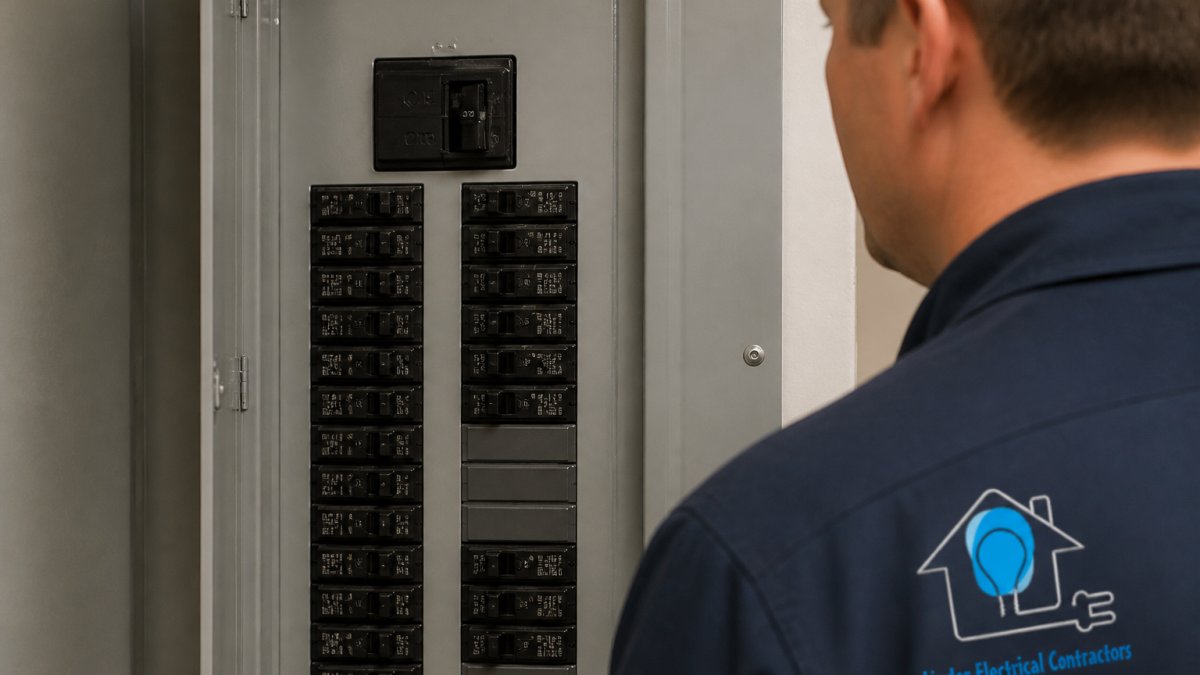
Find your main breaker and service rating, check your remaining breaker space, then calculate your home's total electrical load. These three steps tell you whether your panel can support an EV charger without upgrades.
Locate Your Main Breaker and Service Rating
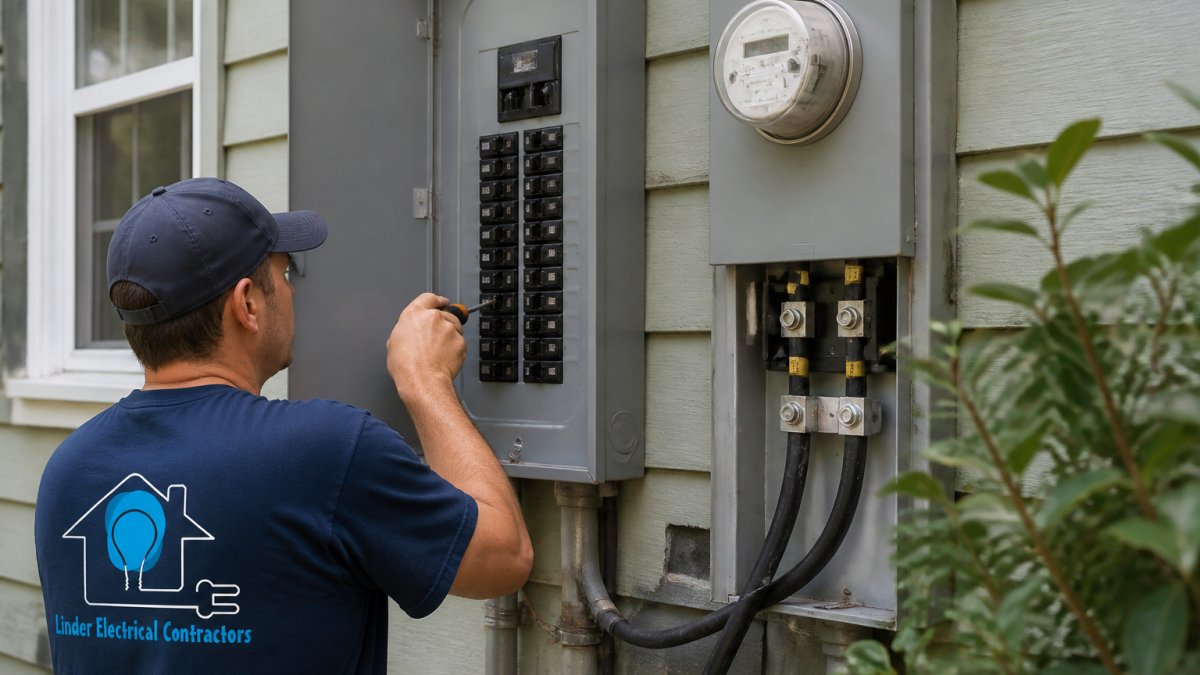
Your main breaker is the large switch at the top of your electrical panel. The number next to it is your service rating, how much electrical power your home can use at once.
Common service ratings are 100, 150, and 200 amps. Newer homes typically have 200-amp service; older homes often have 100 or 150 amps.
To find your service rating:
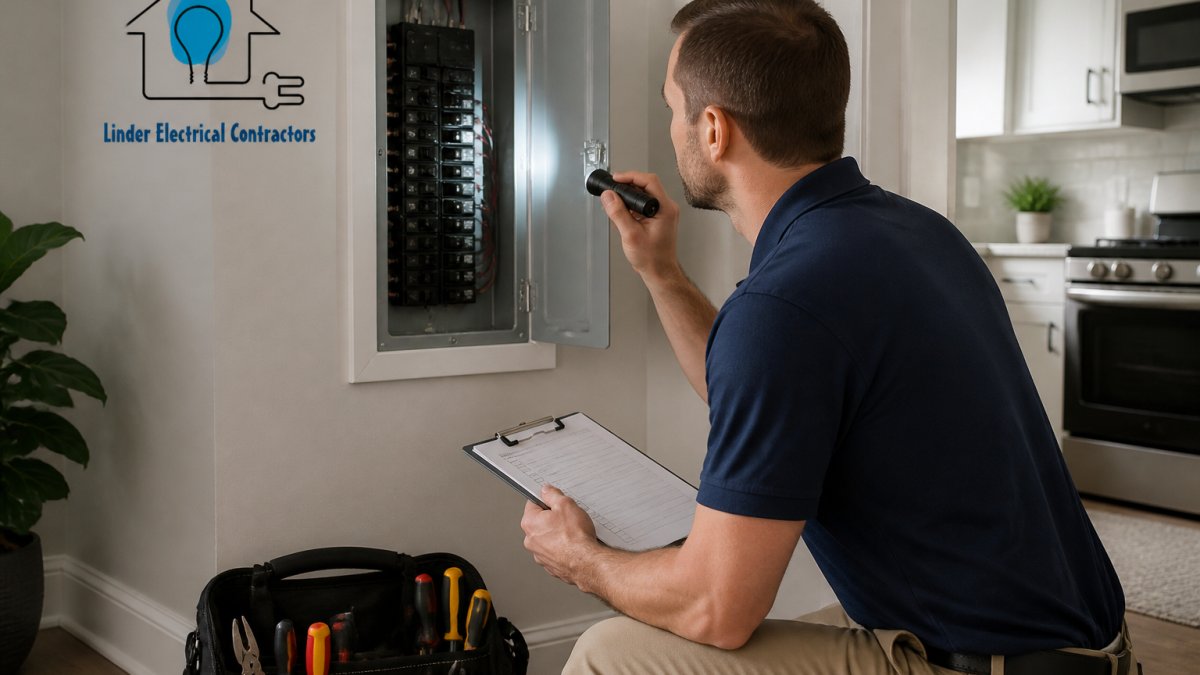
- Open your electrical panel door (or breaker box)
- Look at the main breaker switch at the top
- Read the number printed on it
If you're uncomfortable opening your panel, a licensed electrician can read it for you in minutes.
Identify Available Breaker Space
Your panel has a fixed number of breaker slots, some used by existing circuits and some empty. An EV charger needs a dedicated breaker, typically 30, 40, or 48 amps for a Level 2 charger, with its own slot. If you have at least one empty slot, you can likely fit an EV charger breaker without upgrading.
Understanding EV Charger Load Calculation
A panel support EV charger installation requires understanding that an EV charger is a continuous load, it can draw its rated current for three hours or more. That's why a 200-amp service doesn't give you 200 amps of EV charging headroom; the charger must fit inside the load calculation along with everything else in the house.
Think of your panel like a water pipe: the service rating is the pipe's capacity, and your home's total load is the water flowing through it. If load exceeds capacity, the main breaker trips. The load calculation estimates whether the pipe can carry one more steady stream.
Why Breaker Space Is Not a Capacity Assessment
A common mistake is assuming an empty breaker slot means the panel can support an EV charger. Breaker space only tells you there's a physical place to land the new circuit, not whether the service has capacity to feed it while the rest of the home runs. A panel can have four open slots and still be near its service limit, while a full panel can sometimes support a charger via a tandem breaker, subpanel, or load management device.
What to Gather Before an Assessment
You can speed up an electrician's load calculation by gathering a few details in advance. None require opening the panel:
- Service rating. The number on the main breaker (often 100, 150, or 200 amps). If you cannot read it safely, the electrician will.
- Panel label details. Manufacturer, model, and busbar rating from the label inside the panel door, this shows the panel's maximum capacity and whether tandem breakers are listed for it.
- A list of major appliances. HVAC (with tonnage or BTU if available), electric water heater, range or oven, dryer, well pump, pool or hot tub equipment, and large shop tools.
How a Load Calculation Actually Works
A residential load calculation under the NEC's standard method isn't a simple sum of every breaker. It applies demand factors, adjustments reflecting that not everything runs at full power at once. The sequence:
- General lighting and receptacles. Calculated at a set value per square foot of living space, then reduced by a demand factor.
- Small appliance and laundry circuits. Added at fixed values for the kitchen and laundry areas.
- Major appliances. Nameplate ratings for the range, dryer, water heater, and similar items, with demand factors applied where the code allows.
- Largest motor load. HVAC compressors and similar motor loads are added at 100% of the largest, plus a percentage of the rest.
- EV charger. Added as a continuous load at 125% of its rated amperage.
- Compare to service rating. The total is compared against the service rating. If it fits with margin, the charger can be added. If not, the options are a smaller charger, load management, or a service upgrade.
A typical home with 200-amp service and gas appliances usually has ample room for a 40- or 48-amp charger, while a 100-amp service with electric heat, range, and dryer is often tight. The only way to know is to run the numbers for the specific home.
Charger Amperage and the 80% Rule
Charger amperage is how much current the charger draws from your panel. Common Level 2 chargers draw 16, 32, 40, or 48 amps.
The same 80% logic applies at the service level. A 200-amp service has a 160-amp continuous-load planning ceiling; a 100-amp service has 80 amps. The charger must fit inside whatever headroom remains after the rest of the home's calculated load.
Can a 100-Amp Panel Support an EV Charger?
A 100-amp panel can support an EV charger, but only if your home's existing load is low enough to leave room. Under the 80% rule, a 100-amp service allows 80 amps of continuous load.
Many older homes have 100-amp service. If your panel is already near capacity, a 200-amp upgrade is often the best solution: more expensive upfront, but it gives you room to grow.
Level 2 EV Charger Electrical Requirements Explained
A Level 2 charger is the most common home EV charging choice, faster than Level 1 (120-volt outlets) but slower than Level 3 (DC fast charging). Level 2 chargers use 240 volts and require a dedicated circuit, a properly sized breaker, and the right wire gauge. Installation usually takes a few hours if your panel has space.
240-Volt Circuit and Dedicated Breaker Needs
Level 2 chargers need a dedicated 240-volt circuit running from a breaker in your panel to the charger location. It cannot share power with other appliances. Breaker size depends on the charger's amperage:
- 16-amp charger: 20-amp breaker
- 30-amp charger: 40-amp breaker
- 40-amp charger: 50-amp breaker
The breaker protects the circuit from overcurrent: if the charger draws too much power, it trips to prevent fire or damage. Wire gauge matters too, a 16-amp circuit uses 12 AWG wire, a 48-amp circuit uses 6 AWG. An electrician will size the wire based on the charger and distance from the panel.
Hardwired Charger Versus NEMA 14-50 Outlet
There are two ways to install a Level 2 charger: hardwired or plug-in.
A hardwired charger is permanently connected, mounted on a wall or post with wire running directly from the breaker.
A NEMA 14-50 outlet is a 240-volt plug outlet, similar to a dryer outlet.
Hardwired chargers cost less to install because they don't need an outlet box.
Using EV Charger Load Management to Avoid an Upgrade
Load management lets an EV charger share the service with the rest of the home instead of competing with it. Rather than assuming everything runs at full power simultaneously, a load management system watches the service and reduces or pauses charging when household demand rises. Done correctly, it can let a home add a Level 2 charger without a service upgrade.
How Load Management Actually Works
There are two common approaches, and they are not interchangeable:
- Service-level (whole-home) management. A current transformer (CT) or metering device around the service conductors continuously measures total household current. When load approaches a set threshold, typically a percentage of the service rating, the controller signals the charger to reduce its draw or stop, resuming when load falls. This is the approach that lets a charger operate on a service that would otherwise be too small.
- Circuit-level or charger-level management. Some chargers and devices coordinate a specific set of loads, such as an EV charger and an electric dryer, so they can't run at full power simultaneously. Simpler, but only helps if those loads are the ones creating the conflict.
In both cases, the charger's available current is dynamic, not fixed. A 48-amp charger under management may run at 48 amps overnight and drop to 16 amps or pause when the oven, dryer, and heat pump are all running.
Load Management Is Not a Bigger Breaker
A common misunderstanding is that load management is a way to install a larger breaker than the service can support. It isn't, and it's not a code-compliant workaround for an undersized service.
A larger breaker doesn't create capacity. Installing a 60-amp breaker for a 48-amp charger on a 100-amp service doesn't make it a 160-amp service; it just moves the point at which the main breaker trips.
Load management works within the existing service rating, enforcing the 80% continuous-load ceiling by actively limiting the charger's draw so total household load stays below the threshold.
When Load Management Is the Right Choice
Load management tends to make sense when:
- The service has capacity on paper, but not much margin. A load calculation shows the charger fits only if limited during peak household demand.
- The home has large intermittent loads. Electric resistance heat, an electric dryer, an electric range, or a heat pump with electric backup create short, high-demand windows that would otherwise force a full-size charger to pause.
- Overnight charging is the primary use case. If the vehicle is parked 8-12 hours overnight, a charger that occasionally slows down still delivers a full charge by morning.
When an Upgrade Is the Better Answer
An upgrade is usually the better path when:
- The load calculation shows the home is already at or above service capacity without the charger.
- The panel is a known-hazard type, has been recalled, or has a history of overheating or nuisance tripping.
- The homeowner plans to add other large loads soon, a heat pump, induction range, second EV, hot tub, or shop.
A service upgrade is a one-time cost that adds capacity permanently; load management is an ongoing control strategy that adds a device, configuration, and dependency. The right choice depends on the home's load profile, charging habits, and actual headroom.
Practical Trade-Offs to Expect
- Charging speed is variable. Under management, a 48-amp charger might effectively behave like a 24-amp charger during peak household demand.
- Installation adds hardware and configuration. A service-level monitor requires CT placement, wiring, and commissioning, more cost and complexity than a plain circuit install.
- Compatibility matters. Not every charger supports every load management device; the two must communicate via hardwired signal, wireless protocol, or manufacturer-specific pairing.
When You Need a Service Upgrade
A service upgrade means replacing your main breaker and increasing your service rating from 100 amps to 200 (or 150 to 200), giving your home much more electrical capacity.
Signs Your Panel Cannot Support an EV Charger Safely
You need a service upgrade if:
- Your current service is 100 amps and your home's peak load is above 60 amps
- Your electrical panel is full with no available breaker slots
- Your main breaker has tripped multiple times due to overload
A service upgrade is the only permanent fix if your panel is overloaded; load management won't solve the underlying problem.
What a 200-Amp Service Upgrade Involves
A 200-amp service upgrade includes:
- Replacing the main breaker with a 200-amp breaker
- Installing a larger panel (usually 40-60 slots instead of 20-30)
- Running new service lines from the utility meter to the panel (if needed)
The work takes one to two days, and your home will lose power during installation while the utility disconnects and reconnects service. We handle the entire process, permits, utility coordination, the upgrade, and final inspection.
Next Steps: Getting a Professional Assessment
The best way to know if your panel can support an EV charger is to have a licensed electrician assess it.
Don't guess about electrical capacity, a wrong decision can lead to a tripped breaker, unsafe conditions, or expensive repairs. Contact Linder Electrical Contractors for a free written estimate. We handle the entire project including permits and inspections.
Frequently Asked Questions
How do I know if my electrical panel can handle an EV charger?
Check your main breaker rating (typically 100 or 200 amps) and calculate your home's total electrical load, including HVAC, appliances, and heating. A professional can assess your available capacity and determine if your electrical panel has enough spare capacity for a Level 2 charger's continuous load. Most 200-amp panels can support an EV charger; 100-amp panels may need load management or an upgrade.
What size electrical panel do I need for a Level 2 EV charger?
A 200-amp electrical service is typically sufficient for a Level 2 charger in most homes. Level 2 chargers draw 30 to 48 amps on a dedicated 240-volt circuit. A 100-amp panel may work if your household load is low, but many homes require a service upgrade to safely support both the charger and existing electrical loads without exceeding panel capacity.
Can I install an EV charger on a 100-amp panel?
A 100-amp panel can support an EV charger only if you have sufficient available capacity after accounting for your home's continuous electrical load. If your HVAC, water heater, and other major appliances already consume most of your 100-amp service, you'll need either a service upgrade to 200 amps, load management, or a lower-amperage charger. A professional assessment is essential to determine if your specific panel and home load allow safe installation.
What does load management do for EV charger installation?
Load management systems monitor your home's real-time electrical usage and automatically reduce the charger's amperage when other high-demand appliances (like HVAC or electric heating) are running. This allows you to install an EV charger on a smaller electrical panel without exceeding your service capacity. Smart charging technology can also delay charging to off-peak hours, reducing strain on your electrical panel during peak household demand.
Can your panel support an EV charger? The answer depends on your service rating, available breaker space, and home electrical load. Most homes with 200-amp service can accommodate a Level 2 charger without upgrades. Homes with 100-amp service may need a service upgrade if their existing load is high. Linder Electrical Contractors can assess your panel in person and recommend the right solution. Get a free estimate today and find out exactly what your home can handle.