 How-to
How to Size a Home Standby Generator for Your House
Last Updated: November 8, 2026
Quick Summary
To size a home standby generator, add the running watts of the appliances you need on at once, add the single largest starting surge from any one motor, then multiply by 1.2 to 1.25 for a safety margin. Decide first between whole-house and essential-circuit backup, since that choice sets your capacity target.
- Whole-house backup runs every load in the panel, while essential-circuit backup powers a chosen set of circuits through a transfer switch.
- Starting watts are the brief surge a motor needs to spin up, and you add only the single largest surge, not all of them stacked.
- A cushion of roughly 20 to 25 percent above your calculated total covers startup spikes and future additions.
- A home generator sizing calculator is a starting point, not a final answer, so have an electrician confirm it on site.
- Automatic load-shedding modules drop non-critical circuits when the generator approaches its limit, letting a smaller unit carry more of the house.
Table of Contents
- Step 1: Decide Between Whole-House and Essential-Circuit Backup
- Step 2: List Your Appliances and Find Running Watts
- Step 3: Standby Generator Starting Watts vs. Running Watts
- Step 4: Add Up Simultaneous Loads and Apply a Safety Margin
- Step 5: Choose Essential Circuits for a Standby Generator
- Using a Home Generator Sizing Calculator and What Size Generator Chart
- What Size Generator Do I Need for My House Chart by Square Footage
- Get a Free Estimate from Linder Electrical Contractors
- Frequently Asked Questions
Step 1: Decide Between Whole-House and Essential-Circuit Backup
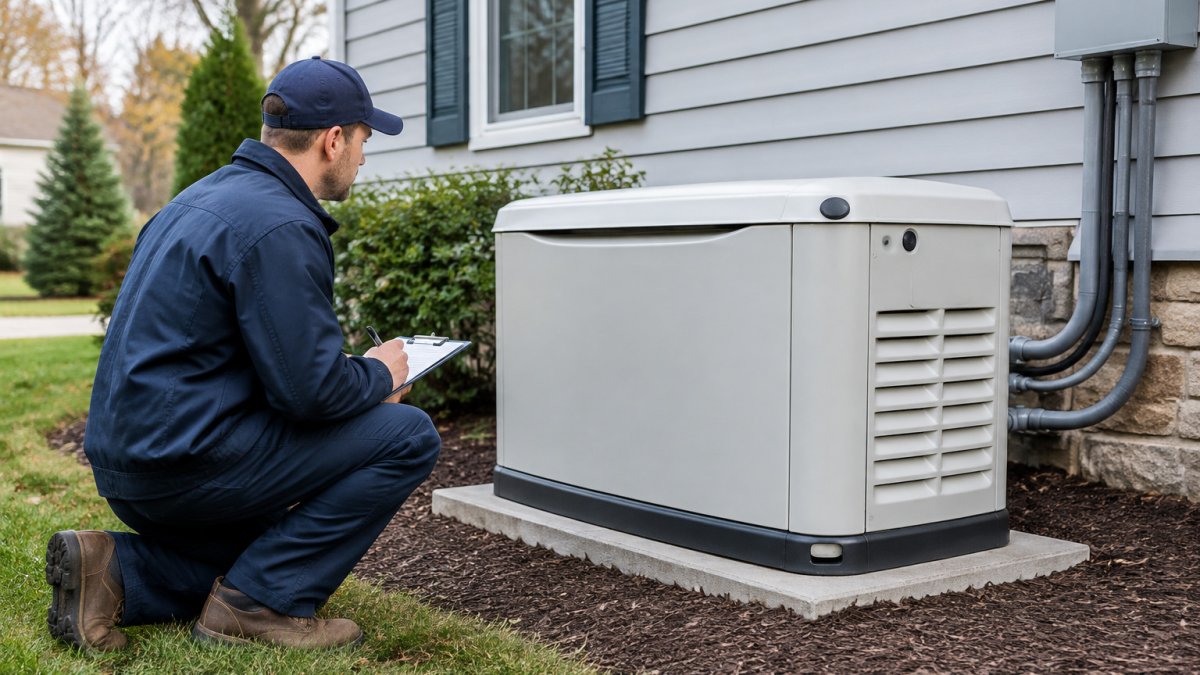
Sizing a home standby generator starts with one decision: do you want to power everything, or just the circuits that matter most? That answer sets your budget and your capacity target before you look at a single appliance.
Whole-house backup runs every load in the panel, including central air and the electric range. Essential-circuit backup powers a chosen set of circuits through a transfer switch, which costs less and fits smaller service panels.
This choice changes everything downstream, so it is the first decision to make.
Most families land on essential circuits. You keep heat, refrigeration, water, and lights running, and you skip the luxury loads that drain fuel.
- Choose whole-house if: you have the panel capacity, the fuel supply, and the budget for a larger unit.
- Choose essential circuits if: you want dependable backup at a lower installed cost.
- Watch out: buying a generator before this decision usually means oversizing or undersizing the unit.
Step 2: List Your Appliances and Find Running Watts
Running watts are the watts an appliance draws while it runs normally. Start your list with the appliances you cannot live without for a few days.
Walk through the house room by room and write down each item. Then find its wattage on the data plate or in the owner's manual. Every appliance sold in the U.S. carries a rating label, and the U.S. Department of Energy appliance and electronic labeling guidance explains how to read those ratings.
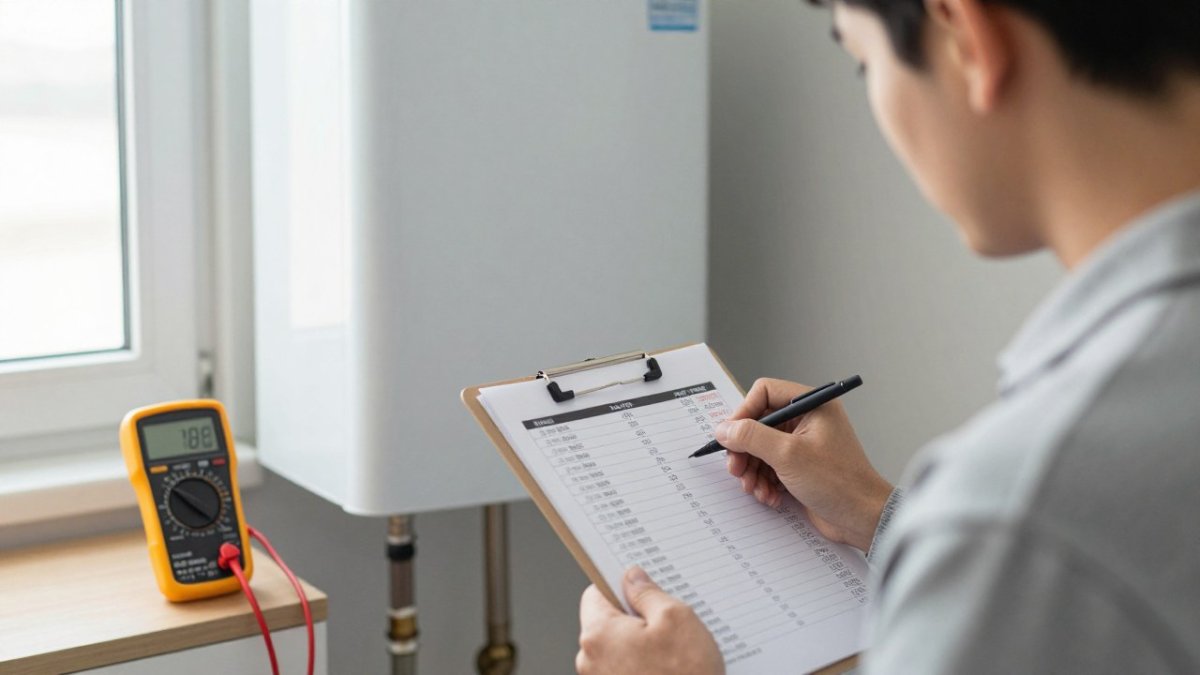
A typical list looks like this:
- Refrigerator: running watts from the nameplate
- Furnace blower: running watts from the label
- Well pump or sump pump: running watts from the motor plate
- Lights and outlets: add up the bulbs and devices you need
- Sump pump, garage door opener, and internet router
A common mistake is guessing. Nameplate numbers are the only reliable source, and a home generator sizing calculator is only as good as the numbers you feed it.
Step 3: Standby Generator Starting Watts vs. Running Watts
Starting watts, also called surge watts, are the brief burst of power a motor needs to spin up from a dead stop. Running watts are what the appliance draws once it is at speed. The gap between the two can strongly affect the generator size you need.
Here is the mechanism. An induction motor at rest has no back-EMF to oppose current, so it briefly draws a multiple of its running current. Inrush for motor-driven equipment is a multiple of running current, and the multiple varies by motor type, age, and load.
This is why the sizing rule is not "add up every surge." You add the running watts of everything on at once, then add the single largest starting surge, not all of them stacked.
Watch out: nameplate "running amps" on a motor are not the same as startup amps. If the label only lists running amps, multiply by the surge factor above, or check the manufacturer's locked-rotor amps (LRA) rating, which is the honest starting number.
Soft-start devices can change the math. A soft starter ramps a compressor or pump motor up gradually instead of at full inrush, which can reduce the starting surge a generator must handle.
The U.S. Department of Energy guide to home heating and cooling systems notes that HVAC equipment is among the largest electrical loads in most homes, which is exactly why the compressor surge, not the steady draw, usually sets the floor on your generator size.
Step 4: Add Up Simultaneous Loads and Apply a Safety Margin
Simultaneous loads are the appliances running at the same moment, not every appliance you own. Add the running watts of the items you expect to run together, then add the single largest starting surge on top.
Then apply a safety margin. A cushion of roughly 20 to 25 percent above your calculated total covers startup spikes and future additions.
Here is the arithmetic in plain form:
- Add running watts for all essential appliances running at once.
- Add the largest starting surge from any one motor.
- Multiply the total by 1.2 to 1.25 for headroom.
If your math pushes past what the panel can carry, an upgrade may be the real answer. Our guide to the signs you need an electrical panel upgrade covers the warning signs, and the benefits of a 200 amp panel upgrade explains what a larger service makes possible.
Step 5: Choose Essential Circuits for a Standby Generator
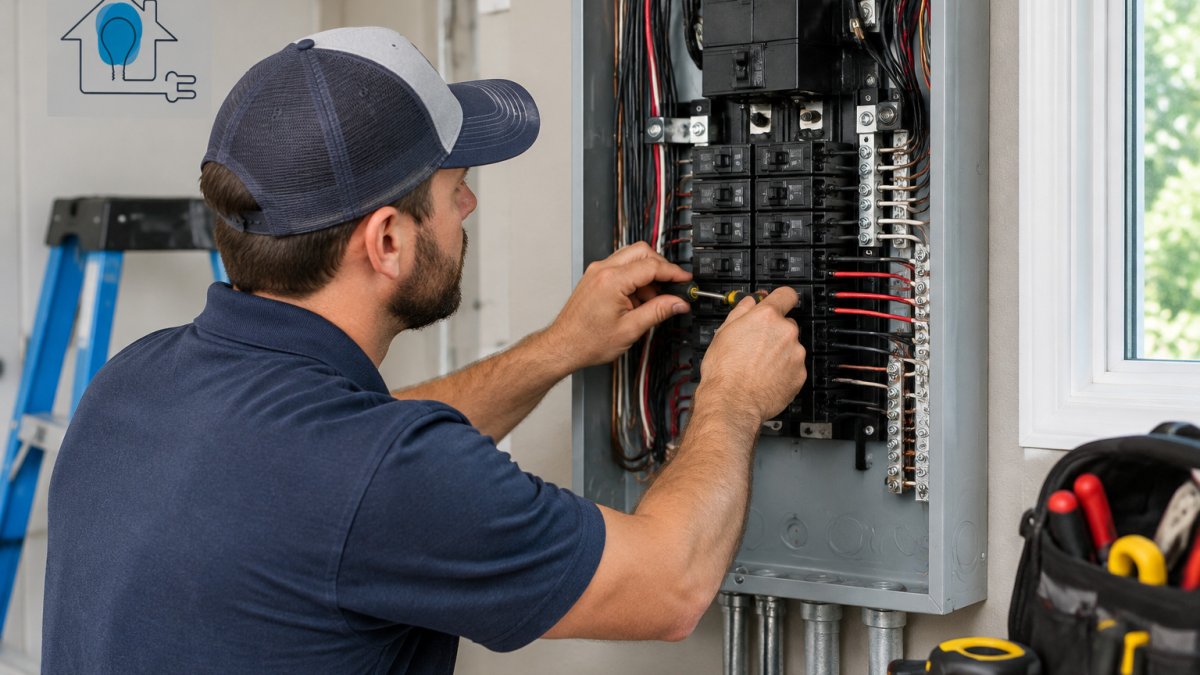
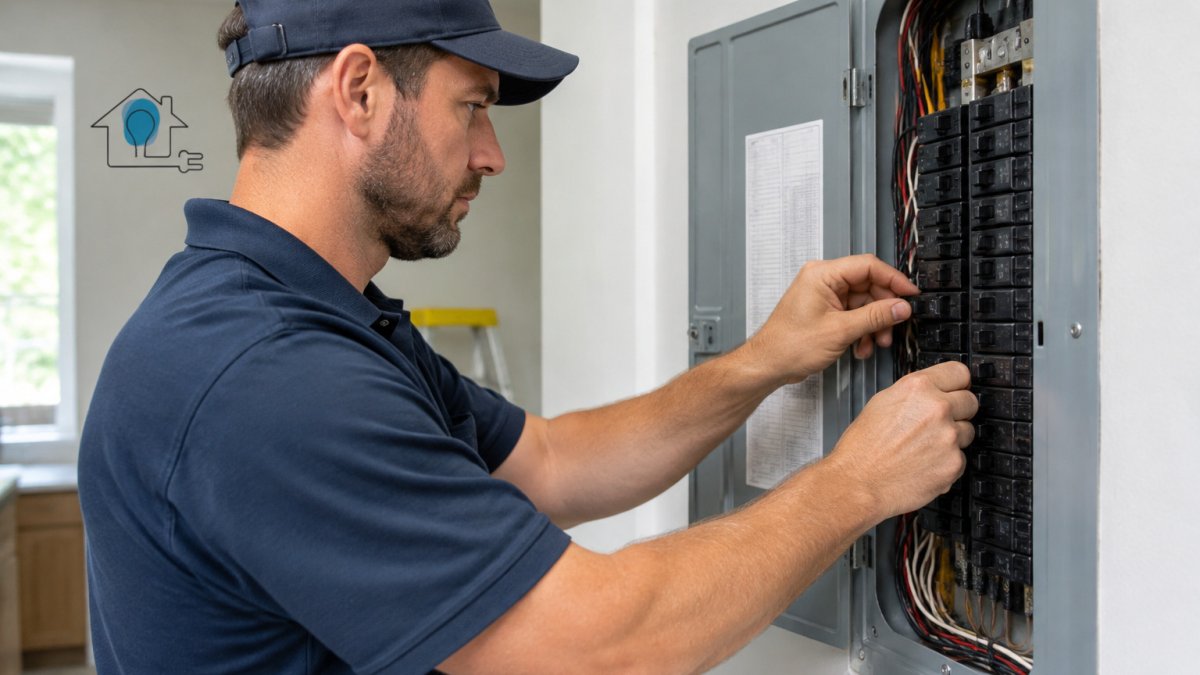
Essential circuits are the specific breakers a transfer switch will feed during an outage. Pick them deliberately, because every circuit you add raises the load.
Start with life-safety and comfort: furnace, refrigerator, well pump, sump pump, a few lighting circuits, and outlets for phones and medical devices. Leave out the electric range, clothes dryer, and hot tub unless your unit can carry them.
An automatic transfer switch flips the house from utility power to generator power on its own. A manual transfer switch costs less but requires you to throw it yourself.
If your service is only 100 amps, check whether it can support the generator you have in mind. Our article on installing a generator on 100-amp service answers that directly.
Using a Home Generator Sizing Calculator and What Size Generator Chart
A home generator sizing calculator turns your appliance list into a recommended kilowatt range. It is a starting point, not a final answer, because calculators cannot see your panel, your fuel line, or your actual startup surges.
Use one to sanity-check your math. Then have an electrician confirm it on site.
Most manufacturers also publish a what size generator do I need for my house chart. These charts map home size and bedrooms to a capacity band, which is handy for a quick read.
| Home Size | Bedrooms | Typical Capacity Band | Backup Type |
|---|---|---|---|
| Under 1,500 sq ft | 2-3 | Smaller air-cooled unit | Essential circuits |
| 1,500-2,500 sq ft | 3-4 | Mid-size air-cooled unit | Essential circuits or partial whole-house |
| 2,500-3,500 sq ft | 4-5 | Larger air-cooled or small liquid-cooled unit | Whole-house or managed loads |
| Over 3,500 sq ft | 5+ | Liquid-cooled unit | Whole-house with load management |
Charts assume average loads. A home with electric heat or a large well pump needs more than the chart suggests.
What Size Generator Do I Need for My House Chart by Square Footage
Square footage is a rough guide, not a rule. Two homes of the same size can need very different generators depending on fuel type, HVAC, and appliances. Use the chart above to narrow the range, then confirm with a load calculation.
What the chart cannot tell you is whether the unit you picked will actually install. Wattage is only one of four constraints, and the other three decide the job:
Service amperage and panel capacity. A home standby generator feeds a transfer switch, and the transfer switch has to be compatible with your service. A 100-amp service limits how large a generator can be tied in without a service upgrade; a 200-amp service gives you far more room. The generator's output breaker, the transfer switch rating, and the panel busbar all have to line up. A unit that calculates out perfectly on paper can still require a panel or service upgrade to connect legally and safely.
Voltage and phase. Residential service is single-phase 120/240 volts. Most home standby units are built for that, but the transfer switch, the generator's output configuration, and any 240-volt loads (well pump, AC, electric range, dryer) have to match.
Transfer-switch compatibility. An automatic transfer switch (ATS) is sized to the service and to the generator, and it must be listed for the combination. A manual transfer switch costs less but requires you to throw it yourself and to manage the load by hand.
Fuel type and real-world output. Generator output can be affected by fuel supply pressure and volume, so confirm the fuel supply can deliver the unit's full rated input. The practical rule: confirm the fuel supply can deliver the generator's full rated input, not just its average.
Load management closes the gap between the chart and the panel. Automatic load-shedding modules drop non-critical circuits (water heater, dryer, EV charger) when the generator approaches its limit, then restore them when demand falls.
Sizing for the future is worth a thought too. If an EV charger or a heat pump is coming, plan capacity now rather than replacing the unit later.
The National Fire Protection Association publishes the electrical and fire safety standards that govern generator installation, and your local code official enforces them. Permits and inspections are part of the job, and we handle both.
Get a Free Estimate from Linder Electrical Contractors
Sizing is the easy part on paper. The hard part is confirming it against your panel, your fuel supply, and your actual startup surges, and that is where a licensed electrician earns the fee.
Linder Electrical Contractors is licensed and insured, offers free written estimates, and handles permits and inspections from start to finish.
Get started with Linder Electrical Contractors and get a generator sized to your home, not to a chart.
A generator that is too small trips breakers. One that is too large wastes money. The difference comes down to an honest load calculation and a site visit. Get a free estimate from Linder Electrical Contractors and let our licensed team confirm the right capacity, handle the permit, and install it to code.
Frequently Asked Questions
How big of a standby generator do I need for a 2,000-square-foot house?
The right size depends on the appliance list, HVAC starting surge, and whether you use load management. The exact number depends on your appliance list, HVAC starting surge, and whether you use load management. A licensed electrician should verify the load calculation against your panel and transfer switch before you buy.
How do starting watts vs. running watts affect standby generator sizing?
Running watts are what an appliance draws once it is operating steadily. Starting watts are the brief surge needed to start motor-driven equipment like a central air conditioner, furnace blower, well pump, or refrigerator compressor. Size the generator so its surge rating covers the largest starting load plus the running watts of everything else on at the same time. Ignoring starting watts is the most common reason a generator trips on startup.
Can a load-management system let me use a smaller standby generator?
Yes. A load-management system or load-shedding device temporarily turns off large loads like an electric water heater, dryer, or EV charger when the generator is near capacity, then restores them when demand drops. This lets a smaller, less expensive unit handle essential circuits without overloading. The trade-off is that some appliances will not run at the same time. Your electrician can set priorities so the HVAC, refrigerator, and well pump always stay powered.
Should I size a standby generator for essential circuits or my whole house?
Whole-house sizing covers every circuit but costs more and may require a larger unit, a bigger fuel supply, and a heavier transfer switch. Essential-circuit sizing focuses on the furnace, refrigerator, well pump, sump pump, lighting, outlets, and a few conveniences, which often means a smaller generator and lower installation cost. Choose whole-house if you want seamless coverage and have the budget; choose essential circuits if you want reliable backup at a lower price and can live without the electric range or dryer during an outage.