 How-to
7 Rules for Running a Generator in the Rain Safely
Last Updated: October 30, 2026
Quick Summary
Yes, you can run a generator in the rain, but only if you keep it completely dry and follow the manufacturer's instructions to the letter. Keep the generator, its connections, and the area around it dry, and make sure the exhaust stays clear.
- Set the unit on a dry, raised surface, never in standing water.
- Keep the generator at least 5 feet from walls, windows, and doors.
- Use a purpose-built cover with open sides for airflow, never a tarp.
- Never run a generator in a garage, basement, or attached shed, even with the door open.
- If a generator gets wet, turn off connected loads first, then switch it off and let it cool.
Table of Contents
- Can You Run a Generator in the Rain? The Short Answer
- Portable Generator Rain Safety: Shock, Water Damage, and Engine Failure
- How to Keep a Generator Dry: Covers, Clearance, and Placement
- Generator Tent for Rain: Why Purpose-Built Beats a Tarp or Household Tent
- What to Do If a Generator Gets Wet
- Wet-Weather Electrical Setup and Generator Transfer Switch Installation
- Generator Types, Weather Ratings, and Storm Preparation
- Get a Free Estimate for a Safe Backup Power Setup
- Frequently Asked Questions
Can You Run a Generator in the Rain? The Short Answer
Yes, you can run a generator in the rain, but only if you keep it completely dry and follow the manufacturer's instructions to the letter.
Skipping the safety steps during a storm can lead to damage that is often preventable.
Here's the core rule: the generator stays dry, the connections stay dry, and the exhaust stays clear. Everything else in this guide builds on that one idea.
Portable Generator Rain Safety: Shock, Water Damage, and Engine Failure
Three things go wrong when a generator gets wet. The first is electrical shock. The second is water damage to components. The third is engine trouble from moisture and corrosion. Each one has a different cause and a different fix.
Electrical Shock and Short Circuit Risks
Water turns a safe machine into a live hazard. Moisture on the frame, outlets, or cords creates a path for current to reach your body.
A short circuit happens when water bridges connections inside the unit. The Occupational Safety and Health Administration guidance on generator hazards treats wet operating conditions as a serious risk for exactly this reason.
Watch out: never touch a generator, cord, or plug with wet hands. Even a light drizzle on an exposed outlet is enough to cause a shock.
Water Damage, Corrosion, and Engine Problems
Moisture doesn't just threaten the electrical side. It gets into the fuel system, the air intake, and the control panel. Over time, corrosion eats at metal contacts and wiring. A unit that sits out in the rain can lose power output and lifespan fast.
Common signs of water damage include:
- Rust on the frame or terminals
- A breaker that keeps tripping
- Rough running or a engine that won't start
How to Keep a Generator Dry: Covers, Clearance, and Placement
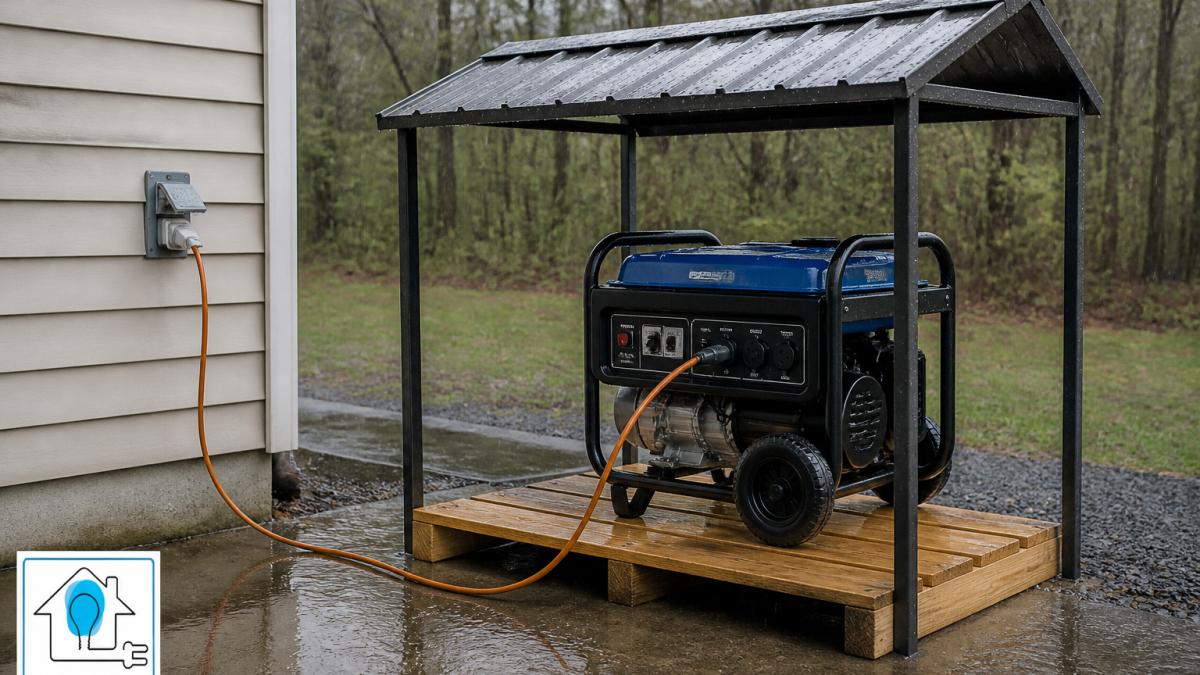
The right setup keeps rain off the unit while letting air move around it. Placement matters as much as the cover. Get both right and your generator runs safely through a storm.
Follow these steps:
- Set the unit on a dry, raised surface, never in standing water.
- Keep it at least 5 feet from walls, windows, and doors.
- Point the exhaust away from the home and any air intakes.
- Use a purpose-built cover with open sides for airflow.
- Keep cords off the ground and out of puddles.
- Check clearance around vents so the unit can breathe.
A generator needs airflow to cool and to vent exhaust. Blocking that airflow causes overheating. It also traps carbon monoxide, which is the real danger inside any enclosure.
Generator Tent for Rain: Why Purpose-Built Beats a Tarp or Household Tent
A generator tent for rain is built for the job. It has open sides, a heat-resistant top, and enough clearance for exhaust and airflow.
Draping a tarp over a running generator traps heat and exhaust. That raises the risk of overheating and carbon monoxide buildup.
| Cover Option | Airflow | Heat Safe | CO Risk | Best For |
|---|---|---|---|---|
| Purpose-built generator tent | Open sides | Yes | Low when placed right | Storm use |
| Tarp draped over unit | Blocked | No | High | Never while running |
| Household/camping tent | Poor | No | High | Not recommended |
| Open-sided canopy | Good | Check rating | Low with clearance | Temporary shelter |
Best for: a purpose-built enclosure with open sides and proper clearance. Skip if: you're tempted to throw a tarp over a running unit.
Carbon Monoxide Safety While Using an Enclosure
Carbon monoxide is invisible and has no smell. Any enclosure that traps exhaust can let CO build up and drift toward the house. That's why open sides and clearance are non-negotiable.
Keep the unit outdoors, well away from doors and windows. Never run a generator in a garage, basement, or attached shed, even with the door open (Winter Storm May Knock Out Power; CPSC Warns of Deadly Carbon Monoxide and Fire Risks). The U.S. Consumer Product Safety Commission generator safety information warns that CO from generators can kill within minutes in enclosed spaces.
What to Do If a Generator Gets Wet
If your generator gets wet, shut it down safely before you touch anything. Don't grab cords or plugs with bare, wet hands.
- Turn off connected loads first.
- Switch the generator off and let it cool.
- Move it to a dry spot, or wait for the rain to pass.
- Disconnect cords only after the unit is off.
- Inspect for moisture in outlets, the panel, and the fuel system.
- Let it dry fully before restarting.
- Check the owner's manual for model-specific steps.
If the unit took on water or won't restart, don't force it. A wet electrical setup can fail or shock you on the next start. That's a job for a licensed electrician. If you need help fast, our 24/7 emergency service is available.
Wet-Weather Electrical Setup and Generator Transfer Switch Installation
A generator transfer switch installation is what lets you power your home safely instead of running cords through windows. The switch connects the generator to your panel and prevents backfeed, which can injure utility workers and damage your wiring. But the transfer switch is only half the wet-weather picture. The cords, connections, and distribution equipment between the generator and the house are where most rain-related electrical failures actually happen.
Use Outdoor-Rated Cords and Connections
Not every extension cord is built for rain. Look for cords labeled for outdoor use with a jacket rated for wet locations, and match the wire gauge to the load and run length. A cord that is too light for the load will heat up, and heat plus moisture degrades the jacket faster. Keep the connection points, the plug at the generator and the plug at the house, out of puddles and off the ground.
Ground-Fault Protection Where Appropriate
Ground-fault circuit interrupter protection is designed to cut power when current leaks to ground, which is exactly the failure mode wet conditions create. Some portable generators include GFCI outlets; others do not. If yours does not, use a portable in-line GFCI or a GFCI-protected cord set rated for outdoor use. Test the GFCI before each storm season and after any exposure to water.
Keep Distribution Equipment Out of Standing Water
Power distribution boxes, spider boxes, and splitters should never sit in standing water or on saturated ground. Raise them on a stable, dry surface and keep them under cover that still allows airflow. Route cords so they do not cross walkways where they can be stepped on or submerged, and keep slack out of low spots where water collects. Never plug a generator into a wall outlet, that is backfeed, and it is dangerous regardless of the weather.
The Transfer Switch Still Matters
For any connection to your home's wiring, a transfer switch installed by a licensed electrician is the safe path. It isolates your panel from the utility, prevents backfeed, and gives you a single, dry, code-compliant point of connection instead of a web of cords.
Wet-weather setup comes down to a few rules:
- Keep the generator and all connections dry and elevated.
- Use outdoor-rated cords, connections, and GFCI protection where appropriate.
- Never plug a generator into a wall outlet.
Not sure your panel can carry a generator? Read our guide on whether you can install a generator on 100-amp service before you buy equipment.
Generator Types, Weather Ratings, and Storm Preparation
Not all generators handle weather the same way. Most portable units are not rated to run in direct rain, so check the owner's manual and manufacturer instructions for your specific model before the storm arrives.
How Generator Types Differ in Rain
- Portable gas generators. Workhorses with open frames and exposed outlets. They need the most shelter and the most careful cord management because water can reach the panel and receptacles directly.
- Inverter generators. Quieter and cleaner for sensitive electronics, often with enclosed housings that shed light rain better than open-frame units. The enclosure helps, but vents and outlets still let water in, so shelter is still required.
- Standby generators. Permanently installed and designed for outdoor exposure, often with weather-rated enclosures and automatic operation during outages. They are the closest thing to a rain-ready setup, but installation, clearances, and exhaust routing still have to be done correctly.
What an IP Rating Does and Does Not Guarantee
An IP rating describes how well an enclosure resists dust and water. The first digit covers solids and the second covers liquids, for example, an IPX4 rating indicates protection against splashing water. What an IP rating does not guarantee is that the unit is safe to operate in a downpour, that its outlets and cords are protected, or that the rating covers a unit that has been dropped, modified, or fitted with an aftermarket cover.
Storm Preparation Checklist
Do this before the weather turns:
- Store fuel safely and check that it is fresh.
- Test the generator monthly under load, not just at startup.
- Confirm your cover or shelter is ready and has open sides and clearance.
A little prep now saves a lot of trouble when the power goes out.
Get a Free Estimate for a Safe Backup Power Setup
Running a generator in the rain safely comes down to keeping it dry, giving it airflow, and wiring it correctly. Get any of those wrong and you risk shock, damage, or carbon monoxide. The safest path is a proper setup done once, by a licensed pro.
Linder Electrical Contractors is licensed and insured, offers free written estimates, and handles permits and inspections for you. We install transfer switches, size your service, and make sure your backup power is safe before the next storm hits. Schedule a residential electrical safety inspection and get a free estimate for a safe backup power setup.
Frequently Asked Questions
Can you run a portable generator in the rain?
Only with the right protection. A generator can run outdoors in rain if it stays dry and has unrestricted airflow and exhaust ventilation. Never run one in standing water, never let rain hit the outlets or control panel, and never enclose it in something that traps exhaust. If conditions are severe or flooding is possible, shut it down and wait. The owner's manual for your model sets the final limits, so read it before the storm arrives.
What is the safest way to protect a generator from rain?
Use a purpose-built generator tent or open-sided rain shelter, not a tarp draped over the unit. Position the generator on a dry, raised surface at least 5 feet from walls, doors, and windows, and point the exhaust away from the house. Keep clearance on all sides so airflow and cooling are not blocked. A household tent or improvised cover can trap heat and carbon monoxide, which makes it more dangerous than leaving the unit exposed.
What should you do if a generator gets wet?
Shut it down if it is safe to do so, then disconnect all loads and cords before touching anything. Do not start it again until it has dried completely. Move it to a dry area, wipe down the exterior, and let the components air out. Check the oil and air filter for water intrusion, and have a qualified electrician inspect the unit if water reached the outlets, wiring, or control panel. Starting a wet generator can cause a short circuit or electric shock.
Do you need a generator transfer switch installation for storm season?
A transfer switch lets you connect a portable generator to your home's wiring safely and prevents backfeeding onto utility lines. Installation must follow local electrical codes and usually requires a permit and inspection. A licensed electrician can size the switch to your panel and generator, handle the paperwork, and confirm everything is grounded correctly. Schedule the installation before storm season rather than during an outage.
Don't wait for the next storm to find out your generator setup is unsafe. Get started with Linder Electrical Contractors and power your home with confidence, backed by licensed, insured work and full permit handling.