 listicle
Benefits of Professional Electrical Maintenance Services
Table of Contents
- Why Professional Electrical Maintenance Matters
- Preventing Costly Repairs and System Failures
- Reducing Fire Risk and Electrical Hazards
- Creating an Electrical Maintenance Checklist for Your Property
- Establishing an Electrical Maintenance Schedule
- What a Commercial Electrical Inspection Includes
- Improving Energy Efficiency and Lowering Operating Costs
- Extending Equipment Lifespan and System Reliability
- Frequently Asked Questions
Last Updated: October 14, 2026
Why Professional Electrical Maintenance Matters
Electrical systems deteriorate silently until something fails. Professional electrical maintenance catches problems before they become emergencies.
Preventive care saves money and prevents disasters. A loose connection or overloaded circuit becomes a costly hazard tomorrow. The difference between a routine inspection and an emergency call often comes down to whether maintenance happened on schedule.
Professional electrical maintenance is a systematic approach to keeping your system safe, efficient, and reliable, avoiding the financial shock of unexpected failures.
Preventing Costly Repairs and System Failures
Electrical systems fail in predictable ways: circuits overload, connections loosen, wiring deteriorates.
A risk-based approach to what gets maintained first
Most experienced electricians triage by criticality:
- Tier 1, Life safety and code-critical: fire alarm power feeds, emergency egress lighting, ground fault protection, and life-support or fire-suppression circuits. These get inspected on the shortest interval your code and insurer require, with no deferral.
- Tier 2, Business-critical: server rooms, refrigeration, manufacturing lines, elevators, sump pumps, and any load where an outage halts operations or causes spoilage. These warrant annual or semi-annual attention and, where practical, backup power.
- Tier 3, High-occupancy and high-load: kitchen circuits, HVAC equipment, laundry rooms, and shared commercial tenant spaces, elevated fire and overload risk from continuous draw and moisture.
- Tier 4, Convenience and low-consequence: general lighting, spare receptacles, and non-essential branch circuits. These can follow the longest interval.
Aging equipment and aluminum branch wiring move up a tier regardless of what they serve, because deterioration, not load, drives failure.
What actually drives the cost of an electrical failure
The visible repair is rarely the largest line item. When a circuit fails unexpectedly, costs stack:
- Emergency labor premium: after-hours and weekend dispatch rates run well above scheduled service rates.
- Diagnostic time: tracing an intermittent fault in an energized, undocumented system can take hours before repair begins.
- Collateral damage: a failed connection can scorch a panel bus, melt adjacent conductors, or damage connected equipment.
- Downtime: for a business, lost production, spoiled inventory, or an unusable space often exceeds the electrical repair itself.
- Code-driven scope creep: once a panel is opened, current code may require upgrades, AFCI/GFCI devices, proper labeling, that a planned project would have budgeted for.
Planned maintenance converts unpredictable emergency spending into scheduled, budgetable work.
Warning signs that require immediate attention
Call a licensed electrician promptly if you observe:
- Breakers that trip repeatedly, especially on the same circuit
- A burning or fishy odor near outlets, switches, or the panel
- Outlets or switch plates that are warm or hot to the touch
- Discolored, scorched, or melted faceplates and cords
- Buzzing, crackling, or sizzling sounds from the panel or fixtures
- Lights that flicker or dim when appliances cycle on
These are active hazards, not maintenance items. A qualified technician tests for them during a routine visit and recommends replacement before failure.
Reducing Fire Risk and Electrical Hazards
Electrical fires start quietly: faulty wiring, overloaded circuits, and deteriorating insulation build heat until flames appear and damage is extensive (CPSC Launches Program to Prevent Home Electrical Wiring System Fires).
Professional electrical maintenance directly reduces fire risk: a licensed electrician inspects wiring, tests circuit capacity, checks grounding, and ensures connections are tight, identifying fire conditions before ignition.
Fire prevention through electrical maintenance includes:
- Testing ground fault circuit interrupters (GFCIs) to verify they shut off power during electrical faults
- Inspecting insulation on wires for cracks, burns, or deterioration
- Verifying that circuits aren't overloaded beyond their rated capacity
- Checking for proper bonding and grounding throughout the system
- Identifying outdated wiring that no longer meets current safety codes
Electrical hazards extend beyond fire: shock risk, arc flash danger, and equipment failure all stem from deferred maintenance. A professional inspection ensures your system operates within safe parameters.
Creating an Electrical Maintenance Checklist for Your Property
An electrical maintenance checklist gives you a clear picture of what needs attention. Property types differ, but the fundamentals stay consistent.
A basic electrical maintenance checklist includes:
- Visual inspection of all outlets, switches, and fixtures for damage or discoloration
- Testing of GFCI outlets in bathrooms, kitchens, and outdoor areas
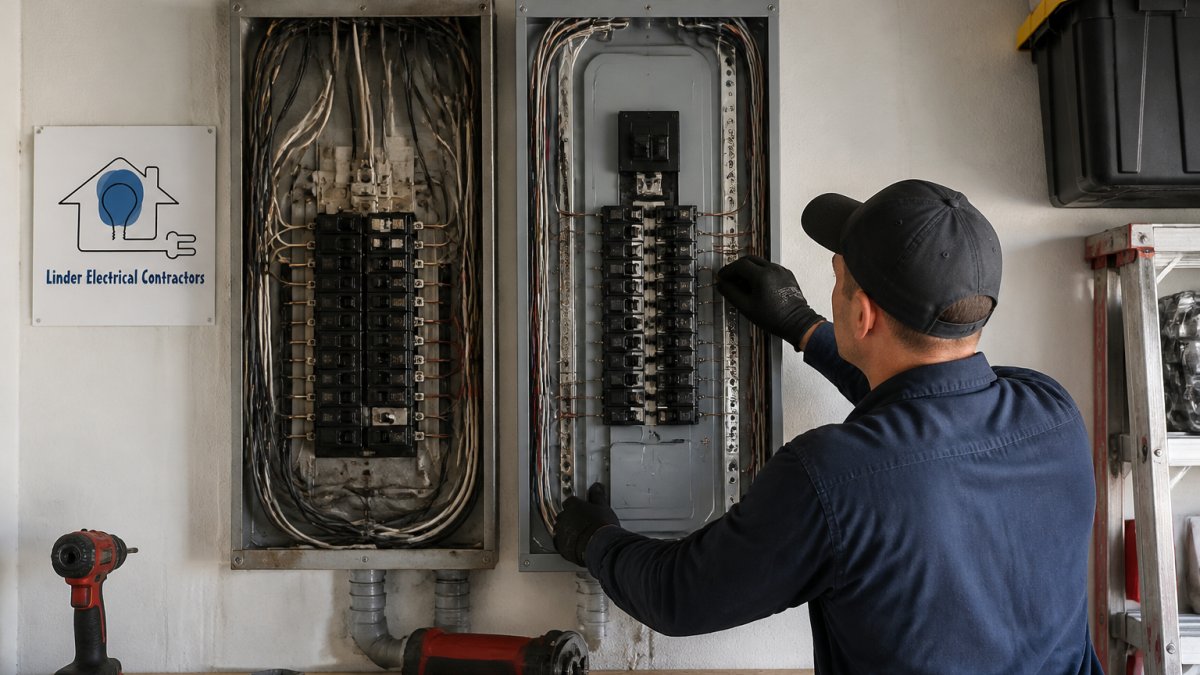
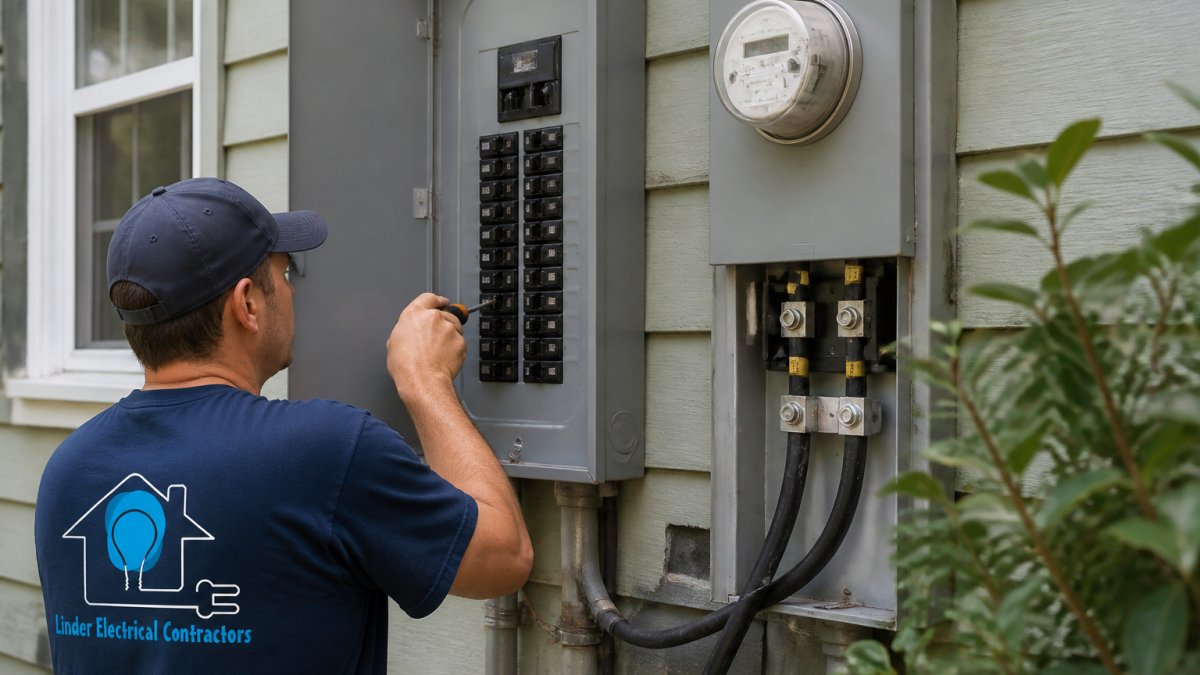
- Inspection of the electrical panel for loose connections, corrosion, or overheating
- Testing of circuit breakers to confirm they trip properly under fault conditions
- Examination of visible wiring for damage, improper routing, or rodent damage
- Check of all light fixtures for proper operation and secure mounting
For commercial properties, the checklist expands to include:
- Three-phase power system balance and voltage verification
- Load testing of emergency lighting systems
- Inspection of data and communication cable routing for safety compliance
- Testing of fire alarm system electrical connections
- Verification of proper bonding in high-moisture or conductive areas
Linder Electrical Contractors can tailor a property-specific checklist to your building's age, size, and usage patterns.
Establishing an Electrical Maintenance Schedule
The right schedule matches your property's actual needs, too infrequent lets problems develop, too frequent wastes money.
For residential properties, professional electrical maintenance typically occurs every 3 to 5 years. Older homes with original wiring may need annual inspections; new construction can extend intervals to 5 years.
Commercial buildings follow more aggressive schedules. Many property managers schedule professional electrical maintenance annually or semi-annually.
Schedule inspections before peak usage, summer cooling or winter heating season, so problems are caught before they cause downtime.
| Property Type | Inspection Frequency | Best Timing |
|---|---|---|
| Residential (new) | Every 5 years | Spring or fall |
| Residential (10+ years old) | Every 3 years | Before seasonal peaks |
| Commercial (standard) | Annually | Before peak usage season |
| Commercial (high-demand) | Semi-annually | Before peak usage, mid-season check |
| Industrial/Critical systems | Quarterly or monthly | Per regulatory requirements |
What a Commercial Electrical Inspection Includes
A professional electrical inspection goes far beyond checking whether lights work: a qualified electrician tests the system's safety, capacity, and code compliance.
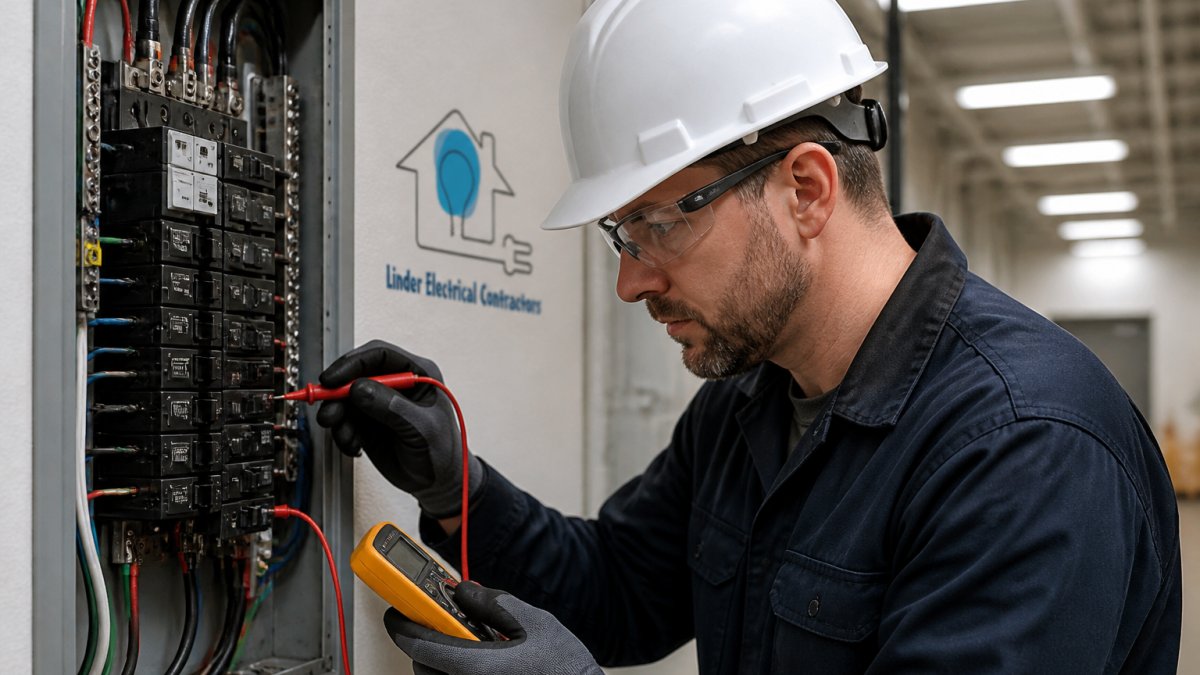
A complete commercial electrical inspection covers:
Electrical Panel Assessment
- Visual inspection for corrosion, loose connections, or overheating
- Testing of main breaker operation and load distribution across circuits
- Verification of proper labeling and circuit capacity documentation
- Check for modifications since original installation
Circuit Testing
- Load testing to verify circuits operate within safe limits
- Measurement of voltage and current on all circuits
- Inspection of circuit breakers for proper operation and trip settings
- Testing of surge protection devices
Outlet and Switch Inspection
- Visual check for damage, discoloration, or loose covers
- Testing of GFCI outlets for proper ground fault protection
- Verification that outlets are properly grounded
- Check that switches operate smoothly and don't arc or spark
Wiring and Cable Assessment
- Visual inspection of all visible wiring for damage or improper installation
- Check for proper wire gauge relative to circuit amperage
- Verification that cables are properly routed and protected
- Inspection for rodent damage or deterioration
Grounding and Bonding Verification
- Testing of ground continuity throughout the system
- Verification of proper bonding in areas with conductive materials
- Check that grounding rods or other ground connections are intact
Equipment Testing
- Inspection of transformers, capacitors, and other major equipment
- Testing of backup generators or uninterruptible power supplies
- Verification that emergency lighting systems function properly
- Check of fire alarm system electrical connections
The inspection produces a detailed report documenting findings, code violations, and recommended repairs, documentation that supports compliance and insurance claims.
Improving Energy Efficiency and Lowering Operating Costs
Outdated equipment, poor power factor, and wiring losses raise energy consumption without added benefit.
Where electrical losses actually come from
Energy waste accumulates across several mechanisms:
- Standby and phantom loads: electronics, chargers, and controls that draw power even when 'off.'
- Legacy lighting: incandescent and older fluorescent systems convert a large share of energy to heat rather than light.
- Poor power factor: inductive loads such as motors and older ballasts draw more current than the work requires, and many utilities bill commercial customers for it.
- Oversized or constant-speed motors: equipment that runs at full speed regardless of actual demand.
- Wiring and connection losses: undersized conductors, loose terminations, and corroded connections dissipate energy as heat.
- Unbalanced loads: uneven phase loading in three-phase systems forces equipment to work harder.
A maintenance visit that measures voltage, current, and power factor produces a factual baseline. Without it, any efficiency recommendation is a guess.
How to evaluate whether an upgrade is worth it
Rather than accepting a blanket savings figure, evaluate each recommendation on its own economics:
- Establish the current cost. Use utility bills and, where possible, sub-metered or clamp-meter readings to estimate what a specific load costs per year.
- Estimate the post-upgrade cost. Use manufacturer data for the replacement equipment's rated draw, not marketing claims.
- Calculate simple payback. Divide the installed cost by the estimated annual savings. A two-year payback is usually easy to justify; a fifteen-year payback may not be, depending on how long you expect to own the property.
- Account for non-energy benefits. Longer equipment life, fewer failures, reduced maintenance labor, and improved comfort or lighting quality often matter more than the energy line item.
- Check for incentives. Utilities and efficiency programs frequently offer rebates for qualifying lighting, motor, and HVAC upgrades; these change the math materially.
Maintenance doesn't always cut your bill by a fixed percentage, but it gives you the data to decide which upgrades earn their cost.
Common upgrades identified during maintenance
- Replacing incandescent and older fluorescent lighting with LED fixtures and lamps
- Installing power factor correction equipment where utility tariffs penalize low power factor
- Replacing failed or aging motors with premium-efficiency models
- Adding variable frequency drives to motors that run at constant speed against variable demand
- Rebalancing three-phase loads to reduce neutral current and equipment stress
- Tightening and re-terminating loose or corroded connections that generate heat
The reliability connection
Efficiency and reliability are the same conversation.
Extending Equipment Lifespan and System Reliability
Overheating, voltage fluctuations, and overloads shorten equipment life; professional electrical maintenance keeps conditions optimal and extends time before replacement.
A well-maintained system experiences fewer failures, less downtime, and lower overall costs over its lifetime.
Regular maintenance extends the life of:
- Electrical panels and circuit breakers through proper operation and cleaning
- Motors and pumps by preventing overheating and overload conditions
- Transformers through monitoring and maintenance of cooling systems
- Lighting fixtures by ensuring proper voltage and preventing thermal stress
- Wiring through protection from environmental damage and proper support
Professional electrical maintenance also supports warranty compliance: many manufacturers require regular maintenance as a condition of coverage, and skipping it can void your protection.
Professional electrical maintenance is an investment in safety, efficiency, and reliability.
Frequently Asked Questions
What are the main benefits of professional electrical maintenance services?
Professional electrical maintenance prevents unexpected equipment failures, reduces fire risk by identifying hazardous conditions early, improves energy efficiency to lower operating costs, extends the lifespan of electrical components, and ensures your system meets local electrical codes. Regular inspections by a qualified technician catch problems before they become expensive repairs, protecting both your property and its occupants.
How often should commercial electrical systems be inspected as part of an electrical maintenance schedule?
Commercial electrical systems should typically be inspected annually, though frequency depends on system age, usage intensity, and equipment type. Older buildings or those with heavy electrical loads may benefit from semi-annual inspections. Your electrician can recommend a maintenance schedule tailored to your specific building and operational demands to prevent unexpected downtime.
What should be included in an electrical maintenance checklist?
A comprehensive electrical maintenance checklist includes testing circuit breakers and panels, inspecting wiring for damage or deterioration, checking connections for corrosion or looseness, testing grounding systems, evaluating load distribution, inspecting outlets and switches, and reviewing electrical service capacity. Professional electricians use detailed checklists to identify potential hazards, worn components, and efficiency issues before they impact safety or performance.
Can regular electrical maintenance actually reduce business downtime?
Yes. Preventive electrical maintenance identifies and addresses weak points before system failures occur. By catching early signs of equipment stress, worn connections, or overloaded circuits, you avoid unexpected power outages that disrupt operations and revenue. Many commercial property managers report fewer emergency calls and shorter unplanned downtime after implementing regular maintenance schedules with a qualified electrician.