 How-to
How to Budget Electrical Maintenance Costs for Commercial Buildings
Last Updated: November 1, 2026
Quick Summary
Electrical maintenance costs for commercial buildings depend on system age, building load, location, and code compliance rather than square footage alone. Build your budget from three buckets: routine maintenance, repairs, and a reserve fund sized to cover your most expensive critical system. Labor rates, access and lift time, and parts obsolescence drive most of the variance between quotes.
- Cost tracks risk, not square footage alone, so aging panels and heavy loads need more frequent service.
- Set routine and repair amounts from past invoices and inspection reports, then size the reserve for your costliest critical system.
- Obsolete switchgear and vintage panel components can take weeks to source and cost multiples of modern equivalents.
- Ask contractors to quote scheduled and emergency work at separate rates so proposals are comparable.
- Compare normalized annual cost, not headline price, when scoring contractor proposals.
Table of Contents
- What Drives Electrical Maintenance Costs for Commercial Buildings
- How to Build a Commercial Property Maintenance Budget
- Cost Breakdown by Task and Equipment
- What a Commercial Electrical Maintenance Plan Includes
- What to Expect From a Commercial Electrical Inspection
- Your Electrical Maintenance Checklist for Scheduling and Scope
- How to Compare Contractor Proposals and Service Agreements
- Request a Free Written Estimate for Your Building
- Frequently Asked Questions
What Drives Electrical Maintenance Costs for Commercial Buildings
Electrical maintenance costs for commercial buildings rarely follow a single price list. The final number depends on how old the wiring is, how hard the system works, and what local codes demand.
The core idea that shapes every estimate: cost tracks risk, not square footage alone. A building with aging panels and heavy loads carries more risk, so it needs more frequent service.
Building Type, Square Footage, and System Age
Building type sets the baseline. A retail property with display lighting and refrigeration draws more power than a quiet office of the same size. Square footage matters, but load matters more.
Age is the wildcard. Older systems need more frequent inspections and repairs, and wiring from decades past may not meet current standards, driving up both repair costs and code compliance work.
Location, Operating Conditions, and Code Compliance
Where a building sits and how it operates change the math. A facility running heavy equipment around the clock wears parts faster than one used eight hours a day. Dust, moisture, and heat all shorten equipment lifespan.
Code compliance adds another layer. For a deeper look at what those codes require and how violations affect costs, see Electrical Code Compliance for Commercial Buildings.
How to Build a Commercial Property Maintenance Budget
A commercial property maintenance budget is a yearly plan that sets aside money for routine service, inspections, and unexpected repairs. Property managers can find maintenance guidance tailored to their role in Commercial Electrical Maintenance for Property Managers.
Start with three buckets:
- Routine maintenance: scheduled service and inspections
- Repairs: fixes for known wear and tear
- Reserve fund: a cushion for unexpected failures
Set the routine and repair amounts from past invoices and inspection reports, then size the reserve to cover your most expensive critical system.
Cost Breakdown by Task and Equipment
Costs split cleanly into tasks you can schedule and equipment you can track. Knowing the difference helps you compare quotes. The table below shows what each line item typically includes and what pushes its price up or down.
| Task or Equipment | What the Work Typically Covers | Primary Cost Drivers | Typical Frequency |
|---|---|---|---|
| Panel and switchgear inspection | Visual inspection, torque checks, thermal scan, breaker exercise | Panel count, service amperage, age, accessibility | Annual |
| Lighting and fixture service | Relamping, ballast or driver replacement, fixture cleaning | Fixture count, lamp type (LED vs. legacy), ceiling height and lift needs | Every 6-12 months |
| Emergency and exit lighting test | 30-second monthly function test, annual 90-minute discharge test, battery replacement | Fixture count, battery age, code schedule | Monthly and annual |
| Outlet and circuit checks | Receptacle testing, GFCI testing, load verification, tenant-change walkthroughs | Building size, tenant turnover, circuit count | Annual, plus at tenant change |
| Motor and equipment servicing | Lubrication, belt and coupling checks, starter and contactor inspection, amp readings | Runtime hours, environment (dust, moisture, heat), manufacturer guidance | Per manufacturer schedule |
| Thermal imaging survey | Infrared scan of panels, disconnects, and high-load terminations under load | Panel count, load profile, whether the building runs 24/7 | Annual or semiannual |
| Repair versus replacement call | Diagnostic, parts, labor, downtime coordination | Part availability, panel vintage, whether gear is still supported by the manufacturer | As needed |
| After-hours emergency call | Troubleshooting, temporary repair, restoration | Time of day, response window, whether the fault is upstream at the utility | As needed |
What Actually Drives the Number
Three mechanics explain most of the variance between two quotes for the same task.
Labor rate and travel. Commercial electrical labor is typically billed hourly, and rates may differ for scheduled and emergency work.
Access and lift time. Access conditions affect how long work takes. Describe your building accurately when you request an estimate.
Parts and obsolescence. Common breakers, receptacles, and LED drivers are inexpensive and stocked.
Repair Versus Replace: The Break-Even Question
The biggest variable is repair versus replacement. Patching an aging panel repeatedly can cost more over time than a planned upgrade, so compare cumulative repair spend against the installed cost of replacement and factor in downtime risk.
A Simple Estimation Formula
You can build a rough annual electrical maintenance figure before you call a contractor. The formula below is a planning tool; adjust the multipliers to your situation.
Annual estimate = (Base inspection) + (Fixture count × per-fixture service factor) + (Panel count × per-panel factor) + (Emergency lighting fixtures × test factor) + (Reserve for repairs)
Where the reserve for repairs is set as a percentage of the scheduled total, scaled by system age:
A building with no failures for several years is not necessarily low-risk, and the reserve should reflect the age of the system rather than last year's invoices.
What a Commercial Electrical Maintenance Plan Includes
A commercial electrical maintenance plan is a scheduled service agreement that covers inspections, testing, and repairs on a set timeline. It turns reactive calls into predictable work. Readers weighing a plan can review the benefits of professional electrical maintenance services before committing budget.
A typical maintenance plan may include:
- Scheduled inspections of panels, wiring, and equipment
- Testing of emergency and exit lighting
- Thermal checks to catch overheating early
The record matters. A documented history supports code compliance and makes future budgeting easier.
What to Expect From a Commercial Electrical Inspection
A commercial electrical inspection is a documented review of your system's safety and performance, checking panels, wiring, grounding, and equipment for hazards and code issues.
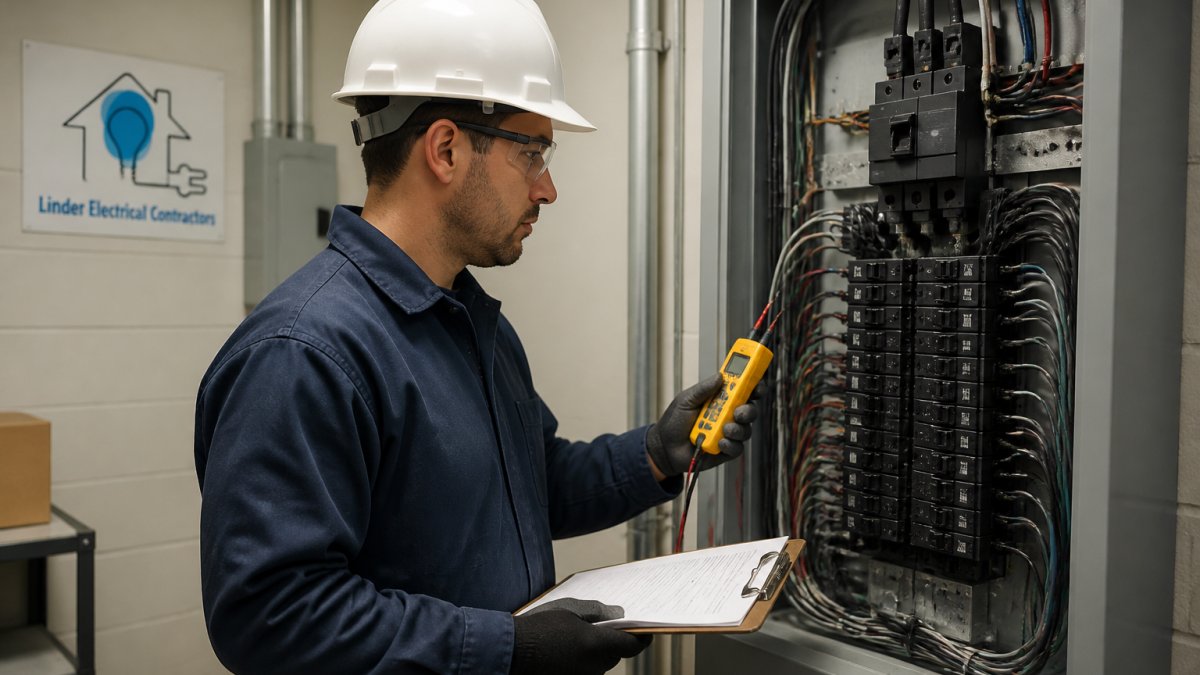
A typical inspection follows a clear sequence:
- Review the panel and service capacity
- Check wiring and connections for wear or heat damage
- Test grounding and safety devices
- Inspect emergency and exit lighting
- Document findings and recommend fixes
That report is your roadmap for the next budget cycle.
Your Electrical Maintenance Checklist for Scheduling and Scope
An electrical maintenance checklist keeps service on track and prevents missed items. Use it to set frequency and scope for each system, adjusting intervals to your building's age and load.
- Inspect main panels and switchgear yearly
- Test emergency and exit lighting per code schedule
- Check outlets and circuits annually
Watch out: skipping emergency lighting tests can create compliance gaps.
How to Compare Contractor Proposals and Service Agreements
Proposals are easy to compare once you know what to look for. The lowest price is not always the full story. Normalize every bid to the same scope, then decide which agreement actually protects the building.
Normalize the Scope First
Before you compare a single number, put every proposal on the same page. Build a one-page scope sheet listing each system, main service and switchgear, distribution panels, branch wiring, lighting, emergency and exit lighting, motors and equipment, and any generator or UPS, and mark whether the proposal includes inspection, testing, scheduled service, and emergency response for each. A bid that looks low may cover fewer systems or visits; a completed scope sheet helps explain price differences.
The Comparison Points That Matter
Score each proposal against these points side by side:
- Scope: which systems and tasks are included, and which are explicitly excluded
- Frequency: how many visits per year, and whether visits are scheduled or on-call only
- Response time: the committed window for emergency calls, and whether it is guaranteed or aspirational
- Labor rates: the scheduled hourly rate, the after-hours rate, and whether travel is billed
Inclusions, Exclusions, and the Effective Price
A service agreement's headline price is not its effective price. Add back the cost of anything the agreement excludes but you will still need, emergency lighting tests, thermal scans, after-hours response, or permit fees. Ask each provider to spell out exclusions in writing, then price the exclusions yourself using the task table above. That converts every proposal to a comparable annual figure.
Contract Terms to Read Before You Sign
- Response-time guarantees: is the window defined in hours, and is there a remedy if it is missed?
- Parts sourcing: can the contractor substitute equivalent parts, or must you approve substitutions?
- Permits and inspections: who pulls permits and who pays for third-party inspections?
- Liability and insurance: confirm current licensing and insurance certificates, and ask for them annually
A Practical Scoring Method
Score each proposal from 1 to 5 on scope, response time, documentation, and contract flexibility, then weight the scores by what matters most to your building. A facility with critical loads should weight response time heavily; a stable office building can weight documentation and price. Multiply each score by its weight, sum the results, and compare the totals alongside the normalized annual price.
Request a Free Written Estimate for Your Building
Every building has its own cost profile, so a generic number will not help you plan. A written estimate based on your actual system does. Before requesting yours, see the Book a Commercial Electrical Contractor: A Hiring Guide. Linder Electrical Contractors provides free written estimates, and handles permits and inspections as part of the job.
Our team is licensed and insured and offers 24/7 emergency service.
Frequently Asked Questions
How much does electrical maintenance cost for a commercial building?
There is no single figure. Electrical maintenance costs depend on square footage, building type, system age, and how much preventive work you schedule versus reactive repairs. A small retail space with a newer panel needs far less annual spend than an older office building with aging distribution equipment. Because pricing varies by scope, request a free written estimate so you can compare line items rather than guess at a lump sum.
Is preventive electrical maintenance less expensive than emergency repairs?
In most cases, yes. Scheduled preventive maintenance spreads cost across the year and catches failing components before they cause outages. Emergency repairs can carry after-hours premiums, expedited parts costs, and business downtime. Scheduled maintenance can help reduce those risks.
How often should a commercial building have its electrical system inspected?
Frequency depends on the system and how the building operates. High-use equipment, older panels, and buildings with heavy loads often need annual inspection, while newer, lightly loaded systems may stretch to longer intervals. Your electrical maintenance checklist should set the cadence per system, and a licensed electrician can confirm the right schedule after an initial commercial electrical inspection.
How can property managers budget for electrical repairs across multiple buildings?
Start with a commercial property maintenance budget that separates planned maintenance from a repair reserve. List each building, its square footage, system age, and inspection findings, then allocate annual preventive spend plus a contingency for unexpected failures. A service agreement covering multiple properties can simplify scheduling and emergency response, so ask your contractor whether they handle ongoing maintenance across your portfolio.
Budgeting for electrical maintenance comes down to matching spend to risk. Buildings with older systems and heavy loads need more frequent service, and documented inspections keep costs predictable. Linder Electrical Contractors brings licensed and insured crews, free written estimates, and full handling of permits and inspections. Get started with Linder Electrical Contractors and build a maintenance budget that protects your property and your bottom line.