 How-to
Resetting a GFCI Outlet That Keeps Tripping: A Step-by-Step Guide
Last Updated: November 13, 2026
Quick Summary
Press the RESET button firmly once on the tripped GFCI outlet. If it trips again right away, the cause is still there, so find it before you reset a third time. Work through the steps in order, from simplest to most serious, to isolate the problem.
- A weak press is the most common reason a reset fails, so press RESET until you hear a click.
- GFCIs protect downstream outlets, so the dead outlet may not be the one that tripped.
- Never hold RESET down with tape or a wedge to keep power on.
- A GFCI that trips with nothing plugged in points to a wiring problem, not a bad appliance.
- Stop and call a licensed electrician if the GFCI trips again immediately after reset.
Table of Contents
- Safety First: Before You Touch the GFCI Outlet
- How to Reset a GFCI Outlet That Keeps Tripping: Step by Step
- GFCI Keeps Tripping With Nothing Plugged In: What That Means
- GFCI Reset Button Won't Push In: Reading the Symptoms
- GFCI Keeps Tripping After Replacing: Installation and Wiring Checks
- GFCI Outlet Will Not Reset After a Power Outage
- When to Stop Troubleshooting and Call a Licensed Electrician
- Get a Free Estimate From Linder Electrical Contractors
- Frequently Asked Questions
Safety First: Before You Touch the GFCI Outlet
A GFCI outlet, or ground-fault circuit interrupter, is a safety device that cuts power when it senses current leaking to ground.
Here is what to do before you touch the outlet:
- Make sure your hands are dry and you are standing on a dry floor.
- Do not touch the outlet with wet hands or while touching metal pipes.
- Look for burn marks, cracks, or a buzzing sound. If you see or hear any of these, stop.
Tripping GFCIs are a common service call. Most are simple fixes, and a few point to a real hazard.
This guide walks you through the safe reset steps. It also shows you when to stop and call a licensed electrician.
How to Reset a GFCI Outlet That Keeps Tripping: Step by Step
Here is the short answer: press RESET firmly once. If it trips again right away, the cause is still there. Find it before you reset a third time.
The steps below isolate the problem in order, from simplest to most serious. Work through them in sequence, each step rules out one category of cause so you are not guessing.
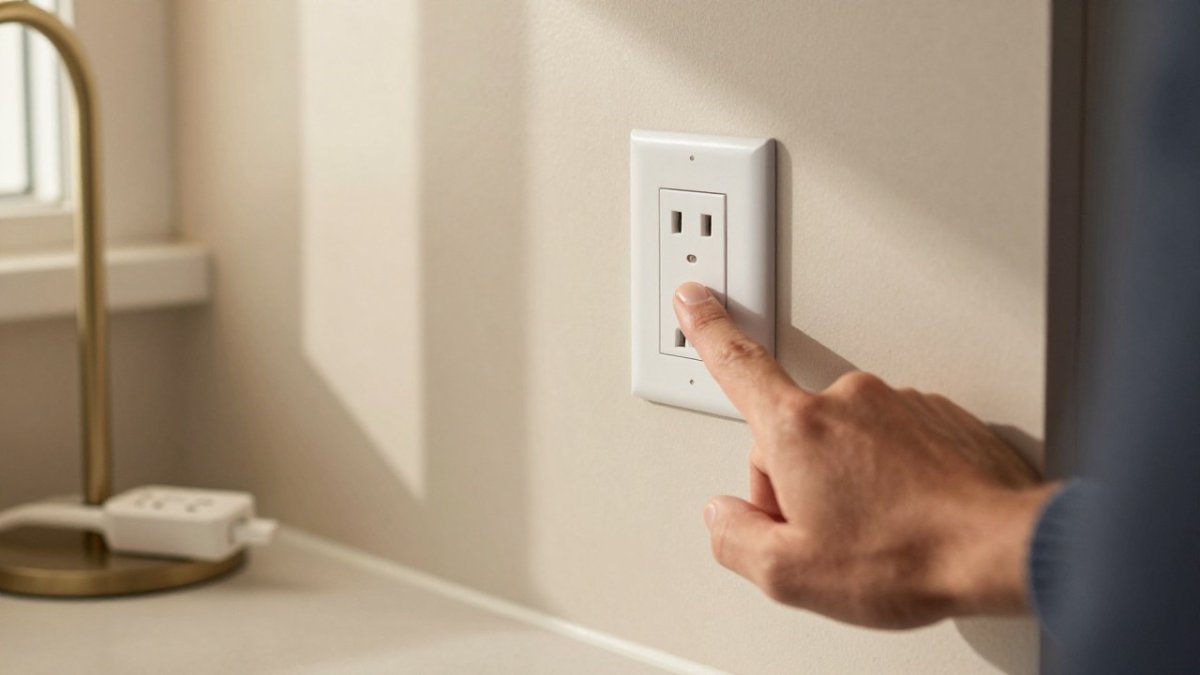
Step 1: Locate the Tripped Outlet and Check for Power Loss
GFCIs protect other outlets downstream on the same circuit. The dead outlet in front of you may not be the one that tripped.
Check every GFCI in the room, then check the garage, bathroom, and kitchen. If the outlet is simply dead with no tripped button anywhere, see our guide to troubleshooting dead outlets in older walls.
A quick way to map which outlets share protection: plug a lamp into a suspect outlet, then press TEST on each GFCI you can find until the lamp goes dark.
Step 2: Unplug Devices and Press the RESET Button Firmly
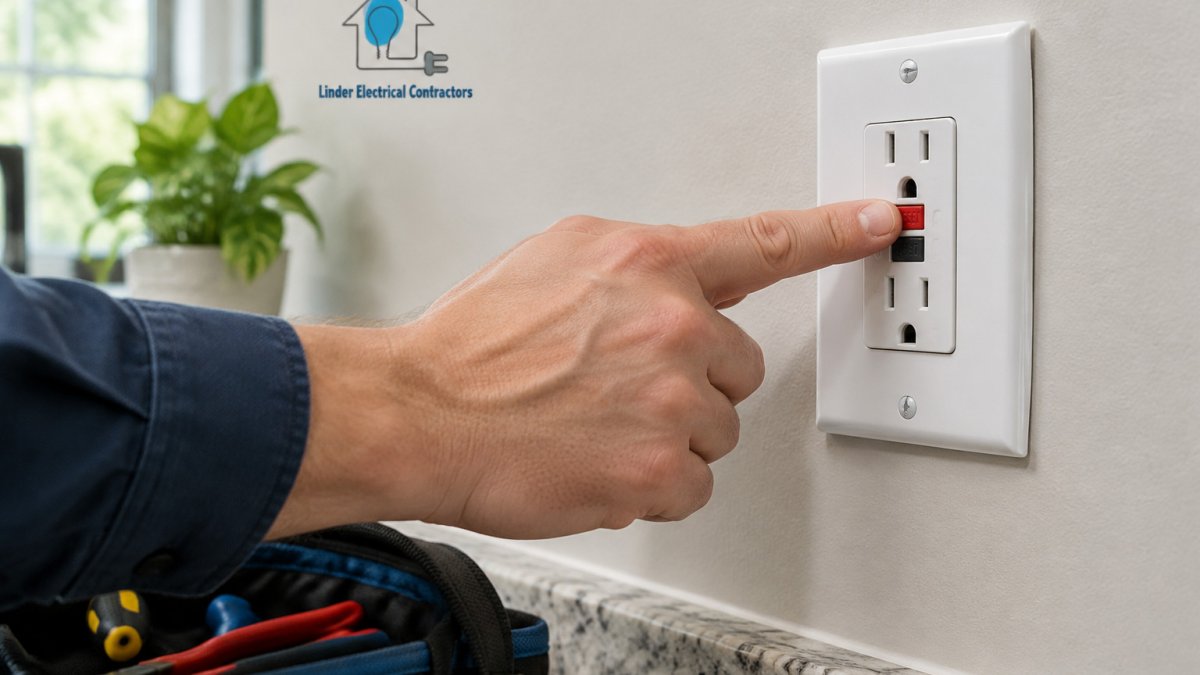
Pull every plug from the GFCI and from outlets it protects. Then press RESET until you hear a click. Press hard. A weak press is the most common reason a reset "fails."
Watch out: never hold RESET down with tape or a wedge to keep power on. That defeats the safety device entirely.
Step 3: Check the Circuit Breaker and Test the Outlet
No click and no power? Open the electrical panel and look for a tripped breaker. It sits between ON and OFF. If breakers trip often in your home, read why your circuit breaker keeps tripping.
Back at the outlet, plug in a lamp and press TEST, then RESET. Power should restore. If it does not, move to the sections below.
Step 4: Isolate the Cause Using Trip Timing
The timing of the trip tells you more than almost any other clue. Use this sequence to narrow it down:
- Trips immediately with nothing plugged in: the fault is in the wiring, the outlet box, or the GFCI itself. Do not keep resetting. Move to the section on tripping with nothing plugged in.
- Trips when you plug in one specific device: that device or its cord is the likely culprit. Try it on a different GFCI-protected circuit. If it trips there too, the device is faulty. If it does not, the original outlet or its downstream wiring is suspect.
- Trips after a device runs for a while: heat buildup, a failing motor, or a device drawing more current than the circuit is rated for. Check the device's wattage against the circuit rating.
Step 5: Read the Indicator Light and Button Behavior
Many GFCIs have a small LED that reports status. The exact color coding varies by manufacturer, so check the label on the device, but common patterns include:
- No light, RESET will not latch: the GFCI is not receiving power. Check the breaker and any upstream GFCI.
- Light on, no power at the face: the device has tripped internally or failed. Replacement is usually required.
- Light flashing: on many models this signals end of life or a self-test failure. Replace the device.
| Symptom | Likely Cause | Next Step |
|---|---|---|
| RESET clicks, power returns | Normal trip | Test with a lamp and monitor |
| RESET clicks, trips again at once | Faulty appliance or wet outlet | Isolate devices one by one |
| RESET will not push in | Dead outlet or no power feed | Check breaker and panel |
| Trips with nothing plugged in | Wiring or moisture fault | Stop and call an electrician |
| Trips only when one device runs | Device fault or overload | Test device on another circuit |
| Trips after rain or mopping | Moisture intrusion | Stop use, dry, inspect |
If you reach the end of this sequence and the GFCI still trips, the problem is beyond what a reset can fix. The sections below cover the specific failure modes and when to call a licensed electrician.
GFCI Keeps Tripping With Nothing Plugged In: What That Means
A GFCI that trips with nothing plugged in points to a problem inside the wiring, not a bad appliance.
Common causes include:
- Moisture inside the outlet box or on the wires
- Damaged or worn insulation on the circuit
- A downstream outlet with a loose connection
Homes built decades ago often have wiring that was never designed for today's electrical load. Our article on common electrical hazards in older houses explains what to look for.
Do not keep resetting a GFCI in this state. Repeated trips are a warning, not a nuisance.
GFCI Reset Button Won't Push In: Reading the Symptoms
A RESET button that will not push in usually means the GFCI has no power reaching it, or the device itself has failed. The button cannot latch without power.
Here is how to read the symptoms:
- Button feels loose or spongy: the internal latch mechanism is worn. The button may push in but not hold. This is a mechanical failure inside the device, not a wiring problem. Replace the GFCI.
- Button will not move at all: the device has no power, or the internal solenoid that latches the button has failed. Check the breaker first, then confirm power at the outlet with a non-contact voltage tester. If power is present at the terminals but the button still will not move, the GFCI is defective.
- No indicator light on a GFCI that has one: power is not reaching the device. This points upstream, a tripped breaker, a loose connection at the LINE terminals, or another GFCI ahead of it on the circuit.
A GFCI has a limited service life. Test it periodically using the TEST button, and replace it when it no longer trips or resets, following the manufacturer's instructions.
Watch out: do not open the outlet box or probe the terminals with the breaker on. Consumer Product Safety Commission publishes guidance on home electrical hazards and GFCI safety (Electrical Safety).
GFCI Keeps Tripping After Replacing: Installation and Wiring Checks
A new GFCI that trips right after installation almost always has a wiring problem. The most common mistake is mixing up the LINE and LOAD terminals.
LINE is the incoming power. LOAD feeds the downstream outlets. Reversed, the device will trip or fail to protect anything.
Other causes to check:
- A ground wire touching a neutral or hot terminal
- Moisture in the box from a recent install
- A downstream outlet wired incorrectly
If you replaced the GFCI yourself and it keeps tripping, stop. Wiring mistakes here can create a shock hazard.
GFCI Outlet Will Not Reset After a Power Outage
After an outage, many GFCIs trip by design and need a manual reset. Press RESET firmly once power is back. If it clicks and holds, you are done.
If it will not reset after an outage, the cause is usually one of these:
- The circuit breaker is still off or tripped
- A surge damaged the GFCI
- The device was already near the end of its life
Power surges from storms can shorten a GFCI's life. If the outlet stays dead after a breaker check and a firm reset, the device likely needs replacement.
When to Stop Troubleshooting and Call a Licensed Electrician
Stop and call a professional if any of these apply:
- The GFCI trips again immediately after reset
- You smell burning or see scorch marks
- The outlet is warm to the touch
- The breaker trips along with the GFCI
Electrical work is not a DIY category where mistakes are cheap. A wrong connection can cause a shock or a fire.
The National Electrical Code sets GFCI protection requirements for kitchens, bathrooms, garages, and outdoor outlets. Check the current edition with a licensed electrician.
Linder Electrical Contractors serves residential and commercial clients in Blue Bell and Montgomery County, PA. You can schedule a residential electrical safety inspection and get a clear answer on what is wrong. If you would rather compare electricians first, our guide on how to find a reliable local electrician walks you through the questions to ask.
Get a Free Estimate From Linder Electrical Contractors
A GFCI that keeps tripping is telling you something. Sometimes it is a wet outlet.
At Linder Electrical Contractors, we are licensed and insured, and we offer free written estimates.
Get a Free Estimate from Linder Electrical Contractors to discuss your home's electrical safety.
A tripping GFCI is a small problem with a clear cause, and finding it takes less time than living with the trips.
Frequently Asked Questions
Why does my GFCI keep tripping when I reset it?
A GFCI that trips again immediately after you press RESET is detecting a ground fault somewhere on the circuit. The most common culprits are a damaged appliance cord, moisture inside the outlet or a downstream receptacle, or worn internal components in an older GFCI. Unplug everything on the circuit and try the reset again. If it holds with nothing plugged in, the problem is a device. If it trips anyway, the fault is in the outlet or the wiring, and a licensed electrician should assess it.
What does it mean if the GFCI reset button won't push in?
A RESET button that feels solid and will not depress usually means the GFCI has no power reaching it or the internal mechanism has failed. First confirm the circuit breaker at the electrical panel is not tripped and that other outlets on the circuit work. If power is present and the button still will not push in, the GFCI is at the end of its service life and needs replacement. GFCIs have a limited service life, and an electrician can confirm whether a unit needs replacing.
Can a power outage prevent a GFCI outlet from resetting?
Yes. A GFCI outlet will not reset without power. After an outage, check the circuit breaker in your electrical panel first, since outages and surges can trip breakers as well. Once power is restored to the circuit, press RESET firmly until you feel a click. If the outlet still will not reset after power returns and the breaker is on, the GFCI likely absorbed a surge and failed. Replacement is the standard fix, and an electrician can confirm the diagnosis.
How do I stop my GFCI outlet from tripping repeatedly?
Find the source instead of resetting on repeat. Unplug every device on the circuit and reset the GFCI. Plug devices back in one at a time, testing the outlet after each, to identify the appliance causing the trip. Check for moisture at weather-exposed outlets and any downstream outlets the GFCI protects. If trips continue with nothing plugged in, or happen at random times, the cause is wiring or a failing outlet. At that point, stop resetting and call a licensed electrician for a professional assessment.