 How-to
7 Reasons Your Circuit Breaker Keeps Tripping
Last Updated: October 25, 2026
Quick Summary
A circuit breaker keeps tripping when it detects too much current flowing through a circuit, cutting power to protect your home from fire or electrical damage. Common causes include overloaded circuits, short circuits, ground faults, arc faults, faulty breakers, moisture, or damaged appliances.
- A 15-amp circuit safely handles about 1,440 watts; a 20-amp circuit about 1,920 watts.
- Short circuits occur when a hot wire touches a neutral or ground wire, causing the breaker to trip in milliseconds.
- GFCI and AFCI breakers detect ground and arc faults faster than standard breakers and are required by code in bathrooms, kitchens, and bedrooms.
- A breaker older than 20 years with corroded contacts or one that won't stay in the ON position likely needs replacement.
- If a breaker trips with nothing plugged in, the fault is in the wiring or panel and requires a licensed electrician.
Table of Contents
- Understanding Why Your Circuit Breaker Keeps Tripping
- Common Reasons a Circuit Breaker Trips
- How to Reset a Tripped Circuit Breaker
- When Your Breaker Keeps Tripping With Nothing Plugged In
- Why Your Breaker Trips Immediately After Reset
- Understanding Different Breaker Types: Standard, GFCI, and AFCI
- When to Replace a Circuit Breaker
- Getting Professional Help for Recurring Breaker Issues
- Frequently Asked Questions
Understanding Why Your Circuit Breaker Keeps Tripping
A circuit breaker keeps tripping when it detects too much current flowing through a circuit. It's doing its job by cutting power to protect your home from fire or electrical damage, but repeated trips mean something's wrong.
Ignoring repeated breaker trips puts your property at serious risk.
This guide covers the most common reasons your breaker keeps tripping, how to identify the circuit involved, and when to call a professional.
Common Reasons a Circuit Breaker Trips
Your breaker trips for one reason: the electrical current exceeds what that circuit can safely handle. Common electrical hazards in older houses are often the underlying cause of repeated tripping.
Overloaded Circuits and Too Many Appliances
The most frequent cause is an overloaded circuit, drawing more power than it's rated for.
A 15-amp circuit handles about 1,440 watts; a 20-amp circuit about 1,920 watts. Run a space heater, hair dryer, and microwave on the same circuit and you exceed that limit, so the breaker trips to prevent overheating.
Common high-wattage appliances that cause overloads:
- Space heaters (750-1,500 watts)
- Hair dryers (1,000-1,800 watts)
- Microwave ovens (600-1,200 watts)
- Toasters (800-1,500 watts)
Spread appliances across different circuits and avoid daisy-chaining power strips. If you consistently overload the same circuit, you likely need additional circuits installed, something we handle regularly at Linder Electrical Contractors.
Short Circuits and Damaged Wiring
A short circuit occurs when a hot wire touches a neutral or ground wire, creating a low-resistance path. Current surges and the breaker trips in milliseconds.
Short circuits can cause sparks, burning smells, or fires if the breaker doesn't catch them in time.
Common causes of short circuits:
- Damaged wire insulation (age, rodents, physical damage)
- Loose connections inside outlets or switches
- Water exposure or moisture in electrical boxes
- Nails or screws driven through hidden wiring during drywall work
If you smell burning plastic or see scorch marks around an outlet, stop using that circuit immediately.
Ground Faults and Arc Faults
An arc fault is a dangerous spark jumping across a gap in wiring, often inside walls where you can't see it.
Ground faults are more common in bathrooms and kitchens where moisture is present; arc faults can happen anywhere, especially with aging wiring.
Modern homes use GFCI breakers (Ground Fault Circuit Interrupter) and AFCI breakers (Arc Fault Circuit Interrupter) to detect these faults faster than standard breakers.
Faulty or Aging Circuit Breakers
Sometimes the breaker itself is failing, tripping repeatedly with nothing plugged in or even under a light load.
Breakers are mechanical switches whose internal contacts corrode and wear down; one that's 20+ years old is more likely to malfunction.
Signs of a faulty breaker:
- Trips with minimal load
- Won't stay in the ON position
- Makes a clicking or buzzing sound
- Feels hot to the touch
Don't keep resetting a suspected faulty breaker.
Circuit breakers trip when current exceeds safe limits; here are the seven most common causes and what triggers them.
| Cause | What Happens | Common Sources |
|---|---|---|
| Overloaded circuit | Current exceeds circuit rating | Space heaters, hair dryers, microwaves |
| Short circuit | Hot wire touches neutral or ground wire | Damaged insulation, loose connections, nails through wiring |
| Ground fault | Hot wire contacts ground or conductive surface | Moisture in bathrooms and kitchens |
| Arc fault | Dangerous spark jumps across wiring gap | Aging wiring, loose connections |
| Faulty breaker | Breaker fails or wears out | Corrosion, age 20+ years, mechanical wear |
| Moisture or water | Water intrusion in electrical boxes | Wet locations, humidity exposure |
| Damaged appliance | Faulty internal wiring in plugged-in device | Worn cords, failing motors, internal damage |
How to Reset a Tripped Circuit Breaker
Resetting a breaker is straightforward, but safety matters.
Step 3: Flip the breaker fully to OFF. Push it all the way to the OFF side.
Step 4: Flip it back to ON. Push it firmly to the ON position.
Step 5: Test the circuit. Go back to the affected outlet or appliance and confirm power is restored.
If the breaker trips again immediately, stop resetting it.
Watch out: Never touch the main breaker or the large lugs at the top of the panel.
When Your Breaker Keeps Tripping With Nothing Plugged In
A breaker that trips with no load connected points to a wiring problem inside your walls or panel.
Possible causes:
- Damaged wire insulation somewhere in the circuit
- A loose connection at a switch, outlet, or breaker terminal
- Water intrusion or moisture in an electrical box
- A failing breaker (less common, but possible)
Don't ignore this. The breaker is protecting you, but the underlying fault needs to be found and fixed.
Unplug everything on that circuit and reset the breaker. If it holds, plug devices back in one at a time to isolate the culprit.
Why Your Breaker Trips Immediately After Reset
Your breaker trips right after reset because the original fault is still present.
Common scenarios:
- You reset the breaker but didn't unplug the faulty appliance
- The overloaded circuit is still drawing too much current
- A short circuit exists in the wiring and the breaker catches it again instantly
- The breaker itself is failing and won't hold a reset
The fix depends on the cause. If you plugged something back in too quickly, unplug it and wait a few seconds before resetting.
Never ignore a breaker that won't stay reset. Forcing it to stay on by wedging it or taping it in place is dangerous and voids the protection your breaker provides.
Understanding Different Breaker Types: Standard, GFCI, and AFCI
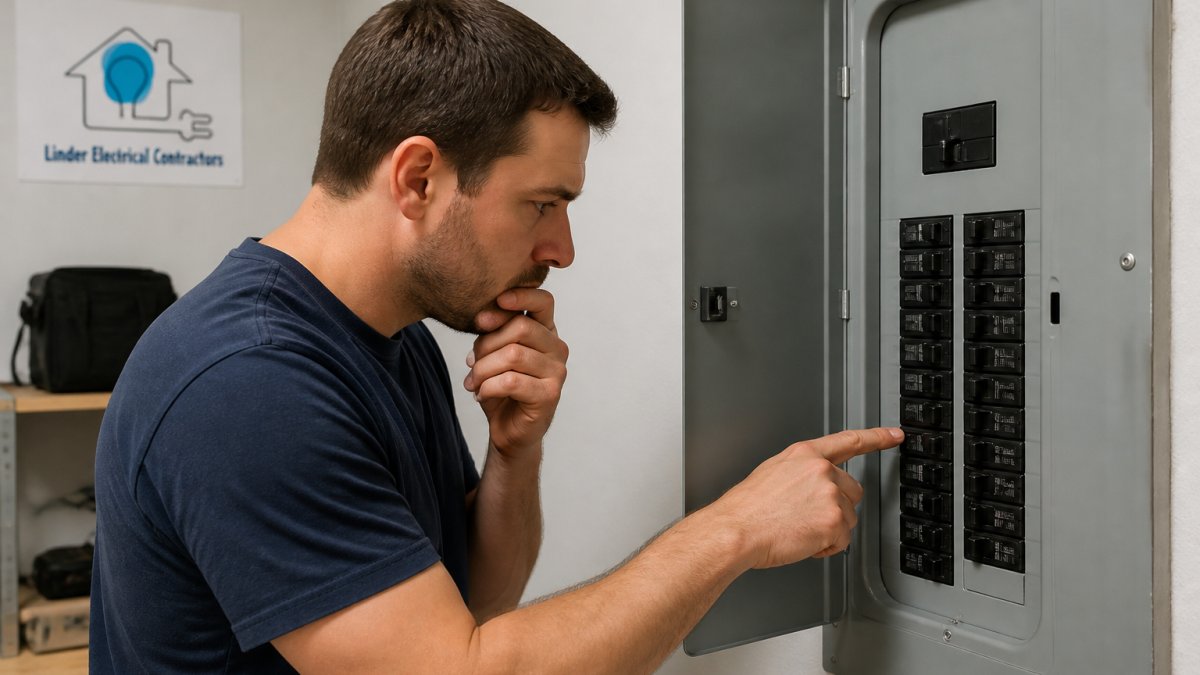
The type of breaker that trips is one of your best clues about the fault.
Standard breakers (also called thermal-magnetic breakers) trip when current exceeds their rating.
GFCI breakers (Ground Fault Circuit Interrupter) detect ground faults, when current leaks to ground instead of flowing through the neutral wire.
AFCI breakers (Arc Fault Circuit Interrupter) detect dangerous electrical arcs, sparks that jump across gaps in wiring.
Some breakers combine both functions (GFCI/AFCI combination breakers).
What the Trip Pattern Tells You
The type of breaker and the pattern of trips together narrow down the cause:
- Standard breaker trips under heavy load: overload. Spread appliances across circuits.
- Standard breaker trips instantly with nothing plugged in: short circuit or wiring fault in the circuit.
- GFCI trips in a bathroom, kitchen, or outdoors: moisture, a damaged cord, or a ground fault in that location.
- AFCI trips when a specific appliance runs: the appliance motor or cord is arcing; unplug it and test.
Frequent ground or arc fault trips may indicate deteriorating wiring, moisture, loose connections, or faulty appliances. GFCI and AFCI breakers are more sensitive and may trip more often, but that means they're catching real faults. The goal isn't to stop the trips, it's to fix what they're warning you about.
When to Replace a Circuit Breaker
A breaker needs replacement if it's faulty, failing, or no longer meets current electrical code. Learn more about when a full panel upgrade might be necessary to understand the broader context of your electrical system.
Signs your breaker needs replacement:
- Trips repeatedly with no clear cause
- Won't stay in the ON position
- Feels hot to the touch
- Makes clicking or buzzing sounds
- Is visibly corroded or damaged
Understand the electrical panel replacement cost involved in this upgrade before you proceed.
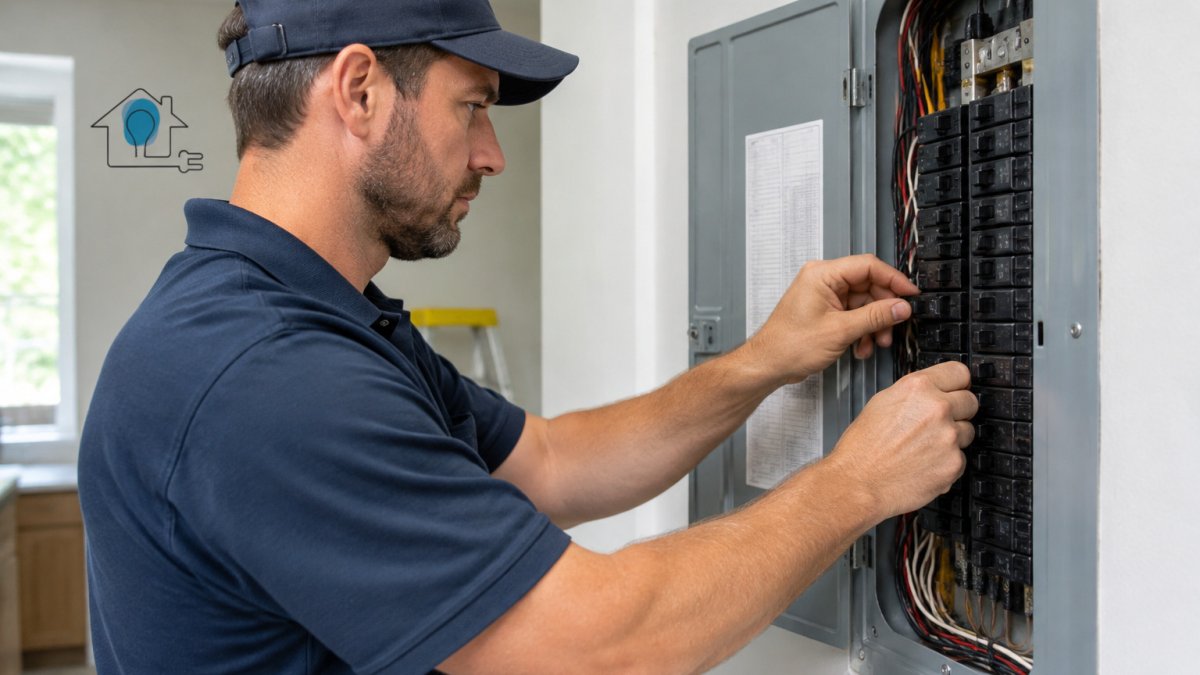
Breaker replacement is not a DIY job. The panel is live, and working inside it requires a licensed electrician.
If repeated trips suggest a faulty breaker, read about the signs that indicate a broader electrical panel upgrade might be needed, since a single failing breaker can be a symptom of a larger issue.
Getting Professional Help for Recurring Breaker Issues
If your breaker keeps tripping and you've ruled out obvious causes (overloaded circuits, faulty appliances), it's time to call a professional.
Here's what an electrician will typically do, and what you can expect:
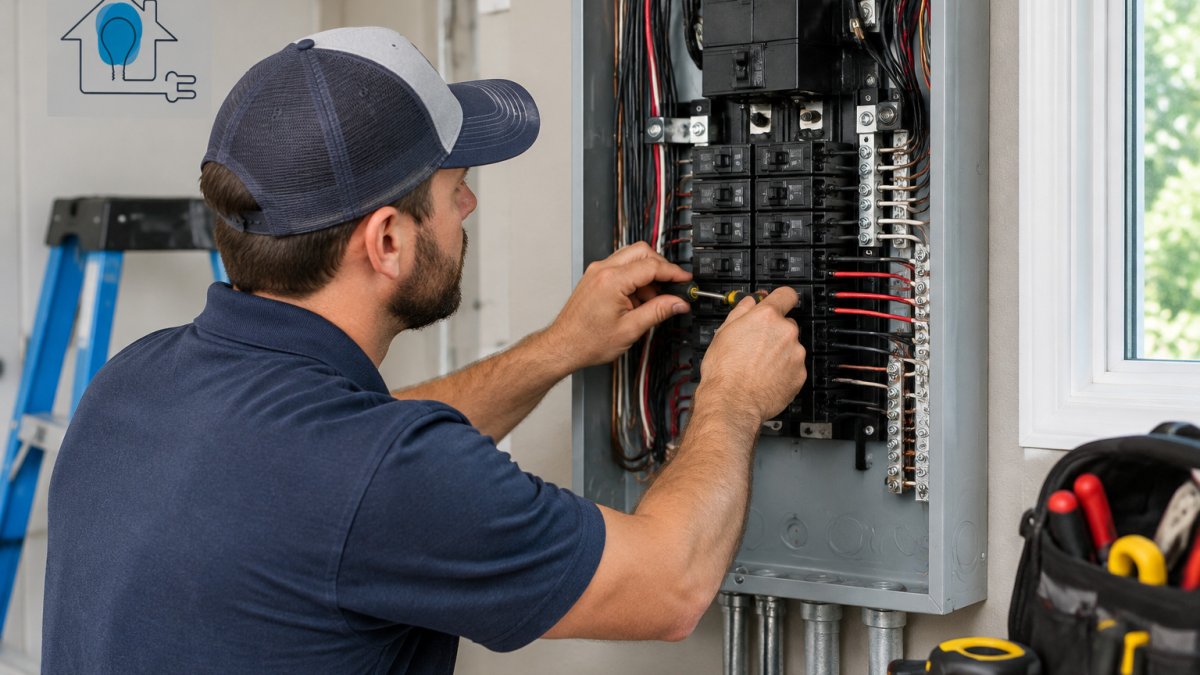
Inspect the panel. Check for loose connections, corrosion, heat damage, or signs of arcing at the breaker terminals. A breaker that feels hot or shows scorch marks is replaced, not reset.
Test the breaker itself. Confirm the breaker trips at its rated current and resets cleanly.
Check for hidden faults. Use a multimeter and insulation tester to detect shorts, ground faults, or arc faults that aren't obvious.
Test suspected appliances. If an appliance is suspected, the electrician may test it on a dedicated circuit to confirm it's the source.
What to Have Ready Before the Visit
A short log saves diagnostic time and money:
- Which breaker trips (the label or circuit number)
- What was running when it tripped
- Whether it trips immediately or after minutes or hours
- Whether it happens in wet or humid weather
- Any burning smell, buzzing, heat, or visible damage
Recurring breaker trips often point to one of these issues: deteriorating wiring in an older home, an appliance with internal electrical damage, moisture or water intrusion in an electrical box, a loose connection that's gradually worsening, or a breaker that's failing.
At Linder Electrical Contractors, we handle recurring breaker issues regularly. We'll diagnose the root cause, explain your options, and fix it right the first time. When breaker issues persist, emergency electrical services are available to address urgent safety concerns.
Frequently Asked Questions
How do I find out why a circuit breaker keeps tripping?
Start by noting when the breaker trips: immediately after reset, during specific appliance use, or randomly. Unplug devices on that circuit one at a time and reset the breaker to isolate the problem. If it trips with nothing plugged in, the issue is likely wiring-related and requires a professional inspection. Check for burning smells or scorch marks on the breaker or outlets, which indicate a serious fault requiring immediate electrician evaluation.
Can a faulty appliance cause a breaker to trip?
Yes. A malfunctioning high-wattage appliance can draw excessive current, triggering an overcurrent trip. Older or damaged appliances with compromised insulation may also create ground faults. To test, unplug suspected devices and reset the breaker. If it holds, the appliance is likely the culprit. Do not use that device until it's repaired or replaced. If the breaker trips even with appliances unplugged, the fault lies in your wiring or the breaker itself.
When should I call an electrician about a breaker that keeps tripping?
Call immediately if the breaker trips with nothing plugged in, trips immediately after reset, produces a burning smell, or trips repeatedly within hours. These signs indicate ground faults, arc faults, or faulty breakers that pose fire and shock hazards. Also call if you cannot identify the cause after unplugging devices, or if intermittent tripping suggests loose connections or damaged wiring. Professional testing and inspection are essential for safety and code compliance.
What is the difference between standard, GFCI, and AFCI breakers?
Standard breakers protect against overcurrent by cutting power when amperage exceeds the breaker's rating. GFCI (ground fault circuit interrupter) breakers detect leakage current to ground, protecting against shock in wet areas like kitchens and bathrooms. AFCI (arc fault circuit interrupter) breakers detect dangerous arcing that can cause fires, required in bedrooms and living areas by electrical code. Each serves a different safety function; the right type depends on circuit location and intended use.