 Ultimate guide
Risks of Keeping an Old Fuse Box in Your Home
Last Updated: November 8, 2026
Quick Summary
Keeping an old fuse box raises the risk of electrical fire from overheated, corroded connections and electric shock because it has no built-in ground fault or arc fault protection. An old fuse box offers overcurrent protection only, so it cannot detect a ground fault or a slow arc the way modern protective devices can.
- Warning signs include fuses that blow repeatedly, a burning or fishy odor, buzzing, scorch marks, and warm cover plates.
- Swapping in a larger fuse to stop it blowing defeats overcurrent protection and lets more current flow than the wiring can carry.
- Fuse boxes rely on screw terminals and spring clips that loosen over decades, and corrosion raises contact resistance and heat.
- A well-maintained fuse box can be safe for a modest load, but added demand it was never sized for can make it unsafe.
- Replace the panel when you find heat damage, repeated fuse failures, an oversized-fuse pattern, or corroded connections that cannot be corrected.
Table of Contents
- Why an Old Fuse Box Deserves a Closer Look
- Warning Signs of a Bad Electrical Panel You Should Never Ignore
- Fire, Shock, and Grounding: The Core Safety Risks
- Fuse Box vs. Circuit Breaker: What Actually Changed
- What the Code and Legal Requirements Say About Old Panels
- Electrical Panel Capacity for Home Gym Equipment and Other Modern Loads
- Old Fuse Box Replacement Cost and What the Job Involves
- Inspecting, Testing, and Knowing When to Replace
- Frequently Asked Questions
Why an Old Fuse Box Deserves a Closer Look
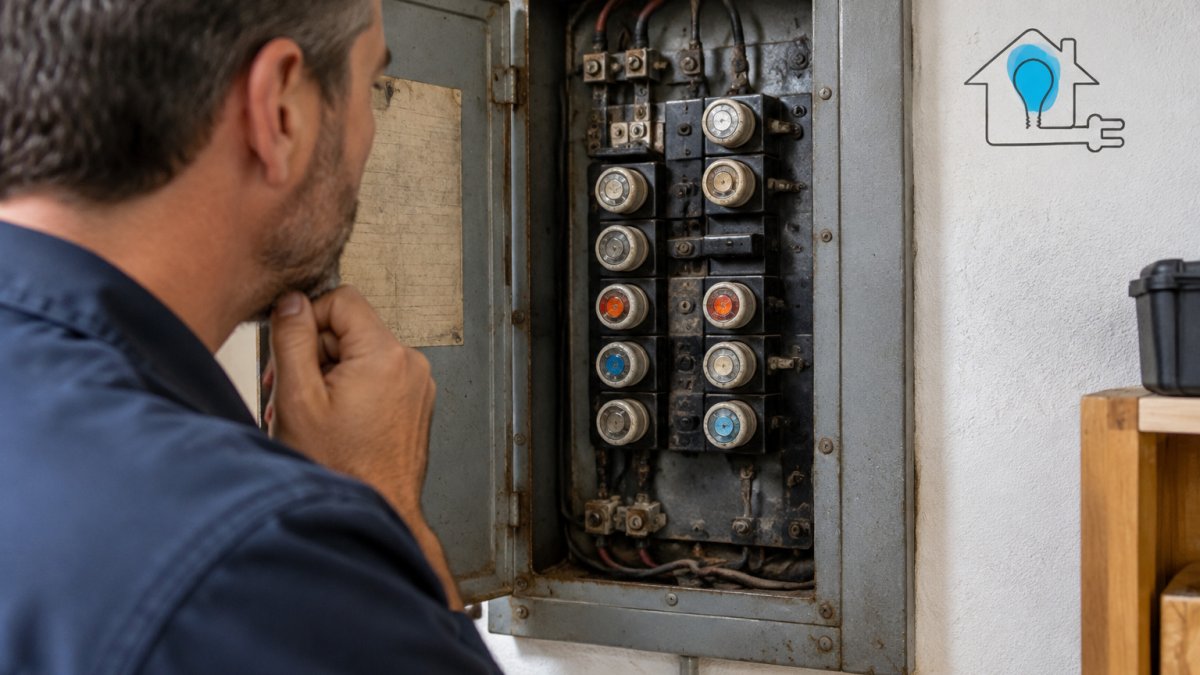
An old fuse box is not automatically a death trap, but it is a piece of equipment running well past its intended service life, and that changes the risk math. The materials inside older fuse panels, from the fuse sockets to the wiring insulation, can degrade with age and heat.
The real question is not "is this old?" but "is this still safe for what the house is asking it to do?"
Warning Signs of a Bad Electrical Panel You Should Never Ignore
The clearest warning signs of a bad electrical panel are heat, smell, sound, and visible damage: fuses that blow repeatedly, a burning or fishy odor near the box, buzzing or crackling, scorch marks, and warm cover plates. Any one of these means you should stop using that circuit and have the panel inspected.
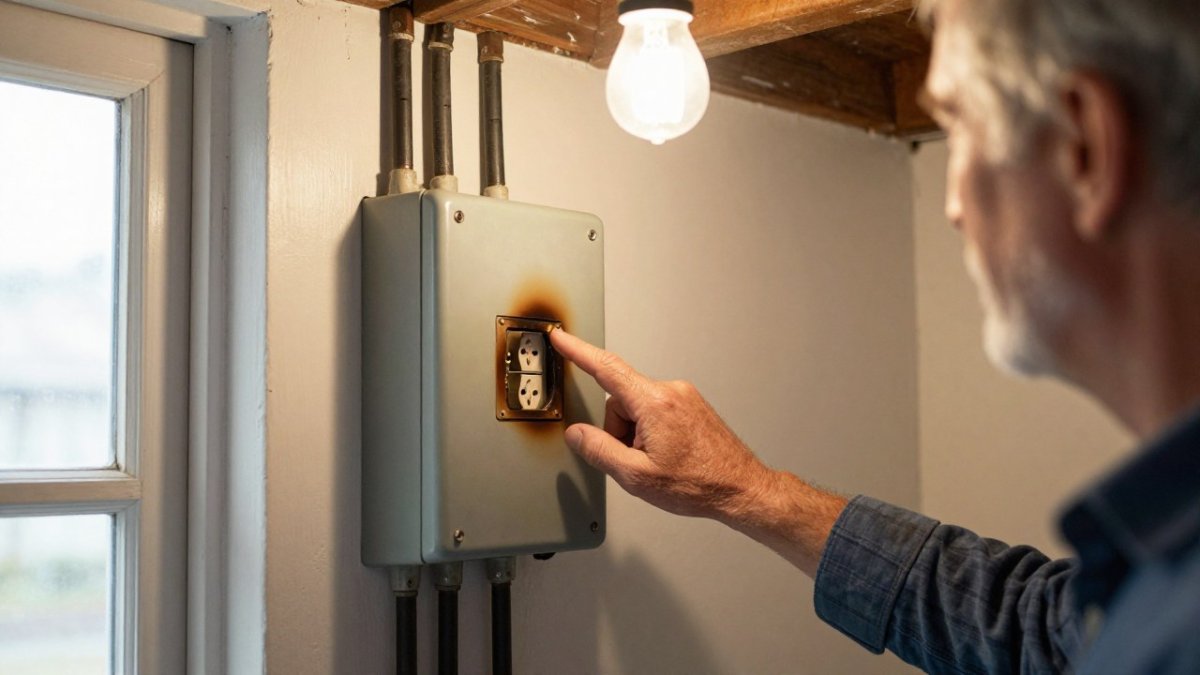
What You Can See, Smell, and Hear
Walk to your panel and use your senses before you touch anything. Look for discolored fuses, rust, or blackening around the sockets. Smell for a sharp, burning, or fishy odor, which often points to overheating insulation.
If you hear buzzing, our guide on how to diagnose a buzzing electrical panel walks through the likely causes. For a fuller symptom checklist, see the signs you need an electrical panel upgrade.
The Overloaded Circuit and Oversized Fuse Problem
A common and dangerous mistake is swapping in a larger fuse to stop it blowing. That defeats the whole point of overcurrent protection. The fuse is the weakest link by design; oversizing it lets more current flow than the wiring can safely carry.
Fire, Shock, and Grounding: The Core Safety Risks
The core risks of an old fuse box include electrical fire from overheated connections and electric shock from failed grounding and missing fault protection.
Loose Connections, Corrosion, and Deteriorating Wiring
Fuse boxes rely on screw terminals and spring clips that loosen over decades. Add corrosion from damp basements and the contact resistance climbs, which generates heat. Older wiring insulation also turns brittle and can crack at the point where it enters the box.
Where Old Fuse Boxes Fall Short on Fault Protection
Modern panels pair circuit breakers with ground fault and arc fault protection. A traditional fuse box offers overcurrent protection only. It has no residual current device equivalent built in, so it cannot detect a ground fault or a slow arc the way modern protective devices can. For a broader look at what else goes wrong in aging homes, read our rundown of common electrical hazards in older houses.
Fuse Box vs. Circuit Breaker: What Actually Changed
The move from fuses to circuit breakers changed convenience and protection, not just style. A fuse melts and must be replaced; a breaker trips and resets. More importantly, modern breaker panels support added protective devices and higher circuit capacity that a fuse board was never built to handle.
| Feature | Old Fuse Box | Modern Breaker Panel |
|---|---|---|
| Reset after overload | Replace the fuse | Flip the breaker |
| Overcurrent protection | Yes, if correctly rated | Yes |
| Ground fault protection | Not built in | Available per circuit |
| Arc fault protection | Not built in | Available per circuit |
| Spare capacity for new loads | Limited | Higher |
A well-maintained fuse box can be safe for a modest load. Adding demand it was never sized for can make it unsafe.
What the Code and Legal Requirements Say About Old Panels
The baseline document is NFPA 70, the National Electrical Code (NEC), maintained by the National Fire Protection Association.
The concept homeowners usually mean by "grandfathered" is more accurately called existing-installation status.
Common events that may bring an old panel into current-code scope include:
- New circuits or added load. A new branch circuit, a subpanel, or a significant load increase may trigger code requirements for the new work.
- Service upgrades or panel replacement. Replacing service equipment is typically treated as new work subject to current requirements.
- Major renovations. A permitted remodel that extends or alters wiring may require the affected work to comply.
- Real estate transactions and insurance underwriting. These are not code enforcement, but they function like it. Insurers and buyers routinely require an inspection, and an underwriter can decline or surcharge a policy over an aging panel regardless of whether it is technically legal.
- Local point-of-sale or rental inspection ordinances. Some jurisdictions impose their own inspection or disclosure requirements on top of the NEC.
A practical distinction matters here: legal compliance is a floor, not a safety guarantee.
Watch out: assuming a panel is fine because it passed inspection years ago.
Because adoption and enforcement vary by jurisdiction, the reliable answer for a specific home is to confirm which code edition the local authority enforces and whether any trigger event applies.
Electrical Panel Capacity for Home Gym Equipment and Other Modern Loads
Electrical panel capacity matters when adding loads such as home gym equipment. Several large loads on one circuit can exceed what a panel is designed to deliver, and capacity should be confirmed before adding an EV charger or a backup generator.
If you are planning a gym, an EV charger, or a generator, capacity is the first thing to confirm.
Old Fuse Box Replacement Cost and What the Job Involves
Old fuse box replacement cost depends on the scope: the panel itself, whether the service needs an upgrade, the condition of the wiring, permit fees, and any code corrections found once the cover comes off. We provide free written estimates.
The job typically involves shutting off power, removing the old box, installing the new panel, and passing inspection. For a clearer budget picture, our electrical panel replacement cost guide breaks down the factors that move the price.
Inspecting, Testing, and Knowing When to Replace
Appearance and age alone cannot tell you whether a fuse box is safe. A panel can look clean and still have a loose neutral generating heat behind the cover, and a panel can look grimy and still test sound. That is why a real inspection combines a visual assessment with measurement, and why the results should drive a triage decision rather than a blanket verdict.
What a Licensed Electrician Actually Checks
A thorough evaluation of an older fuse panel may cover:
- Thermal scan. An infrared camera or non-contact thermometer looks for hot terminals, warm fuse sockets, and heat signatures at connections that are invisible to the eye.
- Connection torque and condition. Terminals and fuse clips are checked for tightness, corrosion, and pitting; loose or corroded connections raise resistance and generate heat.
- Fuse sizing against conductor size. Each fuse is compared to the wire gauge it protects. An oversized fuse is a defect even if the circuit has never failed.
- Grounding and bonding. The electrician verifies that the service is grounded and bonded correctly and checks for the presence and condition of equipment grounding conductors.
- Load calculation. Actual and expected demand is compared to the panel's rated capacity, which is the step that reveals whether the box is merely old or genuinely undersized for the house.
- Insulation condition at the box. Brittle or cracked insulation where conductors enter the enclosure is a common failure point in older installations.
- Protective-device inventory. The electrician documents which circuits have ground fault or arc fault protection and which do not.
Testing establishes condition and capacity; it does not guarantee future safety. A panel that tests clean today can still fail later.
A Symptom-Prioritized Checklist
Use observable symptoms to sort the response into three tiers.
Act immediately, stop using the circuit and call a licensed electrician:
- A burning, sharp, or fishy odor near the panel.
- Visible sparks, arcing, or a flash at the panel or a fuse socket.
- Scorch marks, blackening, or melted plastic on the cover or around a fuse.
- A cover plate that is hot to the touch.
- Loud buzzing, crackling, or popping from inside the panel.
- A fuse that blows again immediately after replacement.
Schedule a prompt inspection, within days, not months:
- Fuses that blow repeatedly on the same circuit under normal use.
- A persistent hum or faint buzz that was not there before.
- Rust, moisture, or corrosion inside the panel.
- Fuses that feel warm or show discoloration at the socket.
- A panel that is visibly undersized for the loads now connected to it.
Monitor and plan, routine review at the next service visit:
- An aging panel with no symptoms and modest, unchanged load.
- Missing ground fault or arc fault protection on circuits where current code would require it for new work.
- Limited spare capacity that will become a problem with planned additions.
Emergency Response
If you smell burning, see smoke or sparks, or hear arcing at the panel, do not touch the panel or attempt to reset anything. Move away from the area, keep others out, and call 911 if there is fire, smoke, or any sign the panel is actively burning. If the situation is safe to approach and you know where it is, shut off power at the main disconnect only when doing so does not require reaching past heat, smoke, or arcing. Then contact a licensed electrician before re-energizing anything.
Repair or Replace
Repair and keep the panel when it is sound, correctly fused, properly grounded, and matched to a modest load. When you are ready to act, you can schedule a residential electrical safety inspection and get a straight answer.
If your panel is showing any of these warning signs, guessing is the riskiest option. Linder Electrical Contractors is licensed and insured, offers free written estimates, and handles permits and inspections as part of the work, with 24/7 emergency service when something goes wrong. Get started with Linder Electrical Contractors and know for certain whether your old fuse box is safe or ready for replacement.
Frequently Asked Questions
Is it safe to buy a house with an old fuse box?
It can be, but only after a licensed electrician inspects it. An old fuse box that has been maintained and correctly fused may function, but most insurers and lenders flag them, and the lack of modern fault protection means a single failure can go unnoticed. Budget for an inspection before closing, and treat any scorch marks, burning smell, or oversized fuses as a negotiating point toward replacement.
Are old-style fuse boxes still legal?
Legally, an existing fuse box is often allowed to remain in service if it was compliant when installed and has not been altered. Changes such as a renovation or a large added load may bring it under current rules, and a qualified electrician can confirm what applies. Local inspectors and insurers can also require upgrades. The practical answer: legal is not the same as safe, and a qualified electrician should confirm what applies to your panel.
What are the warning signs of an unsafe fuse box?
Watch for fuses that blow repeatedly, fuses rated higher than the circuit allows, a burning smell near the panel, scorch marks or discoloration, buzzing or crackling sounds, warm cover plates, and lights that flicker when appliances cycle on. Any one of these points to overheating, loose connections, or an overloaded circuit and warrants an inspection before you use that circuit again.
How much does old fuse box replacement cost?
Pricing depends on the panel size, the condition of the existing wiring, permit requirements, and whether the service mast or meter needs work, so there is no single figure that fits every home. A free written estimate is the reliable way to know. Ask for the scope in writing, including permits and inspection, so you can compare quotes on equal terms.