 How-to
Can You Install an EV Charger in Your Garage?
Last Updated: November 7, 2026
Quick Summary
Yes, you can install an EV charger in a garage, and it is the most common place to put one. You need a dedicated circuit, a safe mounting spot, and a licensed electrician to handle the wiring and permits. The garage usually makes the job easier because the car parks there and the charger stays out of the weather.
- An attached garage shares a wall with the house, so the electrical run is short and the job stays simple.
- A detached garage often needs trenching, conduit, and a subpanel, which adds time and cost.
- Mount the charger on a solid wall near the car, about 4 to 5 feet off the floor.
- Most charging cables run about 18 to 25 feet, so a centered mount often covers the whole parking bay.
- An EV charger install almost always requires an electrical permit and a passing inspection, though specifics vary by jurisdiction.
Table of Contents
- Can You Install an EV Charger in a Garage? The Direct Answer
- EV Charger Installation Requirements Your Garage Must Meet
- EV Charger Inside or Outside the Garage: Choosing the Mounting Location
- EV Charger Distance From Fuse Box and Cable Reach Planning
- NEMA 14-50 Outlet or Hardwired Charger: Which Fits Your Setup
- What to Expect to Install an Electric Car Charger in a Garage Cost-Wise
- Permits, Inspections, and the Steps a Licensed Electrician Handles
- Get a Free Estimate for Your Garage EV Charger
- Frequently Asked Questions
Can You Install an EV Charger in a Garage? The Direct Answer
Yes, you can install an EV charger in a garage, and it is the most common place to put one. You need a dedicated circuit, a safe mounting spot, and a licensed electrician to handle the wiring and permits. Linder Electrical Contractors installs home EV chargers and handles the permit and inspection work from start to finish.
The garage usually makes the job easier. The car parks there, the electrical panel is often nearby, and the charger stays out of the weather. The real question is not whether a garage can host an EV charger. It is whether your electrical system can carry the load.
A detached garage can add a step. Running power from the house to a separate structure often means trenching and a subpanel. That adds time and cost. We will show you how to check your setup below, starting with the requirements your garage must meet.
Attached Versus Detached Garage: What Changes
An attached garage shares a wall with the house, so the electrical run is short. Your panel is usually in the basement, utility room, or garage wall itself. That keeps the job simple.
A detached garage sits away from the house. Power has to travel underground or overhead, and that run needs its own protection. Expect trenching, conduit, and often a subpanel in the garage. The charger still works the same way. Getting power there is the difference.
EV Charger Installation Requirements Your Garage Must Meet
Every garage EV charger installation needs four things: a dedicated circuit, enough panel capacity, the right outlet or hardwired connection, and a safe mounting spot. Miss any one of these and the job stalls or fails inspection.
Here is a quick look at what each requirement involves:
| Requirement | What It Means | Who Handles It |
|---|---|---|
| Dedicated circuit | A breaker reserved for the charger alone | Licensed electrician |
| Panel capacity | Enough open space and load to add the circuit | Licensed electrician |
| Outlet or hardwire | NEMA 14-50 outlet or direct wiring | Licensed electrician |
| Mounting spot | Solid wall near the parking bay | Homeowner and electrician |
| Permit and inspection | Local approval before and after the work | Electrician files, inspector verifies |
Level 1 Versus Level 2 Charging at Home
Level 1 charging uses a standard 120-volt outlet and adds only a few miles of range per hour (Alternative Fuels Data Center: Electric Vehicle Charging Stations). Level 2 charging uses a 240-volt circuit and charges far faster than Level 1 (Alternative Fuels Data Center: Charging Electric Vehicles at Home).
A Level 1 setup needs no new wiring if a regular outlet sits near the car. It works for low daily driving. For most electric vehicle owners, though, Level 2 is the practical pick. It fills the battery overnight and keeps up with a normal commute. If you are weighing the two, our guide to installing a Level 2 home EV charger walks through the full process.
Dedicated Circuits, Breakers, and Panel Capacity
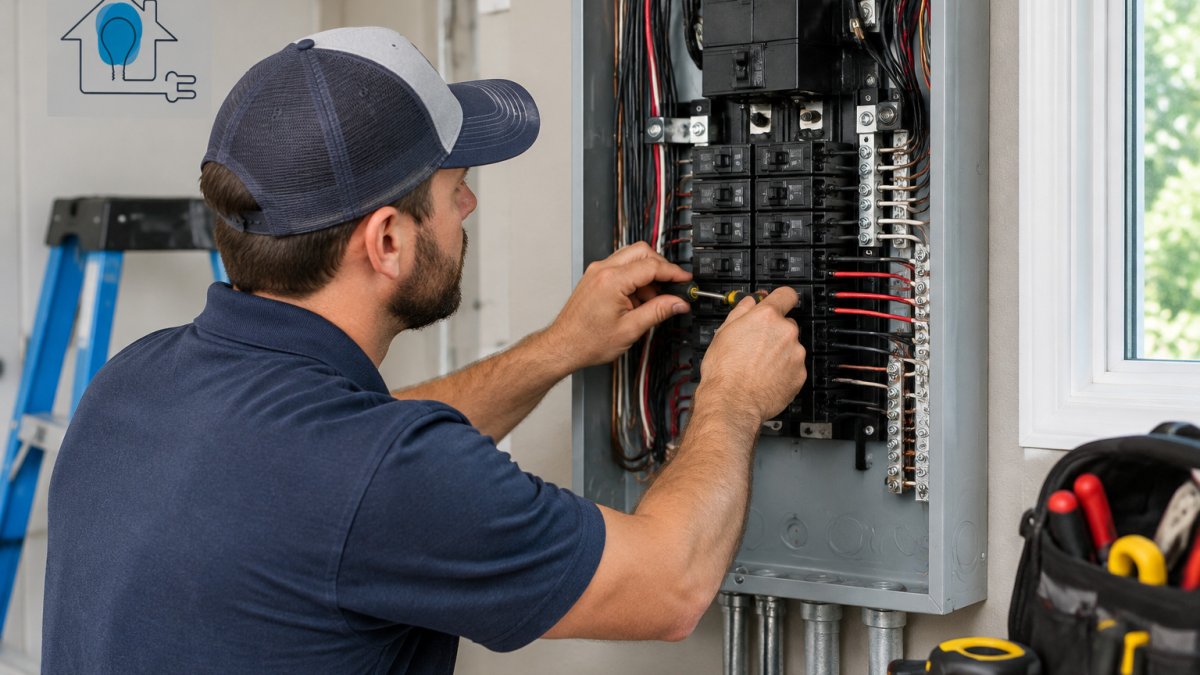
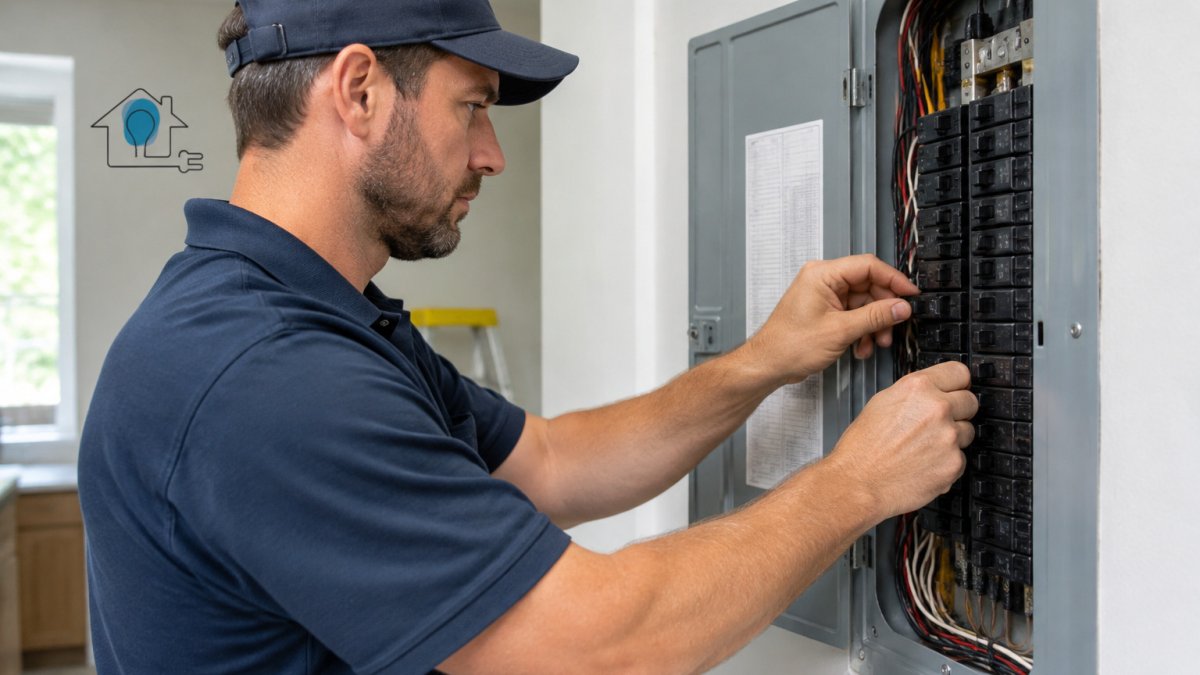
Panel capacity decides whether the job is simple or needs an upgrade. A licensed electrician can run a load calculation to see how much spare room your electrical panel has.
A dedicated circuit means the charger gets its own breaker. Nothing else shares it. That protects the charger and the rest of your home. If you are unsure what your panel can carry, our guide on whether your panel can support an EV charger explains the check. Homeowners with an older 100-amp panel can read that specific case next.
EV Charger Inside or Outside the Garage: Choosing the Mounting Location
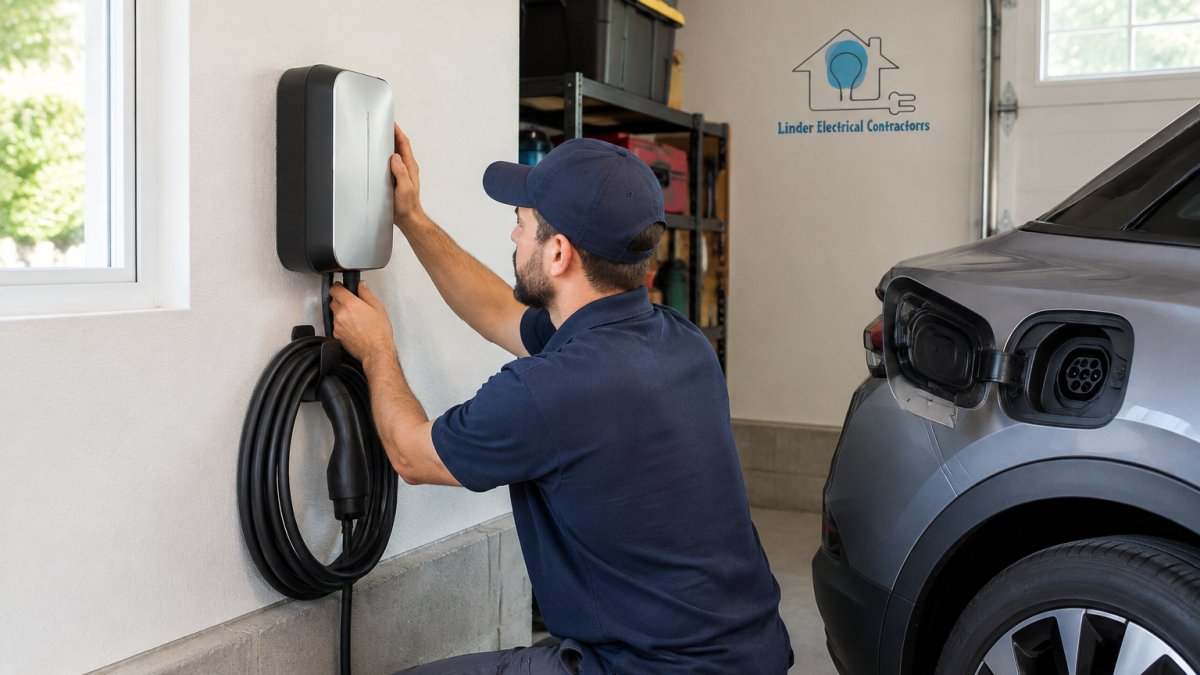
Inside the garage is the better choice for most homes. The charger stays dry, the cable stays clean, and you plug in without stepping into rain or snow. Mount it on a solid wall near where the car parks, about 4 to 5 feet off the floor.
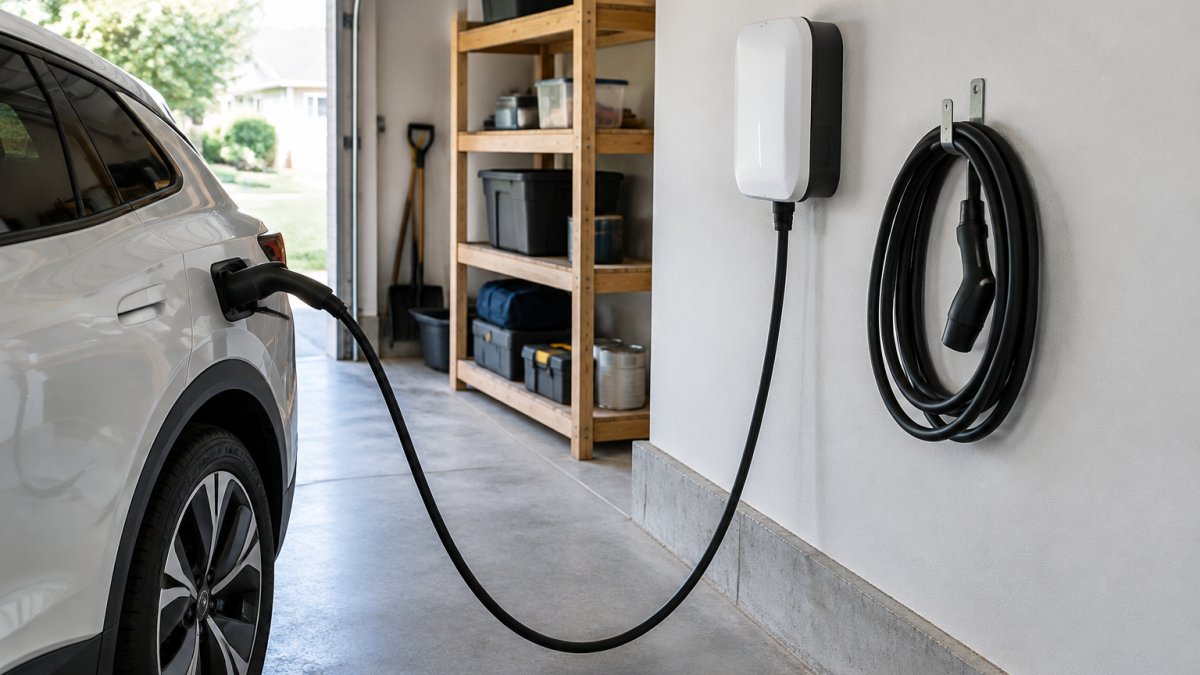
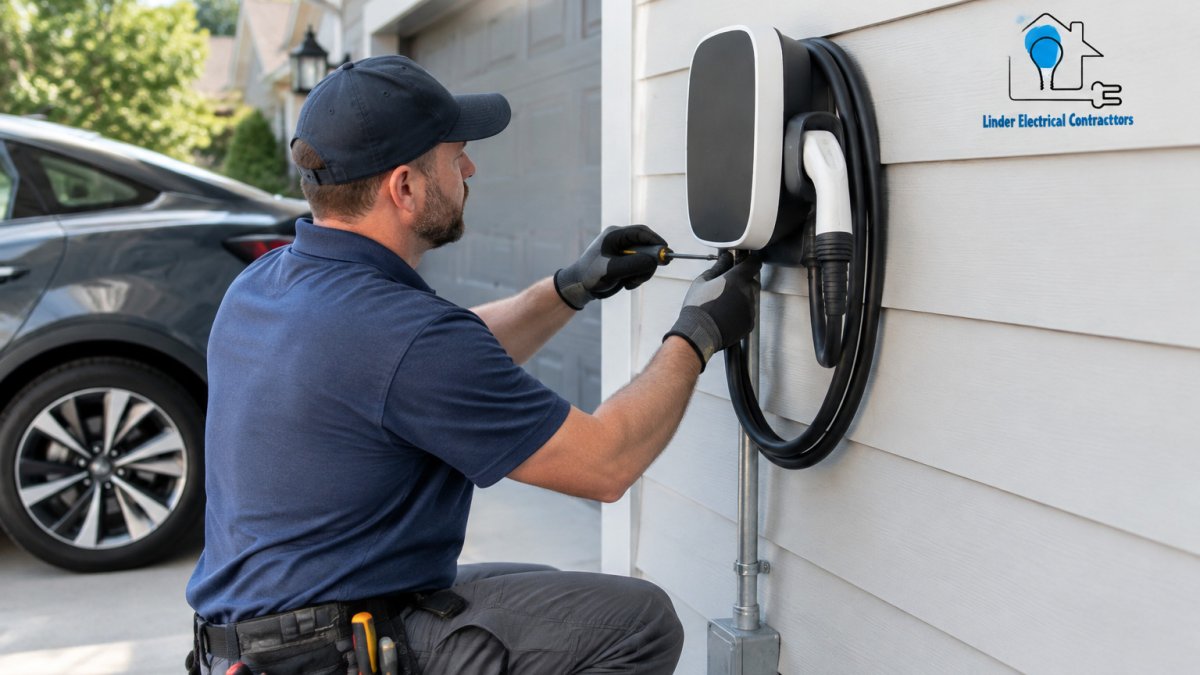
Outside mounting makes sense in a few cases. A carport, a driveway with no garage, or a detached garage with no room inside can push the charger to an exterior wall. Outdoor units need a weather-rated enclosure and a spot above standing water.
Watch out: mounting a charger low on a wall where snow, rain, or a hose can reach it invites water damage and tripped breakers. Keep it high and dry.
EV Charger Distance From Fuse Box and Cable Reach Planning
Shorter runs cost less. The EV charger distance from the fuse box matters because wire, conduit, and labor all scale with length. A charger mounted on the same wall as the panel is the cheapest layout. A run across the garage or through finished walls adds cost and work.
Plan the cable reach before you pick a spot. Measure from the charger to the car's charging port, then add slack. Most charging cables run about 18 to 25 feet, so a centered mount often covers the whole parking bay. A coiled cable that reaches every corner of the garage beats a short one that forces awkward parking.
NEMA 14-50 Outlet or Hardwired Charger: Which Fits Your Setup
A NEMA 14-50 outlet lets you plug in a portable charging cord and unplug it later. A hardwired charger is wired straight to the circuit with no plug. Both work well. The right pick depends on your habits and your local electrical code.
Choose the outlet if you want flexibility or plan to move the charger. Hardwiring is another option for a cleaner install. Some areas now require a GFCI breaker for outlets, which can add cost. Your electrician will tell you what your code requires. Our guide on choosing the right home EV charger compares the options in more detail.
What to Expect to Install an Electric Car Charger in a Garage Cost-Wise
The total cost to install an electric car charger in a garage depends on several factors, including the charger itself, labor, wiring and conduit, any panel or service work, and permit fees. For a quote specific to your home, contact Linder Electrical Contractors.
Here is how the line items usually break down:
| Cost Component | What Drives the Price | Typical Range (USD) |
|---|---|---|
| Level 2 charger unit | Brand, amperage, smart features, cable length | $400-$800 |
| Electrician labor | Hours on site, complexity of the run | $300-$1,200 |
| Wiring and conduit | Wire gauge, distance from panel, conduit type | $150-$1,500+ |
| Panel or service upgrade (if needed) | 100-amp to 200-amp service, subpanel addition | $1,000-$3,500+ |
| Permit and inspection fees | Local jurisdiction fee schedule | $50-$300 |
Pricing depends on the charger, panel capacity, wire distance, and permit requirements. For current pricing, contact Linder Electrical Contractors for a quote.
Several factors affect the quote, including wire distance, finished walls that require fishing wire or patching drywall, and the location of the panel relative to the garage.
Ask for a written scope that lists every line item before you compare bids.
We provide free written estimates, so you can see the scope of work before any work starts.
Permits, Inspections, and the Steps a Licensed Electrician Handles
An EV charger install almost always requires an electrical permit and a passing inspection, but the specifics vary by jurisdiction. A new 240-volt dedicated circuit often requires a permit, and the requirements vary by local jurisdiction.
Here is a practical permit and code checklist to work through with your electrician:
- Confirm with your local building department whether a permit is required for a 240-volt dedicated circuit and for hardwired versus outlet installations.
- Ask whether the permit can be filed online or must be submitted in person, and who is allowed to pull it (many jurisdictions require a licensed electrician).
- Confirm the inspection sequence: rough-in inspection before drywall or finish work, and final inspection after the charger is energized.
- Check which edition of the National Electrical Code (NEC) your local jurisdiction has adopted, since requirements can differ by edition (Learn where the NEC is enforced.).
- Confirm whether a load calculation worksheet must be submitted with the permit application.
- Ask about any utility notification or rebate paperwork that must be filed alongside the permit.
Inspectors typically verify several things on site: the breaker size and wire gauge match the charger's rated amperage, the circuit is dedicated with no other loads tapped in, the grounding and bonding are correct, the charger is mounted securely at the right height, and any outlet is the correct NEMA configuration with GFCI protection where required.
Here is the step-by-step process a licensed electrician typically follows:
- Review the panel and run a load calculation to confirm available capacity.
- Confirm the mounting spot, measure the wire run, and select the wire gauge and conduit.
- Pull the electrical permit with the local jurisdiction and submit any required load calculation.
- Install the dedicated circuit, breaker, wiring, and any subpanel for a detached garage.
- Mount and connect the charger, then torque terminations to the manufacturer's specification.
- Schedule the rough-in inspection if required, then the final inspection after energizing.
- Test the charger, verify the charging rate, and close out the permit.
Skipping a required permit can create complications with homeowner insurance coverage and with a future home sale.
If you want to see the paperwork side in plain terms, our step-by-step electrical permit guide covers what homeowners should expect.
Get a Free Estimate for Your Garage EV Charger
The safest path to a garage charger is a licensed electrician who checks your panel first. We are licensed and insured, we handle permits and inspections for you, and we give free written estimates. You will not be left chasing the township or the utility company on your own.
Here is your next step. Call Linder Electrical Contractors and tell us your car and your garage layout. We will check your panel, confirm what your setup can carry, and give you a clear written estimate. Get started with Linder Electrical Contractors and charge at home with confidence.
Frequently Asked Questions
Is it safe to install an EV charger in a garage?
Yes, when it is installed to code by a licensed electrician. The main safety factors are a dedicated circuit sized for the charger, correct wire gauge, a GFCI-protected breaker where required, and proper grounding. Keep the charging cable off the floor so it is not driven over or tripped on, and mount the unit away from water sources and flammable storage. A permitted installation that passes inspection confirms the work meets current electrical code.
Do I need a permit to install an EV charger at home?
Many jurisdictions require a permit for a new 240-volt circuit or a hardwired EV charger, and the work may be inspected afterward. Requirements vary by township and by how the circuit is added, so confirm with your local building department before work starts. A licensed electrician can pull the permit and schedule the inspection.
How far can an EV charger be from the electrical panel?
There is no fixed maximum distance in the code, but distance drives cost because it determines wire length, conduit, and voltage drop. Long runs need larger wire to keep voltage drop within limits, which raises material cost. Keep the charger as close to the panel as practical, and have the electrician calculate wire size for the actual run rather than guessing.
Can my electrical panel handle a Level 2 EV charger?
It depends on your service size and the load already on the panel. Whether a panel has room depends on the service size and existing load, so a load calculation is the reliable way to check. A load calculation tells you whether you have spare capacity. If not, options include a panel upgrade or a load-management device that pauses charging when household demand peaks.