 How-to
Is EV Charger Installation Covered by Insurance?
Last Updated: October 29, 2026
Quick Summary
EV charger installation is not covered by standard homeowners insurance, since the installation cost itself is never paid for. Coverage applies only afterward: a hardwired charger becomes part of the insured structure, so fire, theft, vandalism, or surge damage may be covered. A portable unit falls under contents coverage instead.
- A hardwired Level 2 charger is a permanent fixture under dwelling coverage; a portable unit is personal property.
- Once installed, the panel and charger become part of the insured structure, so future damage is covered.
- Your claim depends on the permit number, final inspection sign-off, electrician's license number, and invoice.
- Shared charging for money can trigger the business pursuits exclusion, requiring an endorsement or commercial policy.
- A charger in a freestanding garage falls under Coverage B, commonly 10% of your dwelling limit on many HO-3 forms.
Table of Contents
- The Short Answer: What Insurance Usually Pays For
- Homeowners Insurance for EV Charger: Damage, Theft, and Power Surges
- Does Homeowners Insurance Cover Electrical Upgrades?
- EV Charger Installation Permit and Inspection: Why Your Claim Depends On It
- Home EV Charger Liability Coverage: Injuries, Shared Charging, and Commercial Use
- Policy Language to Look For and Endorsements Worth Asking About
- Get a Free Estimate Before You Call Your Insurer
- Frequently Asked Questions
The Short Answer: What Insurance Usually Pays For
Here is the part most homeowners get wrong: your standard homeowners policy was never written with EV charger installation in mind. The answer to whether EV charger installation is covered by insurance depends on why the work is being done and what fails afterward.
- Fire or lightning damage to the charger, conduit, or panel
- Theft of a portable or wall-mounted unit
- Vandalism to outdoor equipment
- Power surge damage if your policy includes that peril
- Water damage from a burst pipe above the garage ceiling
The one exception worth knowing is a covered peril that damages the charger during an unrelated event. If a tree falls on your garage and takes out the wall charger, that charger is part of the claim. The Insurance Information Institute's guide to homeowners policies explains how dwelling coverage extends to permanently installed fixtures, which is the category a hardwired charger falls into.
Homeowners Insurance for EV Charger: Damage, Theft, and Power Surges
A common mistake is filing a claim for a surge-damaged charger when the repair costs less than your deductible. Do the math first. A claim on your record can affect your premium adjustment at renewal for years.
Does Homeowners Insurance Cover Electrical Upgrades?
Once the new panel and charger are installed, they become part of the insured structure. Future damage to them is covered, even though the installation cost was not.
The Panel Upgrade Problem
If your home falls into that group, read can I add an EV charger to a 100 amp panel before you call an insurer. It walks through the load calculation and the realistic options.
EV Charger Installation Permit and Inspection: Why Your Claim Depends On It
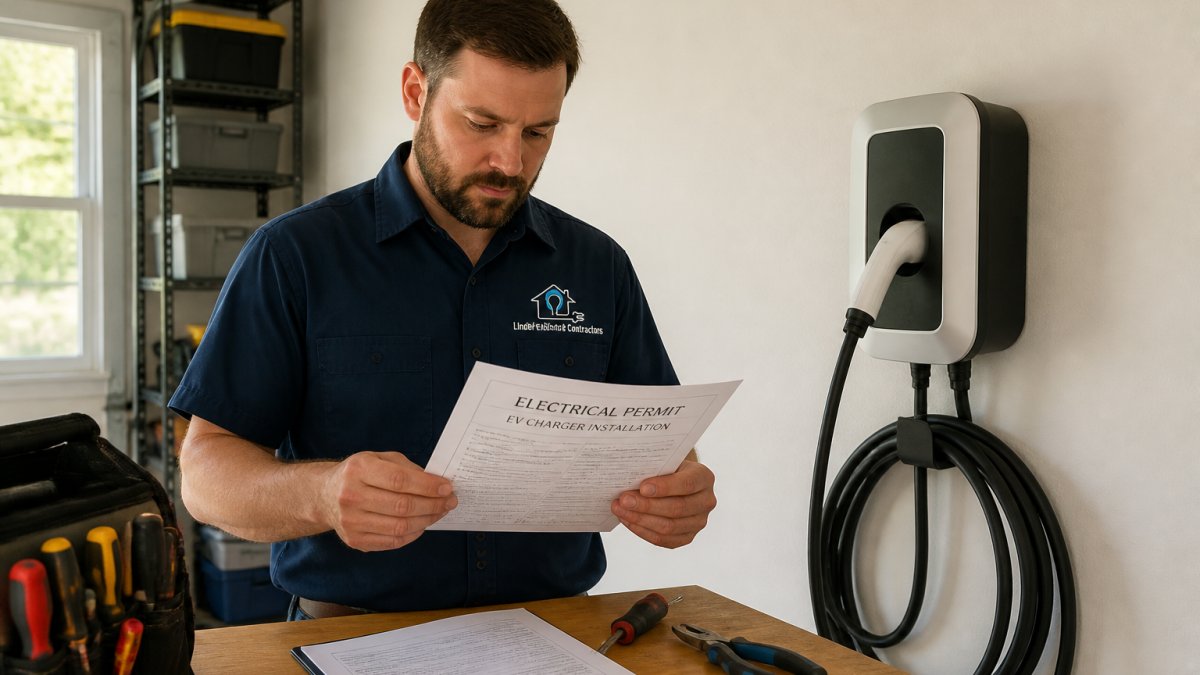
The claims process hinges on three documents:
- The permit number and final inspection sign-off
- The installing electrician's license number
- The invoice showing the work performed
Keep all three with your home records, if you sell, they become a selling point. For the full sequence from application to final sign-off, see our step-by-step permit process for homeowners.
DIY vs. Licensed Electrician: What Happens When You File a Claim
Getting your home ready for that inspection is its own task. How to prepare your home for electrical inspection covers what inspectors look for and how to clear access to the panel and garage walls.
Home EV Charger Liability Coverage: Injuries, Shared Charging, and Commercial Use
Shared charging complicates this. Occasional use by friends or neighbors is generally personal, non-business activity. A formal arrangement where money changes hands, a neighbor paying monthly, a peer-to-peer charging app, or a landlord bundling charging into rent, can trigger the business pursuits exclusion on most homeowners forms. Insurers look at regularity, profit motive, and whether you advertise. If any are present, you need a policy endorsement or a separate commercial policy.
Renters, Condo Owners, and Landlords
| Situation | Who Insures the Charger | Key Gap |
|---|---|---|
| Renter with portable charger | Renter's contents policy (Coverage C) | Landlord's building policy excludes tenant property; actual cash value is common |
| Renter with hardwired charger | Landlord's dwelling policy (Coverage A) | Tenant needs written permission and a liability rider; removal at move-out is a dispute risk |
| Condo owner, unit-mounted | HO-6 unit policy | HOA master policy may exclude garage equipment; the HO-6 loss assessment coverage may respond to a master-policy deductible |
| Landlord installing for tenants | Commercial landlord policy | Shared charging may need a commercial liability endorsement; business-pursuit exclusion applies |
Policy Language to Look For and Endorsements Worth Asking About
Most homeowners never read their policy until after a loss. Here is the exact language to look for and a checklist for your agent.
Pull your policy and search for four phrases. What you find under each one tells you where you stand.
- "Permanently installed fixtures." Confirms the hardwired charger is dwelling coverage (Coverage A), not personal property. If your policy treats the charger as personal property, the lower Coverage C limit and actual cash value settlement may apply.
- "Equipment failure." Often excluded, the clause that denies a dead control board with no external cause. Check whether the exclusion is absolute or an endorsement buys it back.
- "Faulty workmanship." The exclusion that catches DIY and unpermitted work. Some forms exclude the workmanship itself but still cover resulting fire damage; others exclude the resulting damage too.
- "Ordinance or law." Determines whether the insurer pays to bring damaged wiring up to current code after a claim.
Portable vs. Hardwired: The Classification That Drives Everything
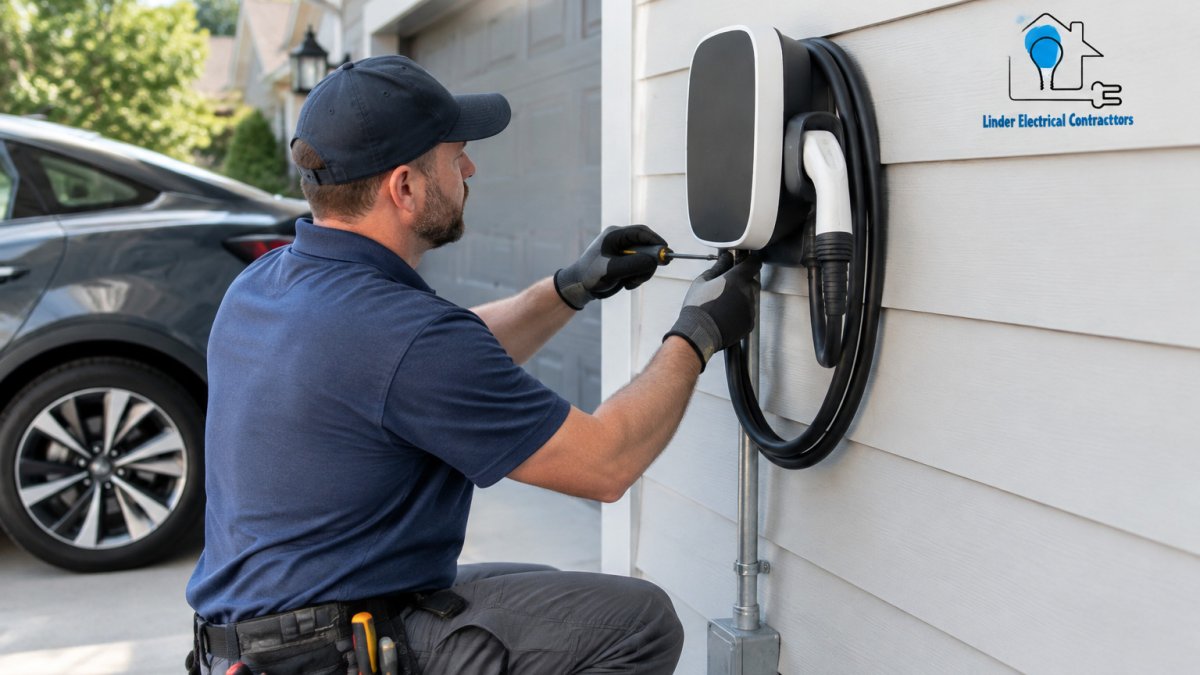
Before you read another clause, confirm how your policy classifies the charger. A hardwired Level 2 unit is a permanent fixture under dwelling coverage. A portable Level 1 or plug-in Level 2 unit is personal property under contents coverage, subject to your deductible and often settled at actual cash value. That classification decides which limit, deductible, and settlement method apply, ask your agent to confirm it in writing.
Endorsements Worth Asking About
Coverage limits on detached structures matter too. A charger in a freestanding garage falls under Coverage B, usually a fraction of your dwelling limit (commonly 10% on many HO-3 forms, though you should confirm your own). Check that number before you assume you are fully protected.
Checklist: What to Ask Your Insurance Agent
One more item: keep a photo of the installed unit and its serial number. Reimbursement moves faster with documentation, and vandalism claims in particular need dated evidence.
Get a Free Estimate Before You Call Your Insurer
Before you request a quote, read our complete guide to installing a Level 2 home EV charger so you know what the job involves.
If you are still unsure whether your panel can carry the load, our guide to whether your panel can support an EV charger answers that before you spend a dollar on an upgrade.
At Linder Electrical Contractors, we handle permits and inspections. You get a free written estimate and licensed and insured work. We also offer 24/7 emergency service.
Frequently Asked Questions
Does homeowners insurance cover the cost of installing an EV charger?
Almost never. Standard homeowners policies cover sudden damage to the home, not planned improvements. The EV charger installation itself, including the unit, wiring, and any panel upgrade, comes out of your pocket. What the policy may cover is damage after the fact, such as a fire or power surge that ruins the charger. Some insurers offer green upgrade credits or endorsements that reduce premiums after a qualifying electrical upgrade, so ask your agent whether your carrier has one.
Will insurance cover electrical damage caused by an EV charger?
It depends on the cause. A power surge, lightning strike, or electrical fire traced to the charger is typically covered under the dwelling and personal property sections of a homeowners policy, minus your deductible. Damage from a known defect you ignored, or from an unpermitted installation, is more likely to be denied. Keep the installation permit and inspection records on hand so the claims adjuster can confirm the work met electrical code compliance.
Do I need to tell my insurer before installing a home EV charger?
Yes, call your agent before the work starts. A hardwired Level 2 charger is a permanent fixture that increases replacement cost and changes the risk profile of your home. Most carriers want to know about it, and some will adjust your premium. Disclosing upfront also protects you at claim time: if the insurer finds an unreported high-draw device after a fire, it can complicate or reduce the payout.
Can an unpermitted EV charger installation affect an insurance claim?
It can. If a fire or injury traces back to work that skipped the permit and inspection process, the insurer may deny the claim or reduce the payout, arguing the installation did not meet electrical code compliance. A permit and a licensed electrician's sign-off are your proof the work was done correctly. Before you hire anyone, confirm they pull the permit and schedule the inspection themselves rather than leaving it to you.
Does car insurance cover a home EV charger?
No. Auto policies cover the vehicle, not the charging equipment mounted on your property. If your car is damaged by a faulty home charger, your auto policy's comprehensive coverage may handle the vehicle repair, but the charger itself and any garage damage fall under homeowners insurance. For a portable charger kept in the car, check whether your auto policy's personal property coverage extends to it, since limits are usually low.
The real risk is not the installation cost. It is an unpermitted job that leaves you uncovered when a fire or surge claim lands. We would rather quote the work properly than see a homeowner discover a coverage gap at the worst possible moment.
Get started with Linder Electrical Contractors and get your EV charger installed to code, permitted, and documented for your insurer.